
Brazil’s women’s game is being built in goal, not in slogans
The real test for Brazil, from a public pitch in Ceará to the CBF’s national plans, is not the announcement itself. It is whether girls can stay in the game long enough to find a pathway.
Announcements are easy; pathways are harder
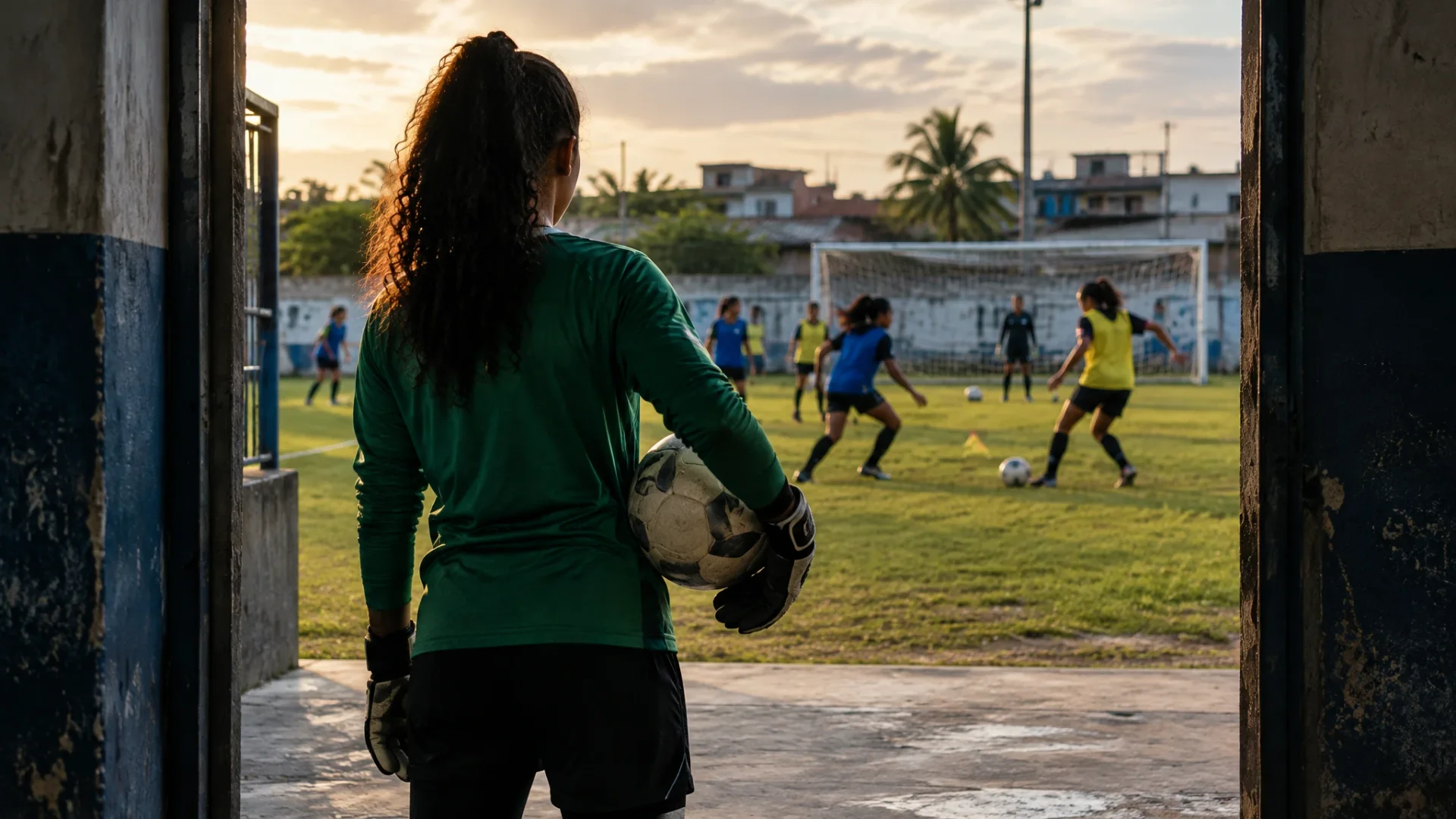
Brazilian women’s football knows how to produce ambitious language. What it has produced less reliably is a set of simple, repeatable mechanisms that turn childhood interest into a durable route. That is why the CBF’s new national goalkeeper project deserves to be judged as something more than a branding exercise. The initiative, called Em busca da Camisa #1, is set to work across Brazil’s five regions, reach 1,200 girls aged 11 to 16 and train more than 100 goalkeeper coaches by 2027. Its first edition is scheduled for Americana, in partnership with the Paulista FA. [1]
The crucial point is not the headline number alone. It is the logic behind it. A country can launch visible campaigns without changing much if girls still cannot find coaching, continuity or a clearly defined position to grow into. Goalkeeping is a revealing case: it depends on repetition, specialist technique and coaches who can correct mistakes without crushing confidence. In that sense, the CBF is finally targeting an area that is often treated as a detail, even though it shapes the depth of the entire talent pool. [1]
Sources : [1] Confederação Brasileira de Futebol ↗
In Fortaleza, access matters more than narrative
Fortaleza’s Leoas do Futuro shows why talk about “potential” is not enough. The club offers 160 free places for girls aged 6 to 17 who attend public schools, with football sessions alongside psychological support and social-assistance backing. According to the reporting, the programme only got underway after a partnership with Ambev and funding through incentive-law mechanisms. In plain terms: no vague miracle, but a concrete setup that pays for staff, training time and broader care. [2]
That matters more to me than any equality slogan. A well-run free academy is more valuable than a grand statement if it lowers the ordinary barriers: transport, cost, dropping out after a few months, or the fear of not belonging. Women’s football does not lack imagery; it lacks bridges. And as long as projects remain mainly showcases, the youngest players will remain too easy to lose. [2]
Sources : [2] ge ↗
The issue is not momentum, but retention
FIFA’s October 2026 women’s football development roundup points in the same direction. It says the work spans several confederations, and notes that in Brazil its women’s football team met stakeholders in Rio to help shape the CBF’s women’s strategy. The visit also involved Brazil coach Arthur Elias and former captain Aline Pellegrino. FIFA adds that Brazil’s matches against Argentina in Porto Alegre and Recife drew close to 30,000 spectators. [3]
That number is eye-catching, but it does not solve anything on its own. A strong one-off crowd does not become a system by itself. The real challenge is turning attention into a stable route: a goalkeeper who starts at 11 must be able to keep playing at 14, then 16, then beyond. That is how you judge the quality of sports policy, not by how quickly a press release appears. If the CBF wants its goalkeeper campaign and local initiatives to be more than exceptions, it has to treat retention as central, not secondary. [1][2][3]
Sources : [1] Confederação Brasileira de Futebol ↗[2] ge ↗[3] FIFA ↗
Read next
 Opinion
FIFA, Argentina and Brazil: women’s football is now a pathway problem
FIFA’s latest women’s-football roundup points to the real bottleneck: campaigns and tournaments only matter if federations turn them into durable routes into the game.
 Inès ValençaLatin America & world football
 Opinion
Fortaleza, Manaus and FIFA: women’s football advances through boring but decisive infrastructure
Women’s football moves forward not through slogans but through free places, club staff, local tournaments and federations that keep girls in the game after the photo op.
Inès ValençaLatin America & world football Opinion
Libertadores Femenina: Brazil has already won the competition before kickoff
Corinthians v Cruzeiro guarantees Brazil a 15th continental title in 18 editions. The real question is no longer who lifts the trophy, but why the gap remains so wide.
Inès ValençaLatin America & world football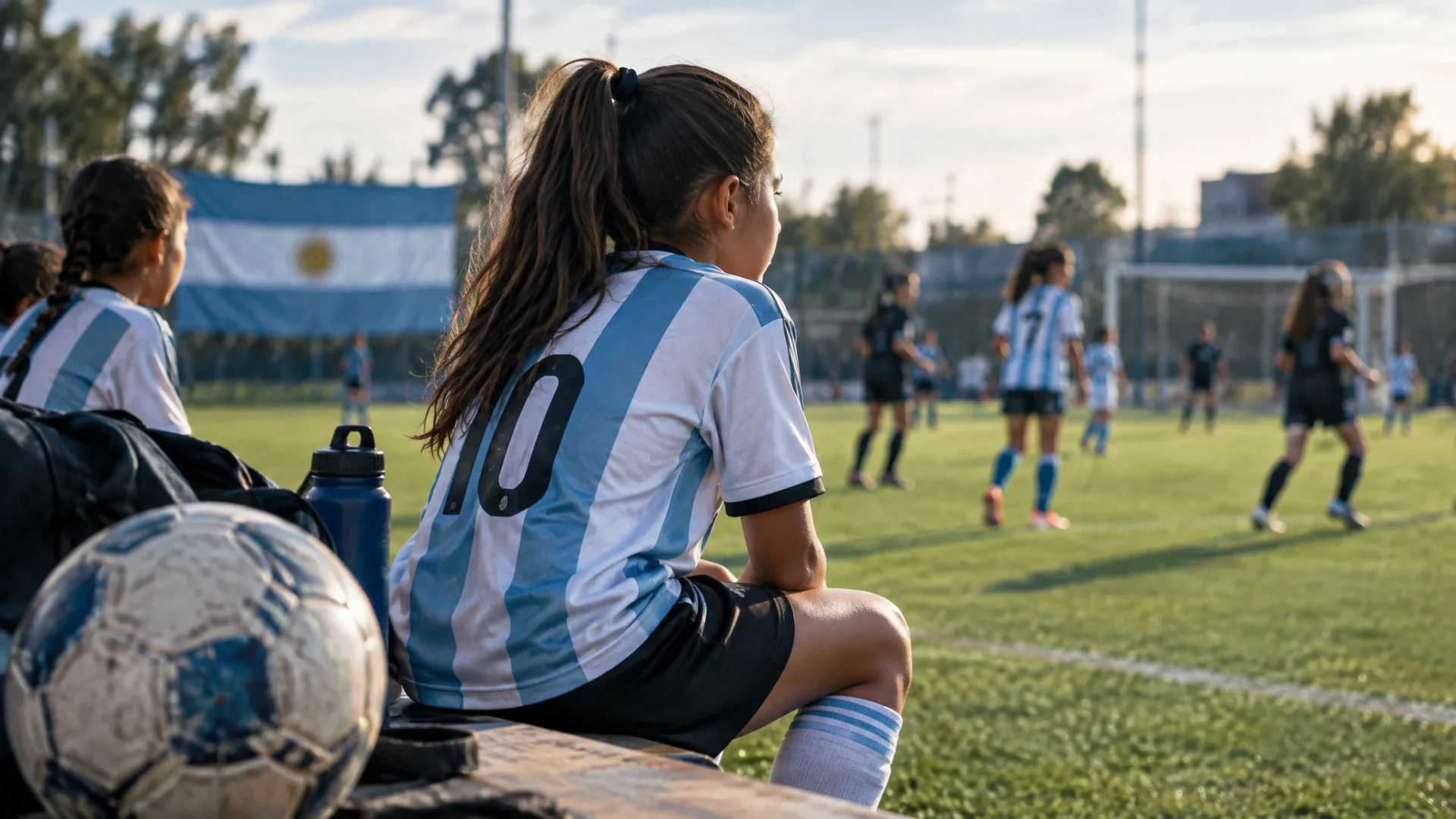 Opinion
Platense, AFA’s U-12 girls’ tournament and the real question: can Argentina build a lasting pathway?
Argentina is starting to build its women’s pipeline from both ends: a visible U-17 team abroad and a first official U-12 girls’ tournament at home. The point is not celebration, but continuity.
Inès ValençaLatin America & world football Opinion
Inter de Limeira and the first real SAF decision: invest in the pitch first
The real test of a SAF is not a photo with famous names. It is where the money goes first, and at Limeira the opening move says a lot about governance.
Inès ValençaLatin America & world football Opinion
PSG and Les Marseillaises: when the shirt becomes a public instrument
PSG and Marseille are no longer just dressing a team: they are using the shirt as a civic, charitable and identity-making object. The real question is simple: who now controls the symbol — the club, the sponsor or the cause?
 Étienne MorelThe football, the clubs, the decisions