
PSG and Les Marseillaises: when the shirt becomes a public instrument
PSG and Marseille are no longer just dressing a team: they are using the shirt as a civic, charitable and identity-making object. The real question is simple: who now controls the symbol — the club, the sponsor or the cause?

The shirt is no longer just a uniform
French football likes to talk about club culture, but sometimes you have to look at the other side of the fabric. At PSG and with Les Marseillaises, the shirt is no longer only the weekend kit: it has become a vehicle for message, fundraising and narrative. That is not a cosmetic detail. It is a hierarchy of symbols. When a club decides what the shirt says before a ball is even kicked, it reminds us that image is now part of the sporting project.
The point of the move is genuine. PSG is building Octobre Rose into several fixtures across the month, with special outfits, in-stadium activations, badges and a partnership structure that goes beyond a one-off paint job. Marseille, meanwhile, gives Les Marseillaises their first shirt with a distinct identity of their own. In both cases, the garment moves out of merchandising and into the realm of a public tool.
Sources : [2] psg.fr ↗[3] lesmarseillaises.om.fr ↗
At PSG, the cause is folded into the brand
For the match against Lyon, PSG is unveiling an Octobre Rose shirt: the home base stays, the names and numbers shift into pink, the breast-cancer ribbon sits on the chest, and the match-worn shirts are later auctioned in support of AP-HP Sorbonne Université. The club also says the campaign extends to other teams in the month, including the women’s match against OL Lyonnes, plus stadium activations and hospitality features. This is a club that leaves nothing to chance: the cause is embedded in the brand, the brand serves the cause, and the sponsor sits inside the mechanism.
That coherence is a strength, but it also demands caution. The more neatly a cause is absorbed into the club’s apparatus, the more it risks becoming one more language layer in the machine. PSG obviously knows how to do scale. So the issue is not intent, which is sound, but dosage: once ceremony, signage and storytelling are all lined up, support can start to look like choreography. The gesture remains useful; it just has to stay legible as a gesture.
Sources : [1] footpack.fr ↗[2] psg.fr ↗
In Marseille, identity starts with the section
The Marseillaises case is different and, in many ways, more interesting. Here, the club is not grafting a campaign onto an established shirt; it is giving the women’s team its first piece with a signature of its own. The club and Puma present the Octobre Rose shirt as a first in the section’s history, a limited edition to be worn against Fleury, with part of ticket income and shirt sales going through Treizième Homme. The message is clear: the section is not just getting a kit, it is getting its own visual identity.
That is where the decision becomes tactical, in the broad sense. A club does not only organise a squad; it also organises the levels of recognition between its teams. In Marseille, giving the women’s section its own badge means making it visible without keeping it in the shadow of the men’s side. That is not an extra marketing flourish. It is a way of saying: this team exists in its own right, with its place in the club’s architecture. And, oddly enough, that is often how a club begins to understand itself.
Sources : [3] lesmarseillaises.om.fr ↗
The real issue: who owns the symbol?
This shift says something broader about French clubs: they no longer just sell emotion, they manage signs. The shirt has become a space where public-health causes, sponsors, hospitality, section identity and institutional storytelling all meet. That is not scandalous. It is often better than lazy folklore. But it should be owned honestly: the modern club does not simply dress its players; it distributes symbolic roles.
That is why the subject deserves more than a shrug. When PSG puts Octobre Rose at the centre of its biggest current fixture, it shows that its shirt can serve a public campaign without losing premium status. When Marseille gives Les Marseillaises a first badge of their own, it corrects an old internal hierarchy: identity should not be borrowed, it should be granted. In both cases, football says something accurate about itself: a symbol only matters if someone is clearly in charge of it.
Sources : [2] psg.fr ↗[3] lesmarseillaises.om.fr ↗
Read next
 Opinion
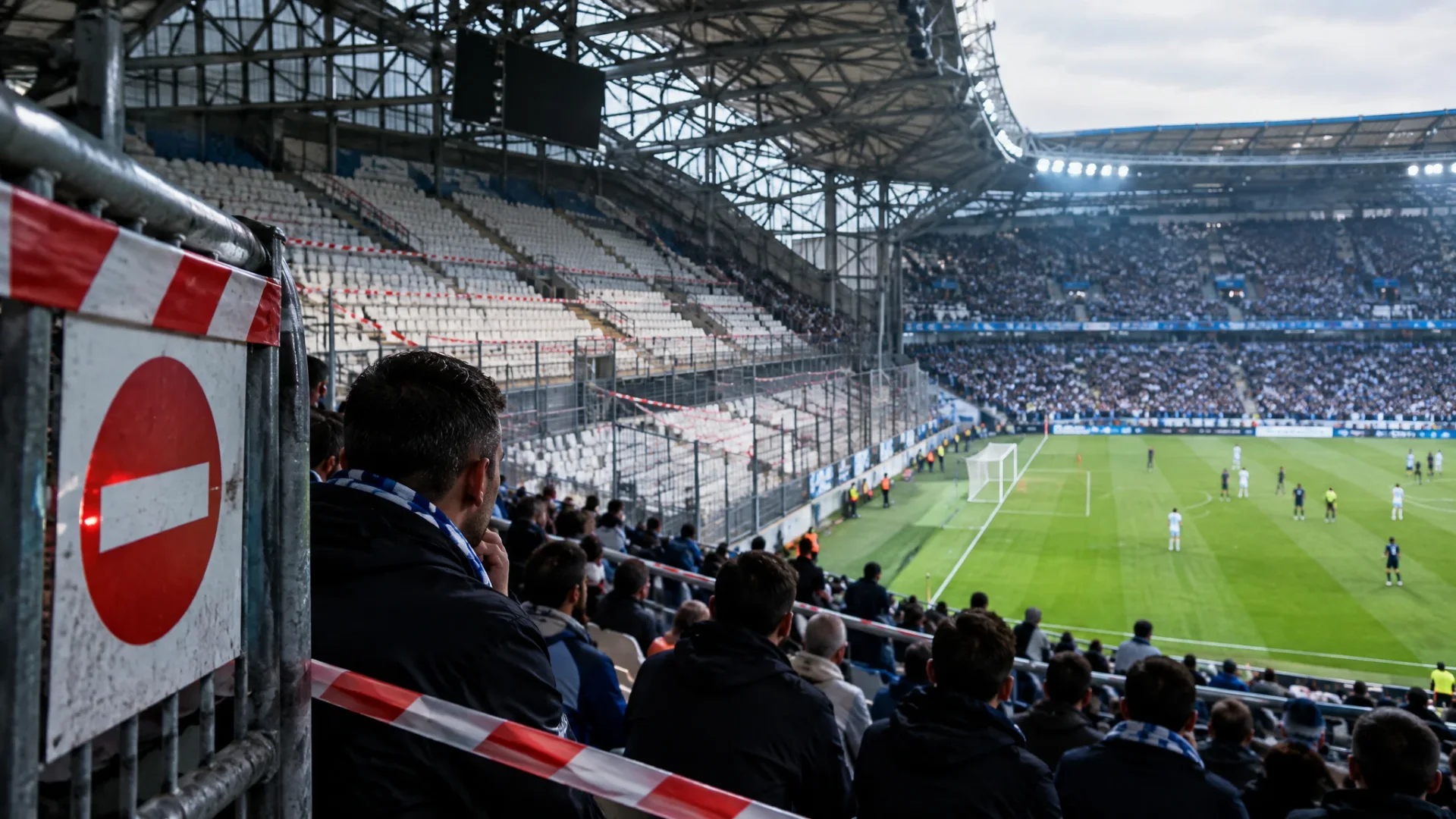
Marseille and the Vélodrome: when the Nord stand becomes a tactical handicap
What is a team worth when it is finally playing better just as its stadium loses part of its voice? Marseille’s sanction is a reminder that a club cannot cleanly separate performance from stand-side disorder.
 Étienne MorelThe football, the clubs, the decisions
 Opinion
Rennes atop Ligue 1, for now: a compressed table leaves no room for self-congratulation
After the 3-0 win over Strasbourg, Rennes moves top provisionally. In a tight Ligue 1, the point is not the snapshot but what the club does with it.
Étienne MorelThe football, the clubs, the decisions The Sunday review
Morel on Sunday: French football needs to become easier to love
Fixtures move, television rights return to the negotiating table and ambitious clubs keep promising a brighter tomorrow. This week raises a quieter question than any transfer saga, but a more important one: what makes people want to come back for the next match?
Étienne MorelThe football, the clubs, the decisions Opinion
Paris FC: spending more need not mean starting again
A club’s new ambitions draw attention. The players who were there before usually draw less. That can obscure something valuable: continuity is a footballing resource, provided it never becomes a sentimental excuse for avoiding difficult decisions.
Étienne MorelThe football, the clubs, the decisions Opinion
PSG–Lyon: supporters cannot be the spare part
A marquee fixture moves to Monday, a global football ceremony occupies the same evening, and the people who planned their Sunday must adapt. Moving a match can be necessary. Treating its audience as endlessly flexible is a choice.
Étienne MorelThe football, the clubs, the decisions Opinion
When the shirt serves the stand: Union Saint-Gilloise, Katowice–Ostrava, PSG
When a shirt becomes a public-health tool, a symbol of supporter friendship or the visible frame for a campaign, the real question is simple: does it serve the club, the brand or the terrace first?
 Basil ArtemoffTerraces, Marseille & style