
Platense, AFA’s U-12 girls’ tournament and the real question: can Argentina build a lasting pathway?
Argentina is starting to build its women’s pipeline from both ends: a visible U-17 team abroad and a first official U-12 girls’ tournament at home. The point is not celebration, but continuity.
A beginning of a ladder, not yet a ladder
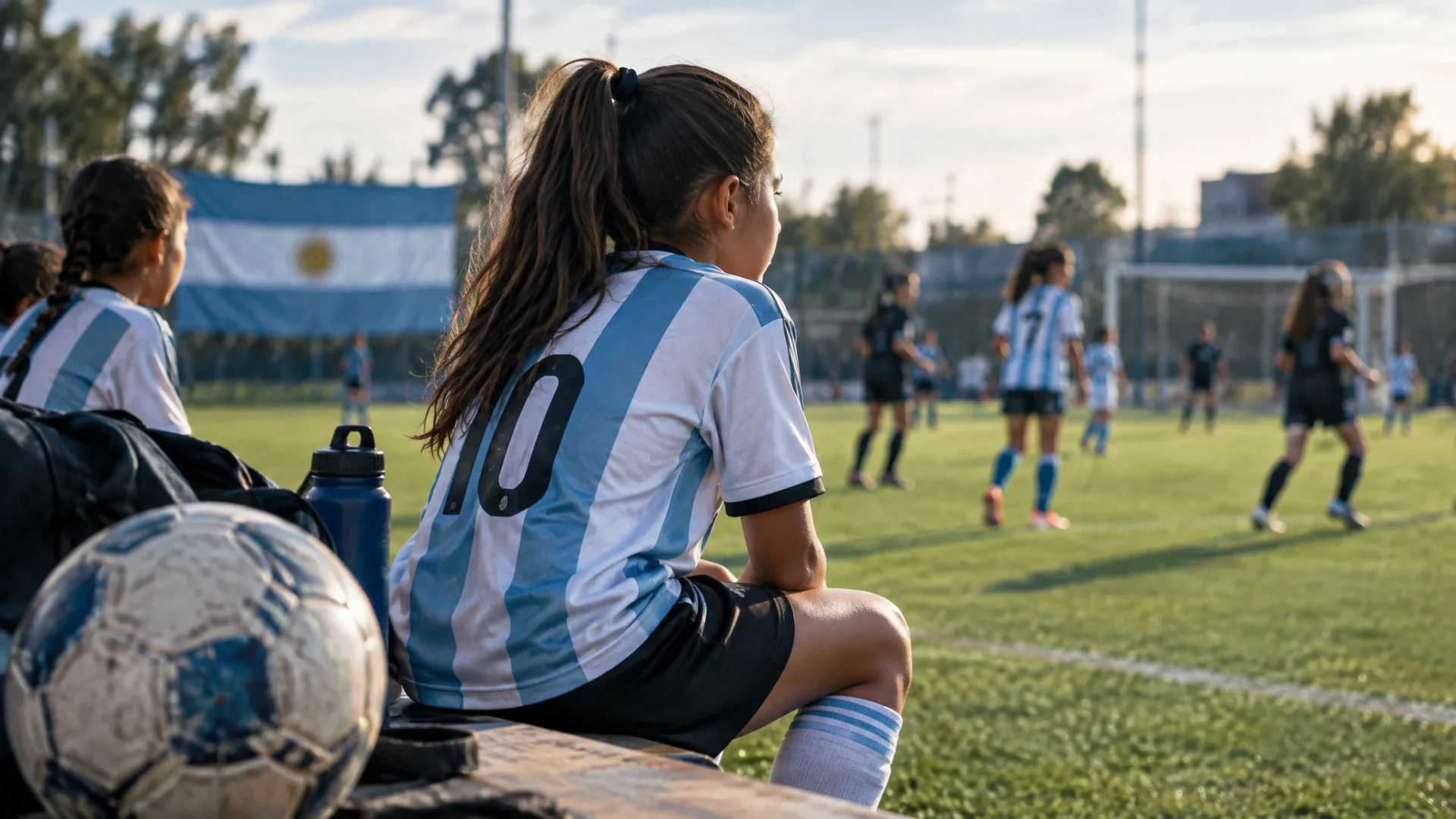
Argentina’s women’s game is finally moving beyond symbolic gestures. Abroad, the U-17 side’s presence in FIFA’s Morocco 2026 knockout-stage coverage shows that an Argentine youth team is now part of the level of competition international bodies are tracking. At home, the AFA has staged its first U-12 girls’ formative tournament, won by Platense 4-1 against Vélez. Nearly 60 young players took part in that inaugural edition, with more than 500 people attending.
Those facts do not prove the pathway is solid. They point to something more interesting: Argentina is beginning to stack steps. In women’s football, the difference between an event and a system is exactly there, in repetition. An inaugural tournament without a sequel is just a showcase. An U-17 category without a wider base remains an isolated peak. The useful question is not whether these milestones deserve applause; it is whether they can add up.
The real test: turning exposure into habit
The AFA presents this first U-12 as an early-development step for girls’ football. That is the right intent, but it only matters if it becomes routine: more teams, more matches, more girls moving from school to club without a break, and above all a clear link between age groups. Argentine women’s football does not need a discovery narrative; it needs a readable calendar and regular access.
Platense becoming the first champion matters less for the record book than for the signal it sends: some clubs are already able to absorb girls’ football at the base level, not just at senior or media-facing level. But a first champion proves very little on its own. What will matter is whether the AFA keeps the category alive, whether clubs invest in coaching, and whether the competition becomes a normal passage rather than a communication exercise.
Sources : [1] Asociación del Fútbol Argentino ↗
Argentina does not need a miracle, it needs a chain
Women’s football is rarely built from the top down. It grows through early entry, frequent matches and clear bridges to higher age groups. That is why the link between the U-17 team visible abroad and the new U-12 tournament at home matters more than the trophy itself. If Argentina wants its young internationals to be more than exceptions, it has to make their route repeatable.
My view is straightforward: the AFA has made a good first move, but a first move is still fragile until it is followed by a second and then a third. Argentine football knows how to produce brilliant generations; now it has to produce a structure that carries them. Only then will the sparkle of an inaugural tournament and the visibility of an U-17 team on the world stage stop being isolated moments and start becoming a pipeline.
Read next
 Opinion
In Baku, FIFA’s new U-15 World Cup asks the right question: does more football actually mean better development?
FIFA’s first U-15 World Cup & Festival gives more federations repeated, competitive games. The real test is not the event’s scale in Baku, but what players take away from it.
 Inès ValençaLatin America & world football
 Opinion
San Lorenzo is suing itself through its former president
Why does San Lorenzo’s crisis go beyond a balance sheet? Because a former president is now demanding $270,000 from the club while the current board says it still needs about $700,000 just to unlock sporting operations.
Inès ValençaLatin America & world football Opinion
PSG and Les Marseillaises: when the shirt becomes a public instrument
PSG and Marseille are no longer just dressing a team: they are using the shirt as a civic, charitable and identity-making object. The real question is simple: who now controls the symbol — the club, the sponsor or the cause?
 Étienne MorelThe football, the clubs, the decisions
 The Sunday review
Morel on Sunday: French football needs to become easier to love
Fixtures move, television rights return to the negotiating table and ambitious clubs keep promising a brighter tomorrow. This week raises a quieter question than any transfer saga, but a more important one: what makes people want to come back for the next match?
Étienne MorelThe football, the clubs, the decisions Opinion
Inter de Limeira and the first real SAF decision: invest in the pitch first
The real test of a SAF is not a photo with famous names. It is where the money goes first, and at Limeira the opening move says a lot about governance.
Inès ValençaLatin America & world football Opinion
Borussia Dortmund’s Fan Mode asks a better question than bans: can rewards protect stadium atmosphere?
Dortmund is testing whether less phone use can be encouraged, not imposed. That matters because the club is trying to defend matchday feeling without turning supporters into content machines.
Inès ValençaLatin America & world football