
OM in Ligue 1: the club brands the stands, not the boots
Why does Marseille still look unified in the curve, while the players’ feet tell a different story? Because the official image and the real dressing-room habits no longer match.
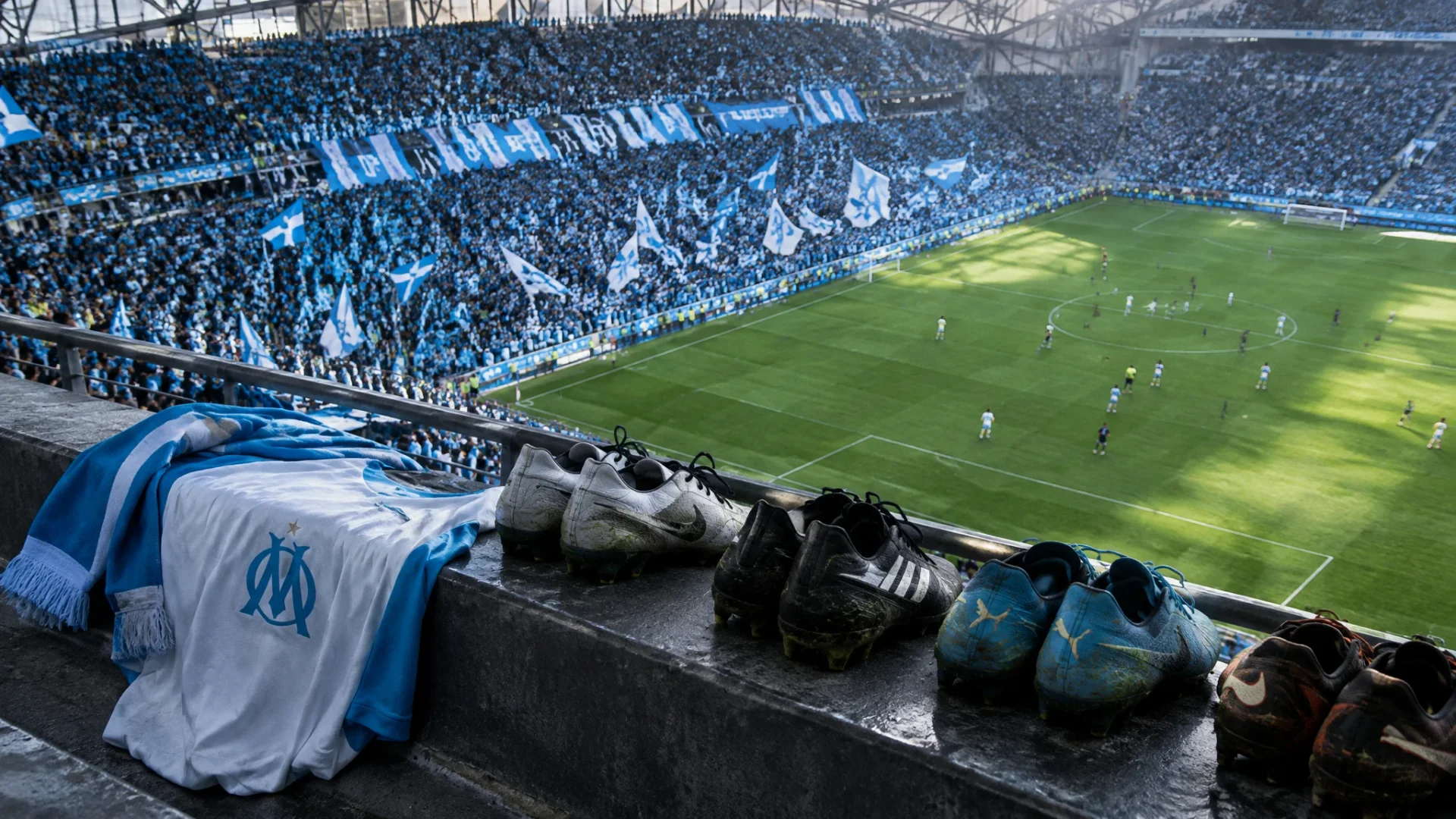
The shirt says OM; the boots say something else
In Marseille, kit culture still matters a great deal. The club’s identity is carried by what people see in the stands, on television and in the wider visual language of the team. But the pitch now undercuts any neat reading of that image. Footpack’s Ligue 1 boot survey shows that Puma still outfits Marseille, yet it appears on only 1 of the squad’s 22 pairs of boots this season, down from 5 last year.
That is not a niche collector’s note. It shows how a club can control the look without controlling the use. The shirt remains a shared front; the boots reveal players’ technical habits, brand loyalties and personal choices. In Marseille, that gap has become too large to ignore.
Sources : [1] Footpack ↗
The supporters’ end still speaks a collective language
OM still presents supporter culture as something organised and alive. On the club’s official supporters page, the Vélodrome is described as a place shaped by chants, tifos, travel and solidarity. The North and South stands are central to that identity, and several supporter groups are listed as part of the club’s atmosphere.
That is where Marseille still feels coherent. The club knows how to dress a crowd, how to give it colours, symbols and a shared story. What it cannot do as neatly is impose a single aesthetic on the boots of the players themselves. That is not a disaster, but it is revealing: the institution controls the stage more easily than the real-life habits of those performing on it.
Sources : [2] OM.FR ↗
The issue is not Puma. It is the confusion of signs
It would be too easy to read this as a defeat for the official brand. The more interesting point is broader: in modern football, the kit supplier is no longer the automatic owner of the club’s visual identity. It can dress the collective without dictating the full silhouette of the team. Footpack’s wider Ligue 1 study makes the point clearly: a shirt brand can be a minority on the feet, even at a club it outfits.
For Marseille, that split between the stand and the dressing room is almost fitting. The club still commands a powerful symbolic bond with its supporters, but that bond no longer transfers mechanically to the objects the players wear. The curves still manufacture identity; the boots now belong to the open market. That is why OM should be read as a culture club first, and as a commercial showcase only second.
Sources : [1] Footpack ↗[2] OM.FR ↗
What supporters actually see
The lesson is simple enough. Marseille can keep projecting a strong identity without pretending it controls every detail of appearance. Supporters are not buying a shirt alone; they defend a way of being in the stadium, a shared memory and a popular style that goes beyond merchandising. That is the energy the club stages on its official channels, and it is what makes OM different from a simple retail product.
But there is a limit the club has to accept: the more it talks about culture, the more it has to admit that culture does not always obey the brand. Players’ feet are not an automatic extension of the shop window. In Marseille, that is actually healthy. The club can still produce symbols, but it cannot confuse symbols with ownership.
Sources : [1] Footpack ↗[2] OM.FR ↗
Read next
 Opinion
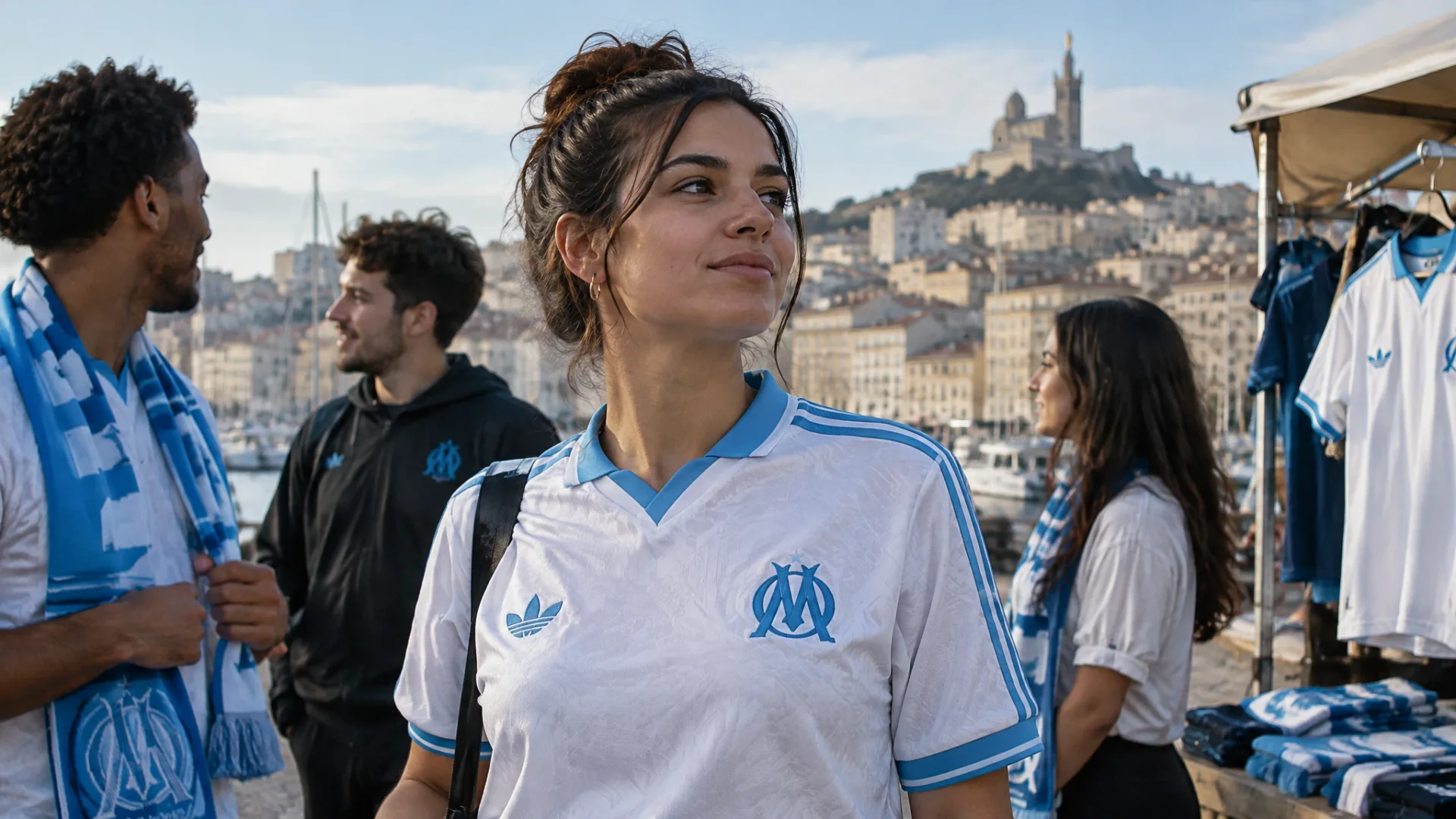
OM and Adidas: why the comeback is a shirt, terrace and market reset
Why does Adidas’s return to Olympique de Marseille matter beyond the badge? Because it reconnects the club’s visual memory, terrace culture and shirt economy in one move.
 Basil ArtemoffTerraces, Marseille & style
 Opinion
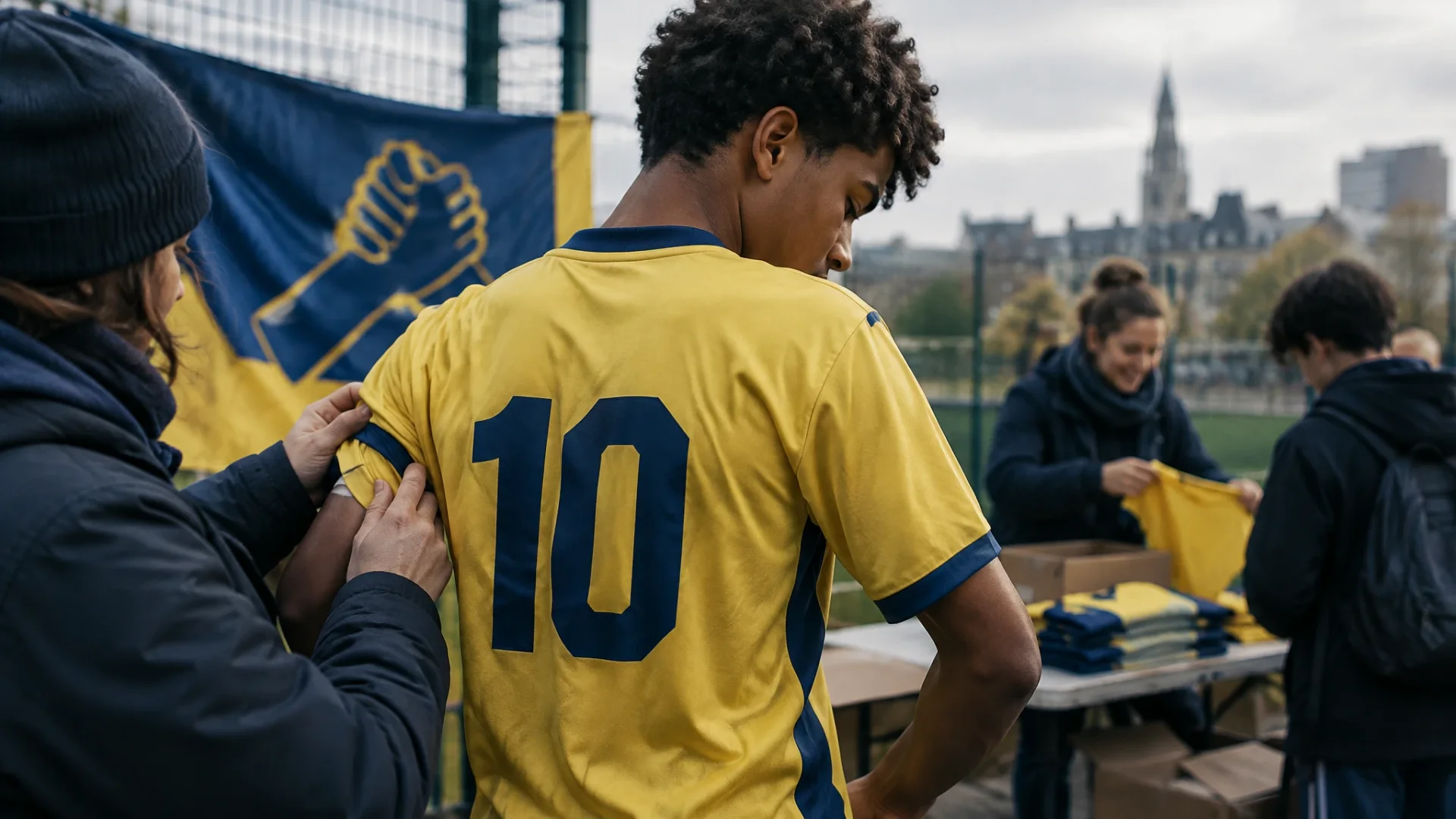
Union Saint-Gilloise, Kappa and the civic shirt: who gets to define it?
From Brussels to Marseille, the football shirt is no longer just a colour swatch for sale: it can organise solidarity. But when a garment turns civic, who really defines its meaning — the club, the brand, or the stand?
Basil ArtemoffTerraces, Marseille & style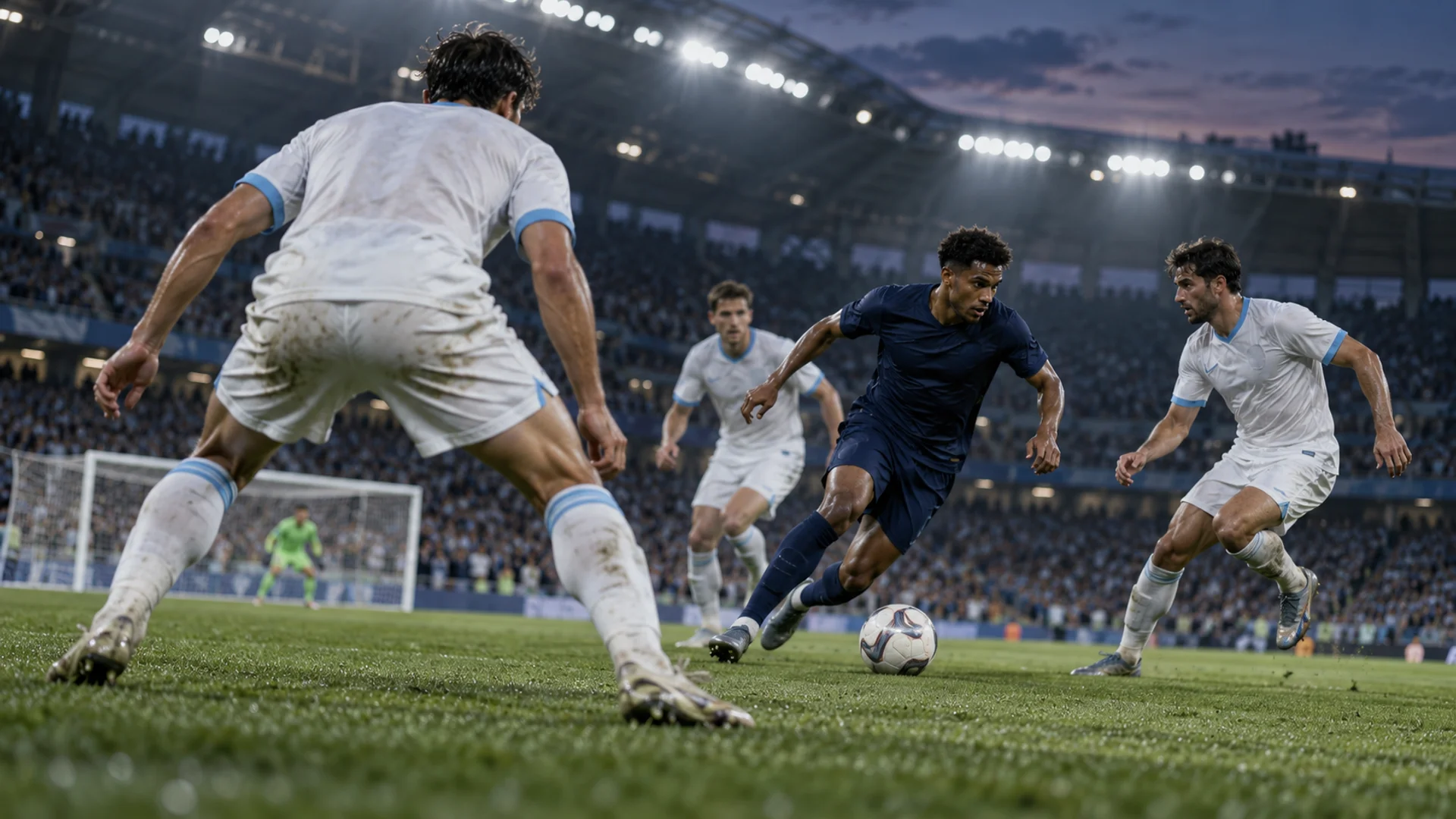 Opinion
Marseille finally has a shape. The problem is what happens after 60 minutes
Against Le Havre, OM looked structurally clearer for an hour before unraveling. The issue is no longer finding a starting shape, but keeping it alive.
Basil ArtemoffTerraces, Marseille & style Opinion
Marseille and the Vélodrome: when the Nord stand becomes a tactical handicap
What is a team worth when it is finally playing better just as its stadium loses part of its voice? Marseille’s sanction is a reminder that a club cannot cleanly separate performance from stand-side disorder.
 Étienne MorelThe football, the clubs, the decisions
 Opinion
Espanyol, Marseille, Footpack: shirts are becoming voted-on, market-tested culture pieces
When a club lets supporters choose a home shirt and a study shows boot choice already sits outside shirt sponsorship, who still controls club identity?
Basil ArtemoffTerraces, Marseille & style Opinion
OM, the Virages and the shirt: Marseille won’t let brands own the meaning
Why Marseille supporter culture still offers the clearest reading of the modern football shirt: clubs and brands package meaning in drops, while Marseille’s groups create it themselves through banners, chants and public space.
Basil ArtemoffTerraces, Marseille & style