
Espanyol, Marseille, Footpack: shirts are becoming voted-on, market-tested culture pieces
When a club lets supporters choose a home shirt and a study shows boot choice already sits outside shirt sponsorship, who still controls club identity?
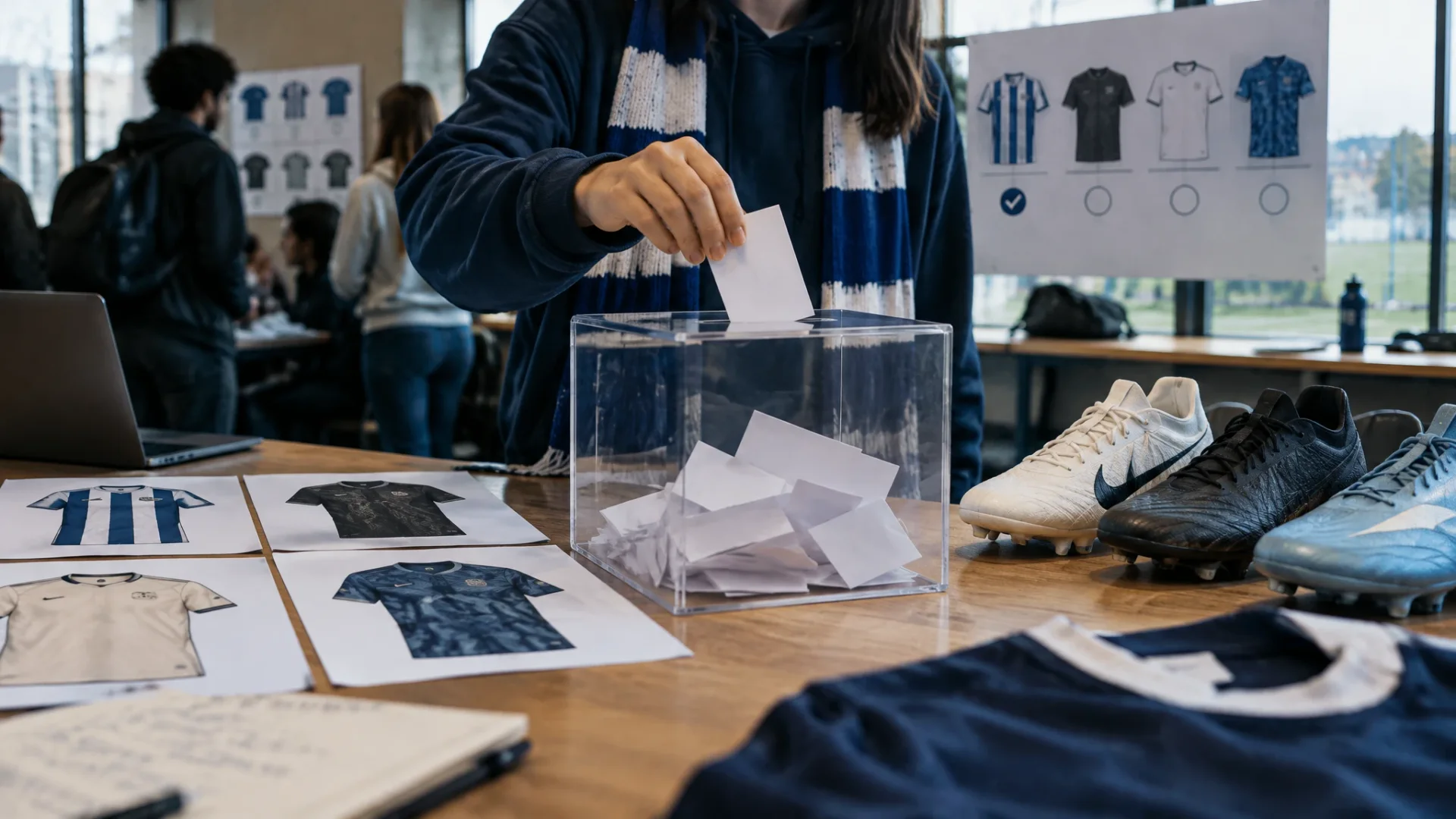
The shirt is no longer a fixed block
Espanyol has opened a supporters’ vote for its next home shirt, tied to the club’s 126th anniversary. The move matters because it shifts some power toward the stands: the shirt is no longer shaped only by a club–manufacturer conversation, but also by collective taste. This is not pure democracy, of course. It is a controlled vote, from a closed set of options. Still, the act of asking the public says a lot: the shirt is no longer just a symbol, it is a negotiated object.
That shift is not trivial for supporters. For a long time, the home shirt worked as a stable marker: a colour, a stripe, a memory. The more it is opened to consultation, the more the club admits it can be reshaped by the mood of the moment. That may flatter fan attachment, but it can also dilute the garment’s core strength: its ability to resist trends and launch-campaign churn.
Sources : [2] Dégaine ↗
Marseille shows how mixed the codes have become
Footpack’s study of boots worn by players across all 18 Ligue 1 squads for the 2026-27 season shows a different kind of shift: the club’s kit sponsor no longer tells you much about what the players actually wear on their feet. The piece argues that shirt sponsorship now explains very little about boot choice, and Marseille is the sharpest example: Puma is still the shirt sponsor in the final year of its contract, yet only one player out of 22 wears Puma boots. In other words, the visual identity on the chest no longer organises the whole look of the team.
Footpack also says Adidas leads in 14 clubs, including eight that it does not dress on the shirt. That split is important because it shows modern football as a bundle of separate decisions, technical preferences and contracts that do not always line up neatly. For a club like Marseille, where image carries as much weight as performance, the result is almost ironic: the shirt speaks of belonging, while the boots tell a different story.
Sources : [1] Footpack ↗
From supporter-consumer to supporter-arbiter
The link between Espanyol’s vote and Footpack’s findings is simple: the shirt is no longer purely imposed. On one side, clubs test public reaction before locking in a design; on the other, players already exercise near-total autonomy on the pitch, even when the match kit suggests unity. We are no longer just looking at a club; we are looking at a permanent negotiation between institution, brand and individual use.
I find that shift fascinating, but not automatically healthy. It gives supporters the feeling of greater control, while the real framing often remains tightly managed by the club. But it also exposes a more honest truth: football identity has become participatory, fragmented and market-tested. Fans are no longer there only to applaud a design handed down from above; they are also asked to comment on it, sort it and legitimise it. That is lively, but it can quickly become decorative if the vote leads to little more than a catalogue variation.
Sources : [2] Dégaine ↗[1] Footpack ↗
Why supporters should care
Supporters should care because the shirt is not a shop-floor detail; it is a piece of culture. When it is put to a vote, it comes closer to a common good. When it is split apart by boot choices, it reveals the industrial reality of modern football. In both cases, the message is the same: the uniform is no longer fully uniform.
For Marseille and for other clubs, the real question is not whether a shirt looks good on a launch graphic. It is who decides, when, and with how much honesty. A club can listen to supporters without turning every consultation into marketing theatre. It can also defend a clear identity without pretending everything is negotiable. That is where credibility lives. And that is why these two stories, one in Barcelona and one in Ligue 1 boot data, speak directly to supporter culture.
Sources : [1] Footpack ↗[2] Dégaine ↗
Read next
 Opinion
OM, the Virages and the shirt: Marseille won’t let brands own the meaning
Why Marseille supporter culture still offers the clearest reading of the modern football shirt: clubs and brands package meaning in drops, while Marseille’s groups create it themselves through banners, chants and public space.
 Basil ArtemoffTerraces, Marseille & style
 Opinion
At the Vélodrome, OM’s supporters are still the club’s most stable asset
When the club wobbles, the stand holds. And as shirts turn into cultural objects, Marseille is a reminder that a demanding crowd is worth more than any launch campaign.
Basil ArtemoffTerraces, Marseille & style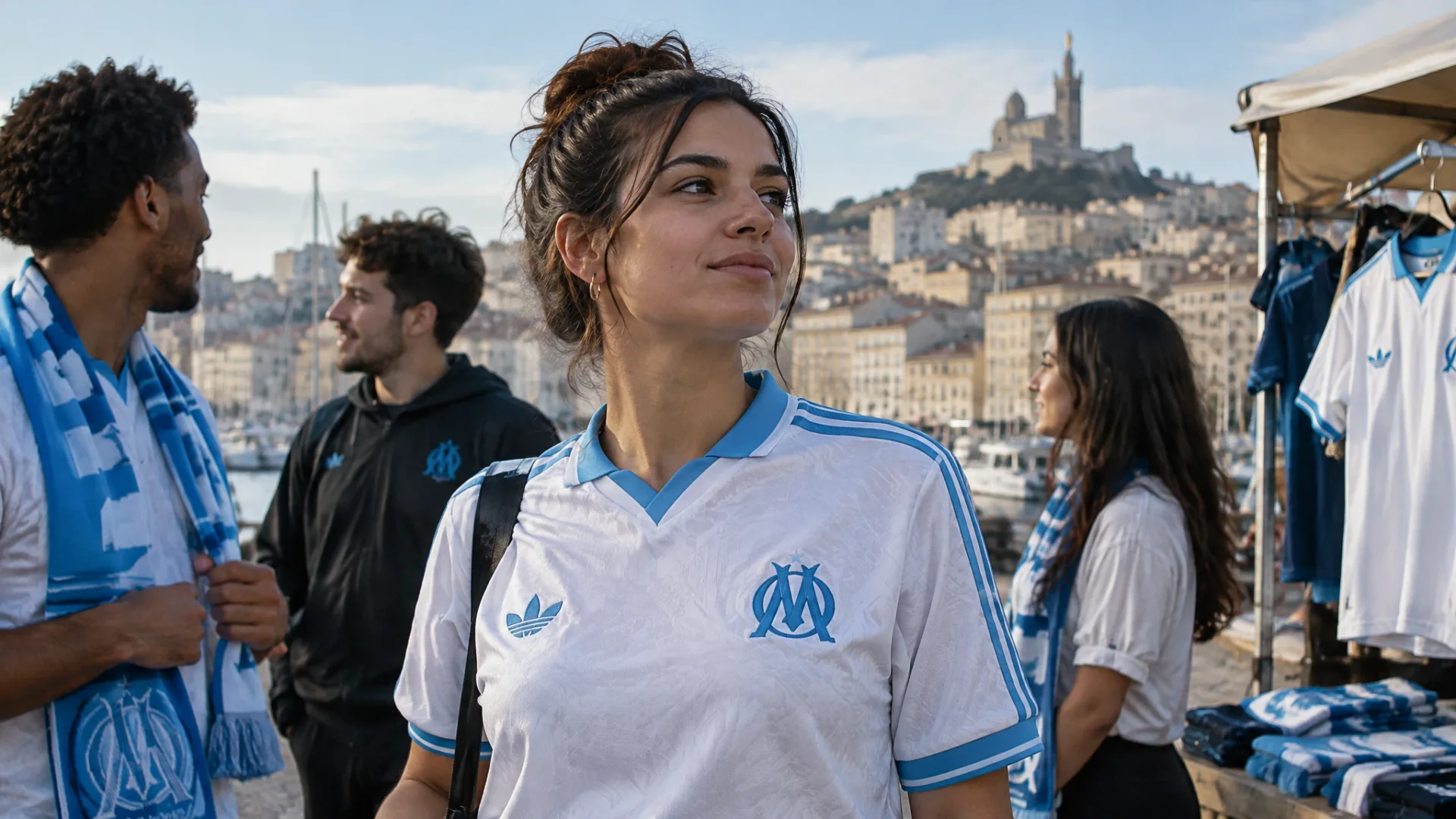 Opinion
OM and Adidas: why the comeback is a shirt, terrace and market reset
Why does Adidas’s return to Olympique de Marseille matter beyond the badge? Because it reconnects the club’s visual memory, terrace culture and shirt economy in one move.
Basil ArtemoffTerraces, Marseille & style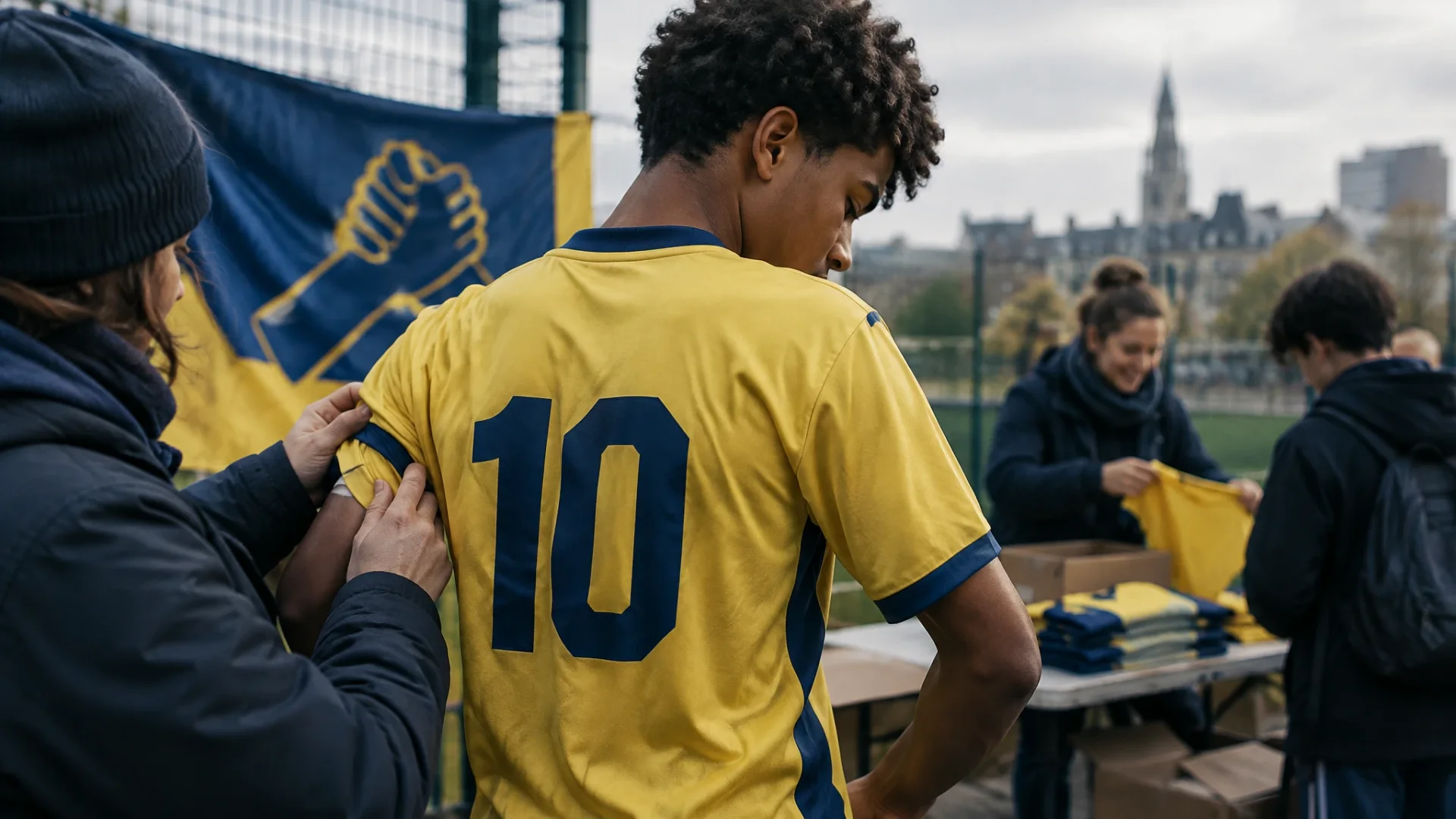 Opinion
Union Saint-Gilloise, Kappa and the civic shirt: who gets to define it?
From Brussels to Marseille, the football shirt is no longer just a colour swatch for sale: it can organise solidarity. But when a garment turns civic, who really defines its meaning — the club, the brand, or the stand?
Basil ArtemoffTerraces, Marseille & style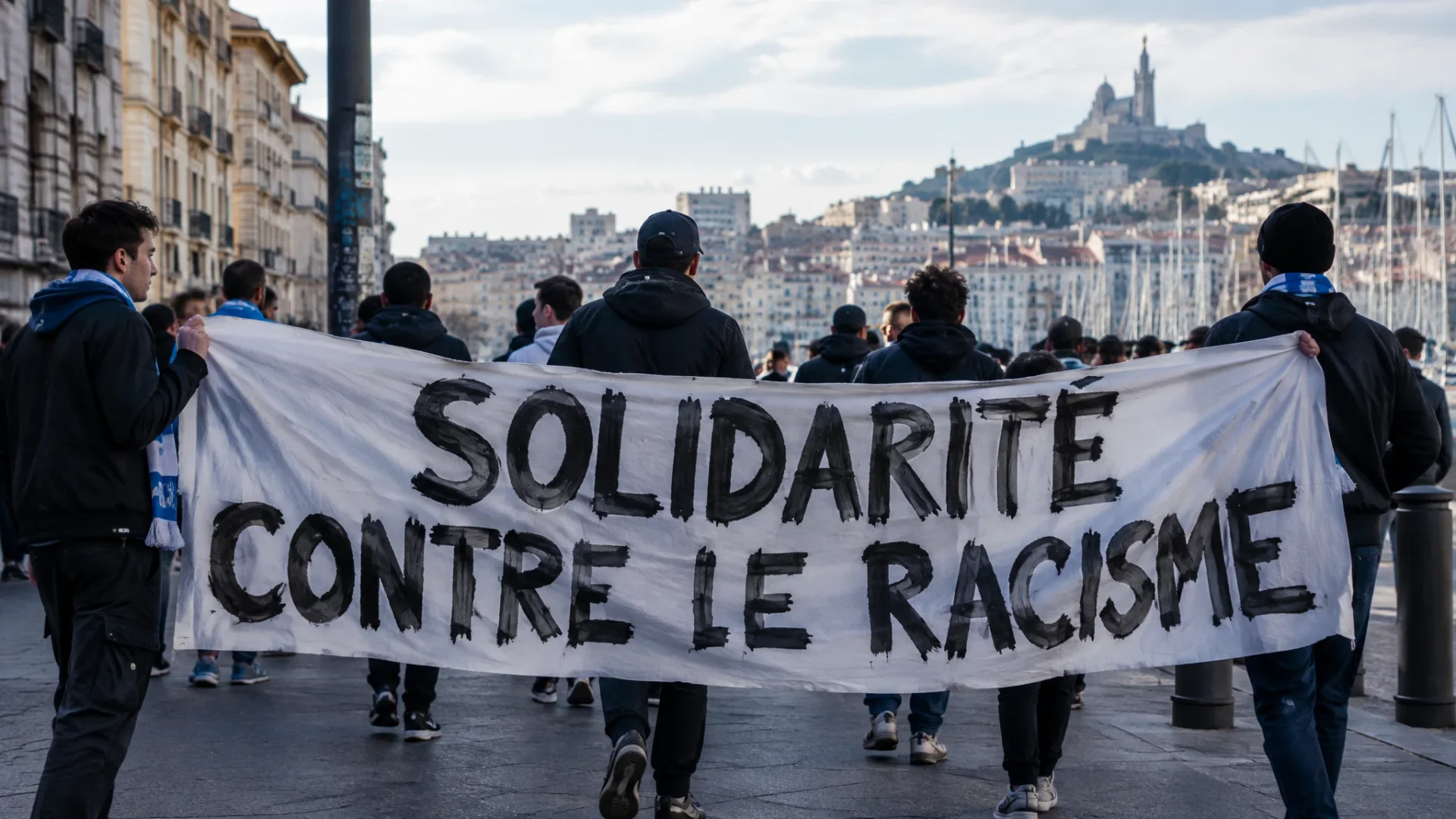 Opinion
OM, the MTP and the banner as a civic act in Marseille
After Trappes, the MTP did more than protest: it moved the terrace into the city and turned a banner into a public anti-racism statement.
Basil ArtemoffTerraces, Marseille & style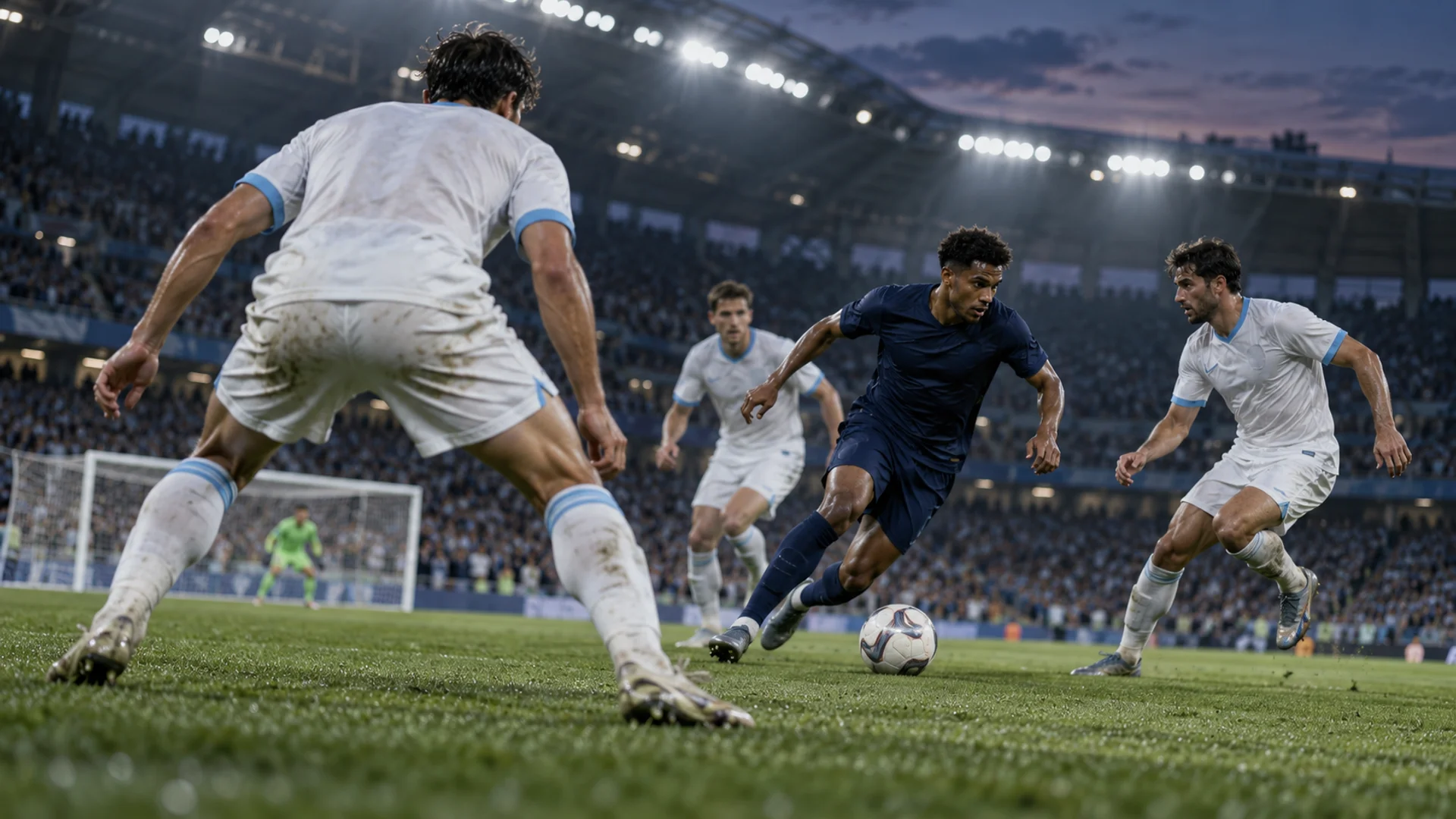 Opinion
Marseille finally has a shape. The problem is what happens after 60 minutes
Against Le Havre, OM looked structurally clearer for an hour before unraveling. The issue is no longer finding a starting shape, but keeping it alive.
Basil ArtemoffTerraces, Marseille & style