
OM, PUMA and adidas boots: in Marseille, the shirt no longer runs the whole show
In Marseille, the shirt still matters. But the boots tell a different story: players now have far more autonomy than the club’s kit deal suggests.
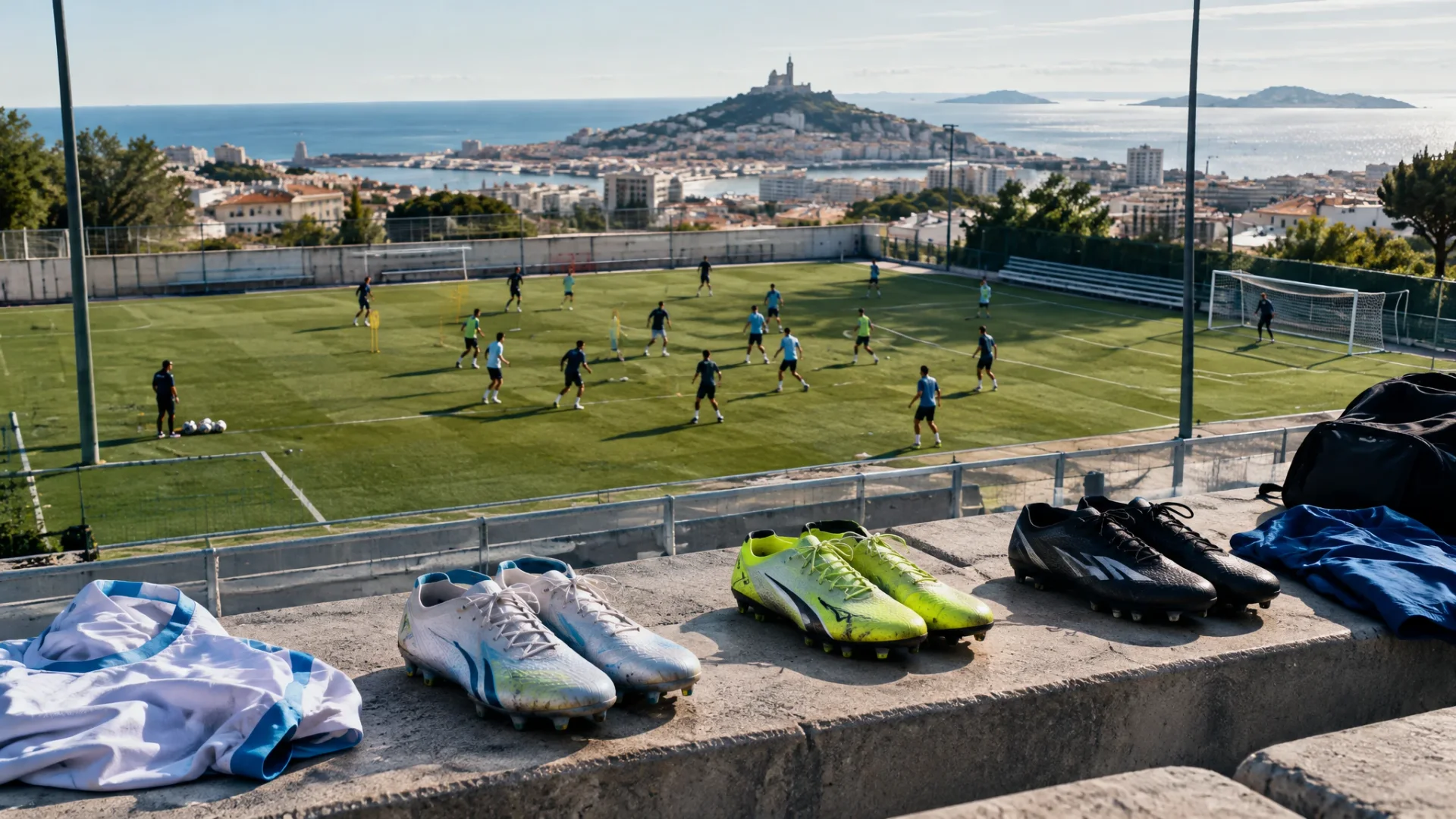
The shirt still speaks, but it no longer dictates
In modern football, the shirt still carries enormous symbolic weight. It frames the supporter’s eye, anchors belonging and projects the club’s image. But it no longer sets the full aesthetic of the pitch on its own. The useful distinction is no longer just between a good shirt and a bad one: it is between a garment designed for the stand and an object worn on the body of a player who follows other logics.
Marseille is a strong example. Shirts there remain a serious subject, almost political, because they touch the club’s popular identity. But if you focus only on the jersey, you miss how match-day style is now built in two parts: the shirt on one side, the boots on the other. Those two languages do not always say the same thing anymore.
Sources : [2] Dégaine ↗[1] Footpack ↗
In Marseille, the shirt contract does not control the boots
Footpack says PUMA still dresses OM for the final year of its contract, yet only one player out of 22 wears PUMA boots. That is highly revealing: the club shirt can remain under a clear commercial banner while the players’ feet mostly escape that logic. The old mechanical link between a club’s shirt supplier and the boots worn by the squad no longer really holds.
The same piece adds that adidas leads in 14 Ligue 1 clubs, including eight it does not dress. In other words, the boot has become autonomous. For supporters, that changes the visual code: a crest on the chest is no longer enough to explain the team’s full look. Football has kept its sponsors, but it has given players a much wider style margin than the shirt alone can control.
Sources : [1] Footpack ↗
Shirt culture also lives outside the elite
This shift is not just a wardrobe detail. It says something about how football culture now travels. Dégaine makes that clear by publishing a ranking of the best shirts from second-tier leagues across Europe, from the Championship to Serie B, via Liga 2 and Bundesliga 2. The subject is no longer reserved for the biggest clubs or the most visible showcases.
That is good news, provided we keep a critical eye. The shirt has not magically become “lifestyle”; it is still a club object, a collective narrative and a commercial asset. The point is to separate design work, brand strategy and terrace passion. In Marseille, that distinction matters even more because OM lives under constant scrutiny from its popular codes, and every visual detail is read like a statement.
Sources : [2] Dégaine ↗
The real shift is aesthetic, not emotional
The shirt has not lost value; it has lost its monopoly. That is where supporter reading needs to become more precise. Fans still identify with the jersey, but players also compose their image through their boots, comfort, preferences and personal visual signature. The club mark on the shirt is no longer enough to contain the whole picture.
Marseille deserves exactly that level of nuance. In a city where the shirt is a living language, you can still defend the idea of a strong, legible jersey without refusing to criticise the effects of branding. But you have to accept that the pitch has become a collage: one club, one sponsor, bodies, and boots moving on their own path. That is not a betrayal of football. It is proof that football now speaks several alphabets at once.
Sources : [1] Footpack ↗[2] Dégaine ↗
Read next
 Opinion
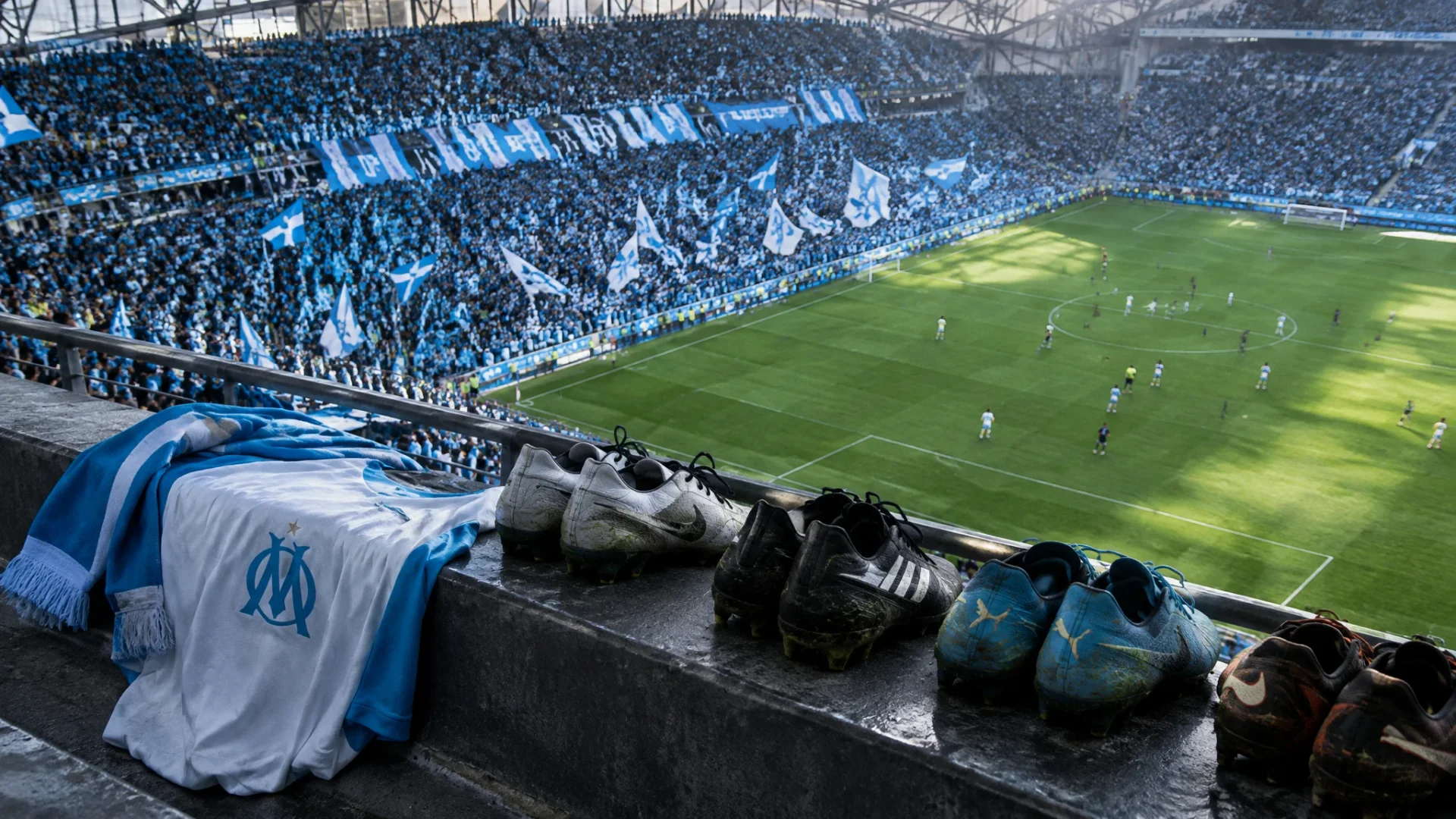
OM in Ligue 1: the club brands the stands, not the boots
Why does Marseille still look unified in the curve, while the players’ feet tell a different story? Because the official image and the real dressing-room habits no longer match.
 Basil ArtemoffTerraces, Marseille & style
 Opinion
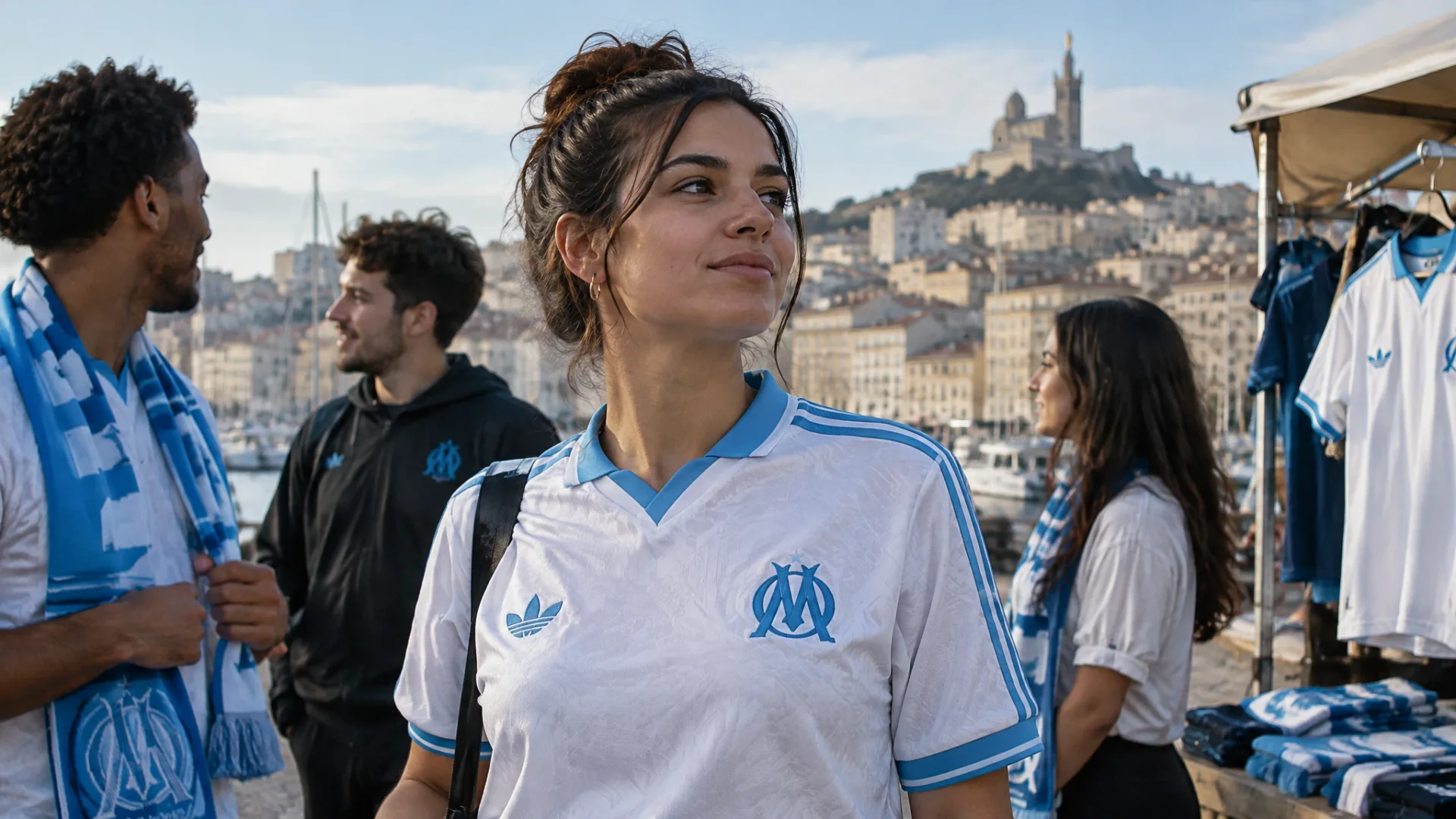
OM and Adidas: why the comeback is a shirt, terrace and market reset
Why does Adidas’s return to Olympique de Marseille matter beyond the badge? Because it reconnects the club’s visual memory, terrace culture and shirt economy in one move.
Basil ArtemoffTerraces, Marseille & style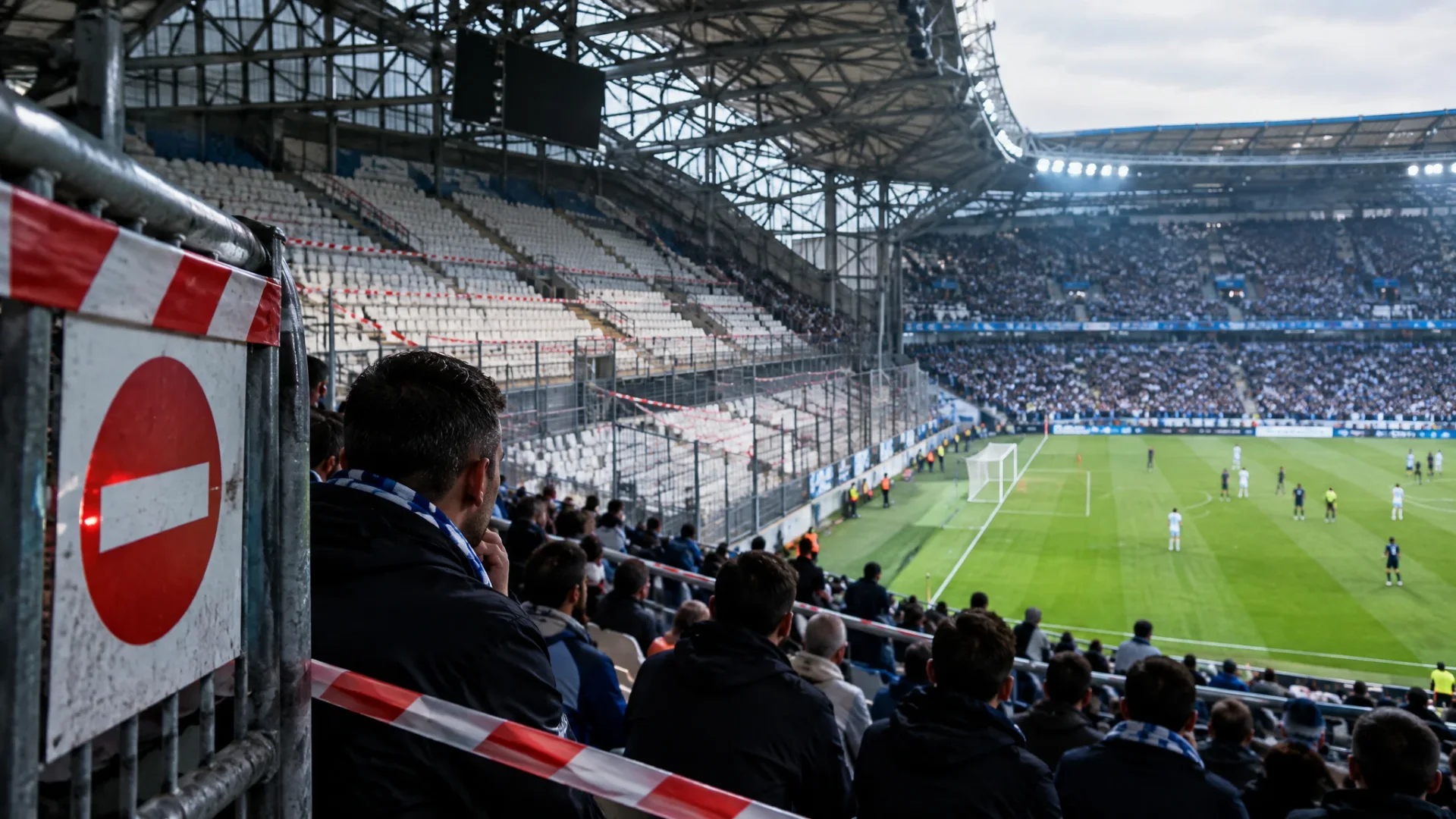 Opinion
Marseille and the Vélodrome: when the Nord stand becomes a tactical handicap
What is a team worth when it is finally playing better just as its stadium loses part of its voice? Marseille’s sanction is a reminder that a club cannot cleanly separate performance from stand-side disorder.
 Étienne MorelThe football, the clubs, the decisions
 Opinion
Union Saint-Gilloise, Kappa and the civic shirt: who gets to define it?
From Brussels to Marseille, the football shirt is no longer just a colour swatch for sale: it can organise solidarity. But when a garment turns civic, who really defines its meaning — the club, the brand, or the stand?
Basil ArtemoffTerraces, Marseille & style Opinion
Marseille finally has a shape. The problem is what happens after 60 minutes
Against Le Havre, OM looked structurally clearer for an hour before unraveling. The issue is no longer finding a starting shape, but keeping it alive.
Basil ArtemoffTerraces, Marseille & style Opinion
Espanyol, Marseille, Footpack: shirts are becoming voted-on, market-tested culture pieces
When a club lets supporters choose a home shirt and a study shows boot choice already sits outside shirt sponsorship, who still controls club identity?
Basil ArtemoffTerraces, Marseille & style