
OM, the MTP and the banner as a civic act in Marseille
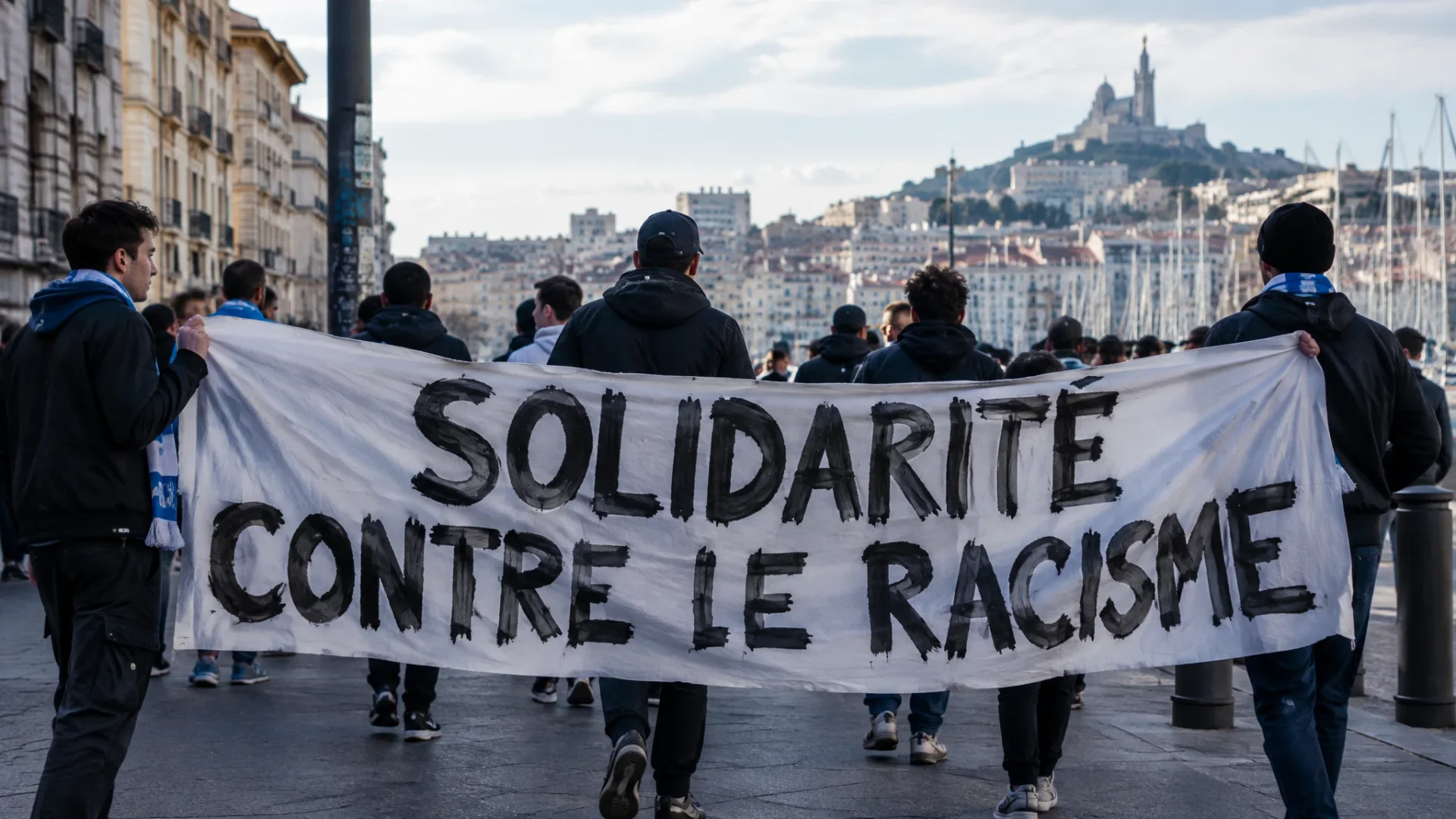
After Trappes, the MTP did more than protest: it moved the terrace into the city and turned a banner into a public anti-racism statement.
When Marseille steps beyond the stadium
What stands out in this Marseille sequence is not only the force of the message, but where it was placed. The Marseille Trop Puissant first displayed a banner under the Ombrière at the Vieux-Port, then near La Plaine, on 26 October, after the attack in Trappes. The wording reported — “LE RACISME TUE, SOLIDAIRES AVEC TRAPPES!” — condemned racism, Islamophobia and anti-Black racism. This was not a match-day tifo; it was a visible gesture in the city’s public space. [1]
That detail matters in Marseille. A stand does not speak only to the stadium; it can also address the city itself. Here, the MTP turns the banner into a civic sentence: plain, legible, impossible to dismiss as a mere burst of anger. Marseille’s supporter culture does not just voice disagreement; it seeks to place politics in the everyday streetscape. That is not a decorative footnote. It is a reminder that football in this city regularly spills beyond the pitch. [1]
Sources : [1] FootMarseille ↗
A banner is not only a punishment tool
People often reduce the terrace to its easiest function to describe: punishing, booing, targeting an owner or a board. In Marseille, the banner certainly serves that purpose too, and one recurring anti-Frank McCourt message at the Vélodrome before the Classique shows how established that language already is. It tells us something durable about Marseille’s supporter groups: the stretched cloth is not just an internal grievance board, but a street medium, able to assign responsibility out loud. [2]
The difference here is crucial. The MTP is not using a banner to keep the issue inside the club or to package a mood for effect. It uses it to move from a local club dispute to a wider, more serious issue that goes beyond OM. That is where an ultra culture shows maturity: it can shift from local conflict to public solidarity without abandoning its own voice. The gesture remains confrontational, but its target and its reach change. [1][2]
Sources : [2] L'Équipe ↗
Why this matters
It would be too easy to treat this banner as a one-off reaction to current events. That would miss what Marseille has long revealed: a terrace can produce common ground even while it speaks in the grammar of conflict. The MTP does not erase the combative side of support culture; it adds responsibility to it. In a city where football is social theatre as much as spectacle, that shift matters. [1][2]
The value of this kind of action is that it does not hide behind false neutrality. The banner states clearly what it rejects, and it does so in a language Marseillais recognise immediately. It is more than an emotional response: it is a way of occupying public space with the codes of the stadium, without losing political clarity. In that sense, the MTP shows that Marseille ultra culture is not just anger and choreography. It can also function as civic vigilance. [1]
Sources : [1] FootMarseille ↗[2] L'Équipe ↗
Read next
 Opinion
Marseille finally has a shape. The problem is what happens after 60 minutes
Against Le Havre, OM looked structurally clearer for an hour before unraveling. The issue is no longer finding a starting shape, but keeping it alive.
 Basil ArtemoffTerraces, Marseille & style
 Opinion
At the Vélodrome, OM’s supporters are still the club’s most stable asset
When the club wobbles, the stand holds. And as shirts turn into cultural objects, Marseille is a reminder that a demanding crowd is worth more than any launch campaign.
Basil ArtemoffTerraces, Marseille & style Opinion
Marseille and the Vélodrome: when the Nord stand becomes a tactical handicap
What is a team worth when it is finally playing better just as its stadium loses part of its voice? Marseille’s sanction is a reminder that a club cannot cleanly separate performance from stand-side disorder.
 Étienne MorelThe football, the clubs, the decisions
 Opinion
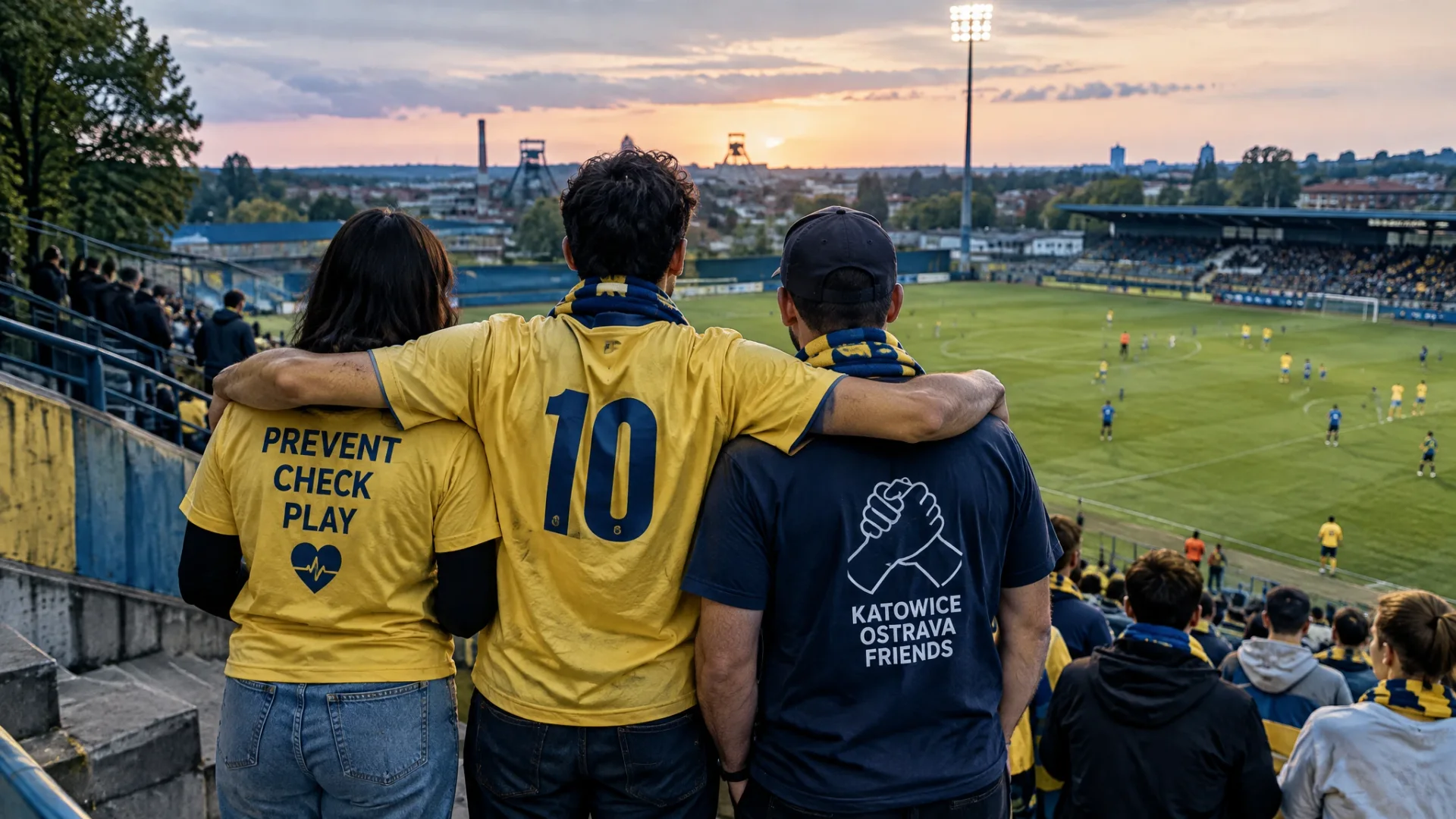
When the shirt serves the stand: Union Saint-Gilloise, Katowice–Ostrava, PSG
When a shirt becomes a public-health tool, a symbol of supporter friendship or the visible frame for a campaign, the real question is simple: does it serve the club, the brand or the terrace first?
Basil ArtemoffTerraces, Marseille & style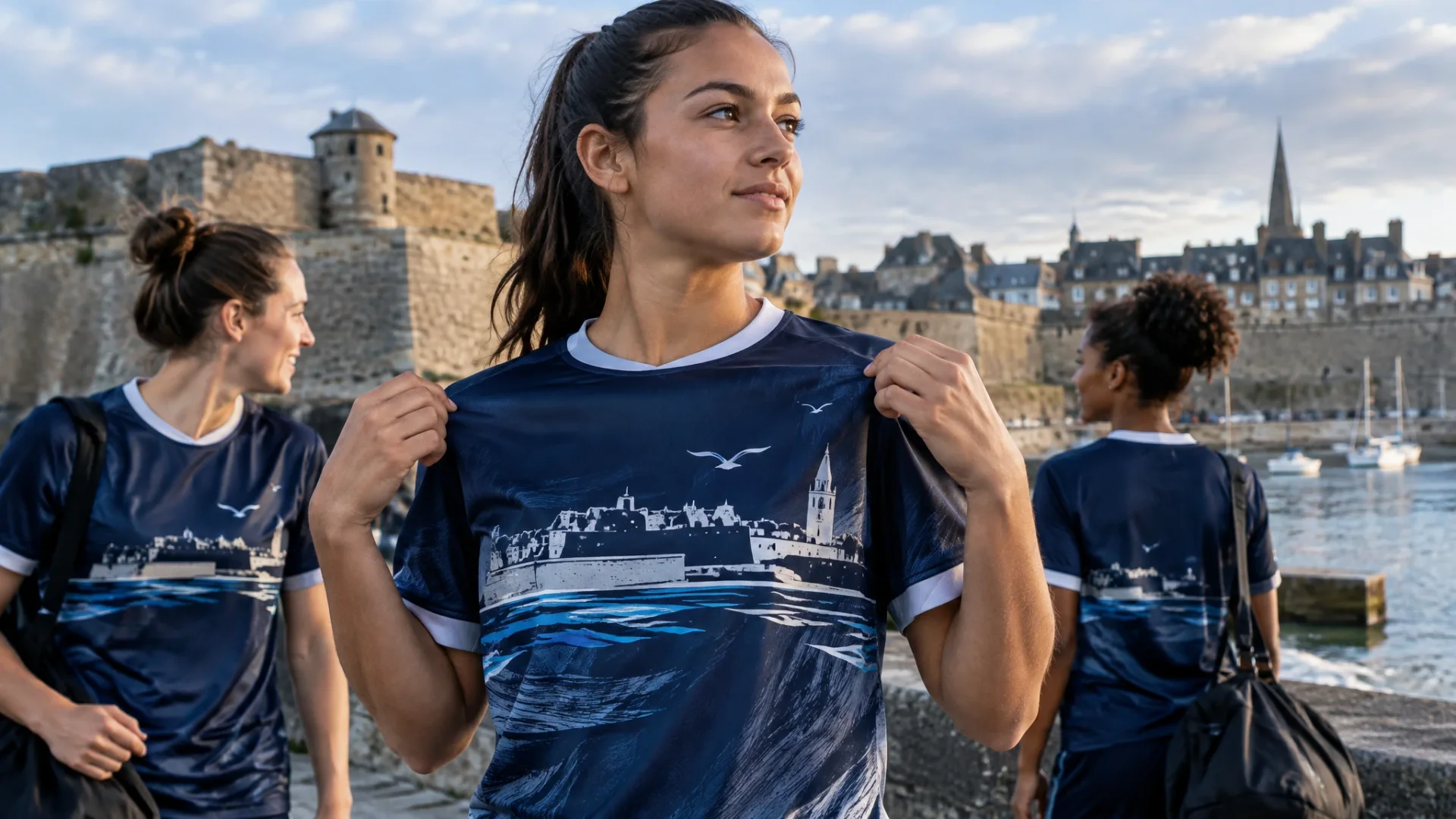 Opinion
US Saint-Malo, Les Marseillaises: when the shirt becomes an identity product
Why do special editions now say as much about the club as about the city, and why would Marseille recognise the pattern immediately?
Basil ArtemoffTerraces, Marseille & style