
Argentina U-18 in Dakar: a 4-2 win that proves less than it promises
The Dakar 2026 final is a useful stress test for Argentina’s U-18 futsal pathway: a clean result, yes, but also a squad drawn from major clubs and smaller sides, which says something about the route, not just the scoreboard.
A useful result, not a full verdict
The 4-2 win over Morocco sent Argentina’s U-18 side into the final of the Dakar 2026 Youth Olympic Games. That is a fact worth respecting: in a short tournament, every match matters, and a semifinal won clearly is better evidence than vague talk about “potential”. But it would be a mistake to turn that result into automatic proof of a national model working perfectly. A two-goal margin tells you about one evening, not yet about a whole pathway.
What matters here is the difference between a bright scoreboard and a durable development line. A youth team can produce a sharp performance in one setting without that guaranteeing a lasting step up to the next level. So the right question is not “is Argentina strong?”, but “what development base makes this kind of match repeatable?”
The context matters: Dakar 2026 is a youth event, not a senior tournament. That is exactly why the result should be read carefully. It offers a showcase, not a final judgment on a generation.
A squad that looks like a network
The squad list says something more interesting than the celebratory headline: it includes players from River Plate, Boca Juniors, Kimberley AC, Camioneros, América del Sud and Estudiantil Porteño. That is not a decorative detail. The mix of big-name clubs and smaller local sides suggests a scouting and selection chain that is not limited to the two giants of Buenos Aires, even if their gravity remains obvious.
That is where the story becomes useful as football analysis. If selection came only from two or three showcases, we would be looking at a narrow funnel. Here, the presence of smaller clubs points to a broader circulation of talent. That does not prove equal access, or an ideal system; it simply shows that the route to the national side runs through several doors, which is already meaningful football evidence.
Still, the mix should not be overread as proof of depth by itself. A squad is a sample. The real test is whether this network keeps producing players who can raise the level over time, not just assemble a strong lineup for one tournament.
The trap of over-decorating youth wins
Official praise naturally wants to turn qualification into a grand statement. That is understandable, and often convenient. But youth football is badly judged if you only look at the final bracket. A team may win because it handled the match better, because its intensity surprised the opponent, or because its current pool is deeper than the one across the pitch. None of that stops us from celebrating the win; it simply stops us from mistaking it for a complete diagnosis.
So this 4-2 should be treated as a test, not a coronation. Argentina have earned a final and, with it, a chance to show that this group can repeat its best sequences under pressure. That is the real value of a tournament like Dakar: it shows whether a team can do more than produce one sharp result.
Sources : [1] Asociación del Fútbol Argentino (AFA) ↗[2] TyC Sports ↗
Why a fan should care
Because this is where the difference becomes visible between a country that produces moments and a country that produces pathways. The two do not always match. Argentina’s U-18 futsal side has earned the right to be watched closely; now it has to show that its semifinal was not just a scoreboard spike, but the sign of a readable collective base.
The final against Portugal will say more than the post-match celebration. Not because one result decides a generation, but because it asks the essential question: can this side turn a convincing performance into a competitive habit? That difference, far more than a simple 4-2, is what deserves attention.
Sources : [1] Asociación del Fútbol Argentino (AFA) ↗[2] TyC Sports ↗
Read next
 Opinion
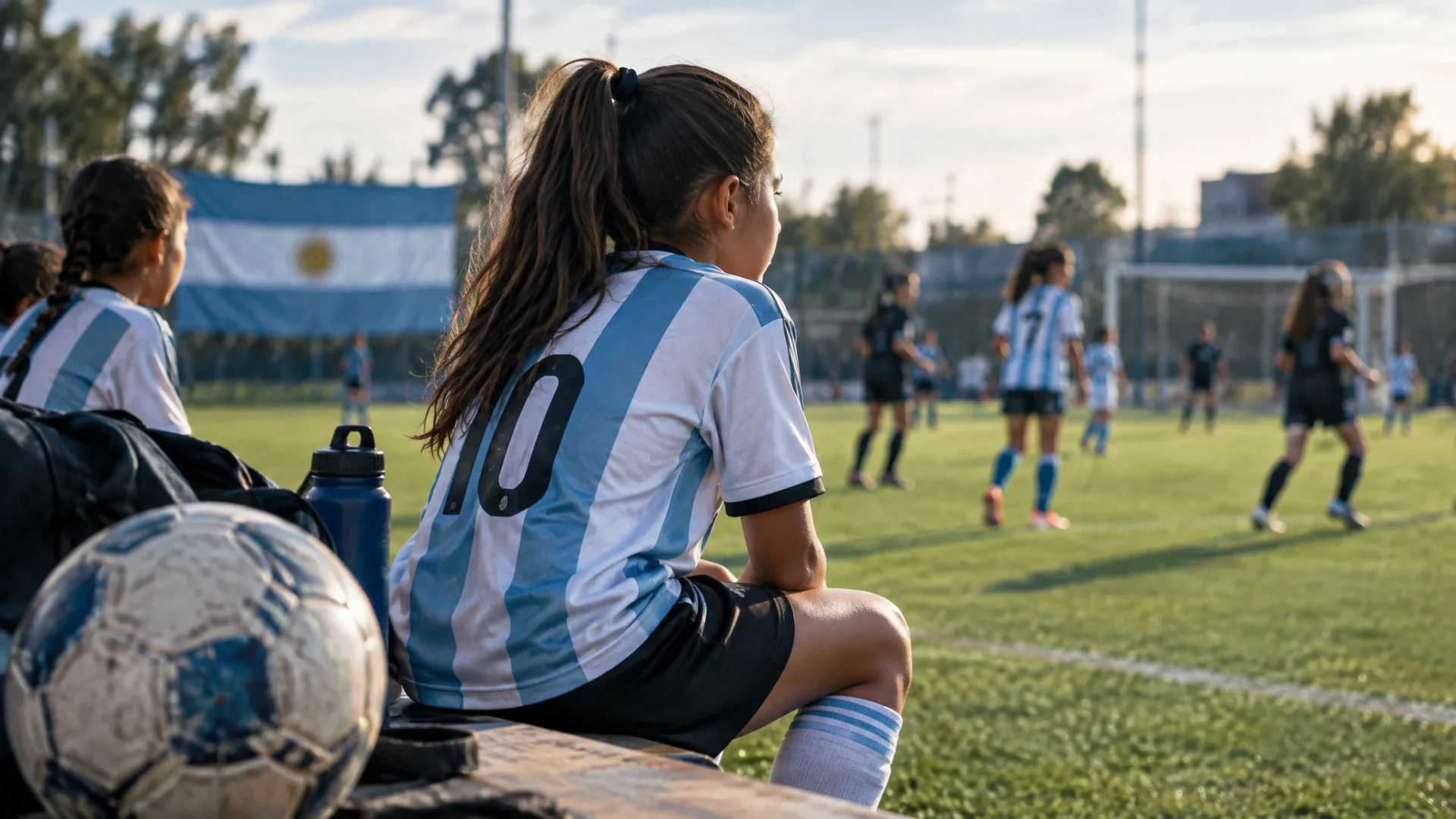
Platense, AFA’s U-12 girls’ tournament and the real question: can Argentina build a lasting pathway?
Argentina is starting to build its women’s pipeline from both ends: a visible U-17 team abroad and a first official U-12 girls’ tournament at home. The point is not celebration, but continuity.
 Inès ValençaLatin America & world football
 Opinion
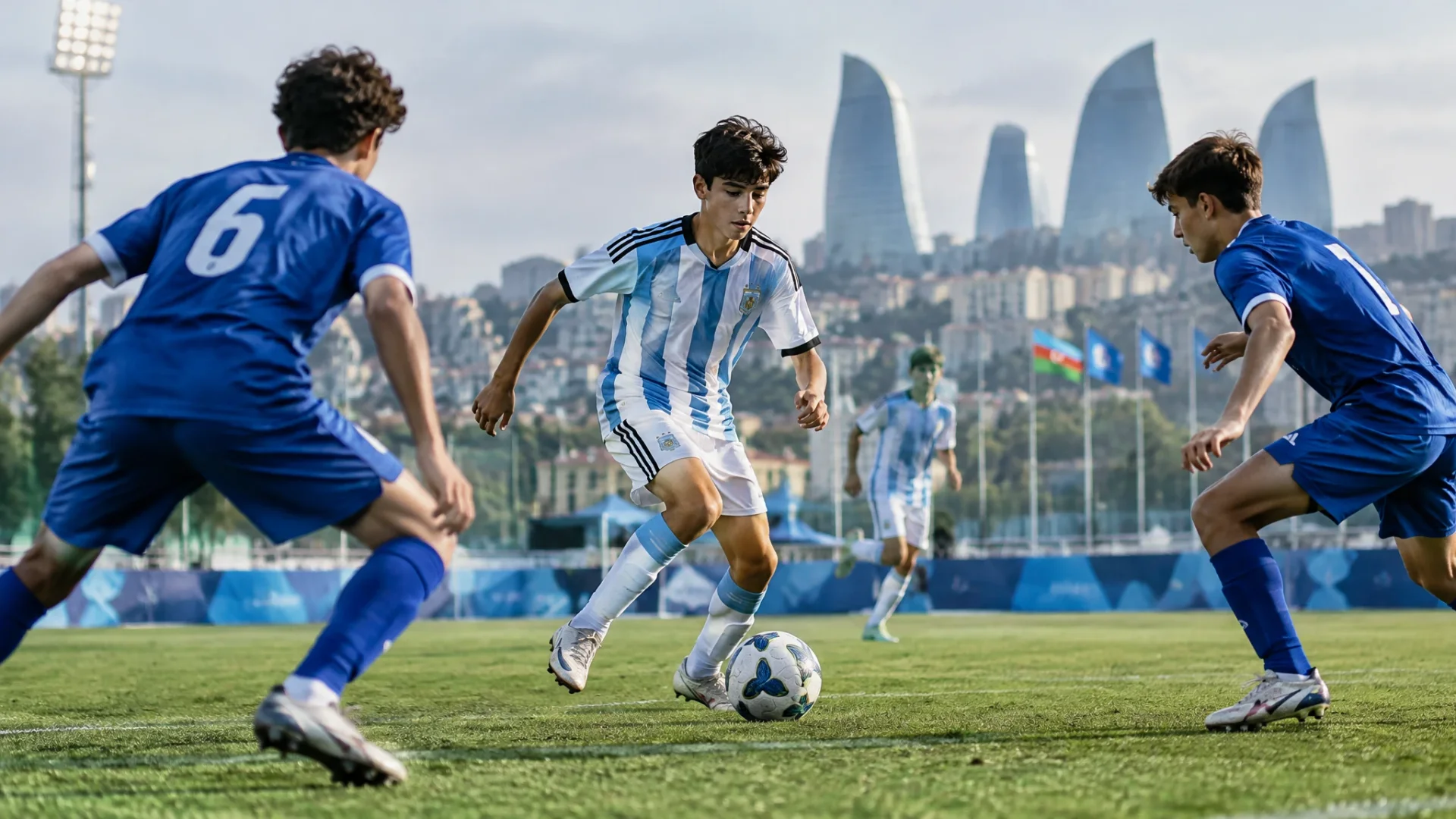
In Baku, FIFA’s new U-15 World Cup asks the right question: does more football actually mean better development?
FIFA’s first U-15 World Cup & Festival gives more federations repeated, competitive games. The real test is not the event’s scale in Baku, but what players take away from it.
Inès ValençaLatin America & world football Opinion
Futsal Finalissima 2026: penalties exposed the real hierarchy
Why did Brazil and Spain reach the final the hard way, and what does Argentina’s third-place run say about the gap that still separates elite futsal from the merely good?
Inès ValençaLatin America & world football Opinion
Futsal Finalissima 2026: Brazil chose details over spectacle
In Rio, Brazil beat Argentina on penalties in the Futsal Finalissima semifinal. Is this CONMEBOL-UEFA showcase just branding, or something more serious? It matters because it forces elite teams into a real competitive stage.
Inès ValençaLatin America & world football Opinion
AFA vs FIFA: how far should Argentina push its post-World Cup appeal?
Argentina is not just fighting a sanction. By taking the case further, AFA is testing how much control it really has over the discipline and narrative that collapsed around the 2026 World Cup.
Inès ValençaLatin America & world football Opinion
Uruguay, Argentina and the AFA: November is already manufacturing the post-Messi era
This November window is less about nostalgia than administration: squads, schedules and ticketing already show how the next cycle is being packaged.
Inès ValençaLatin America & world football