
In Baku, FIFA’s new U-15 World Cup asks the right question: does more football actually mean better development?
FIFA’s first U-15 World Cup & Festival gives more federations repeated, competitive games. The real test is not the event’s scale in Baku, but what players take away from it.

Baku as a live test
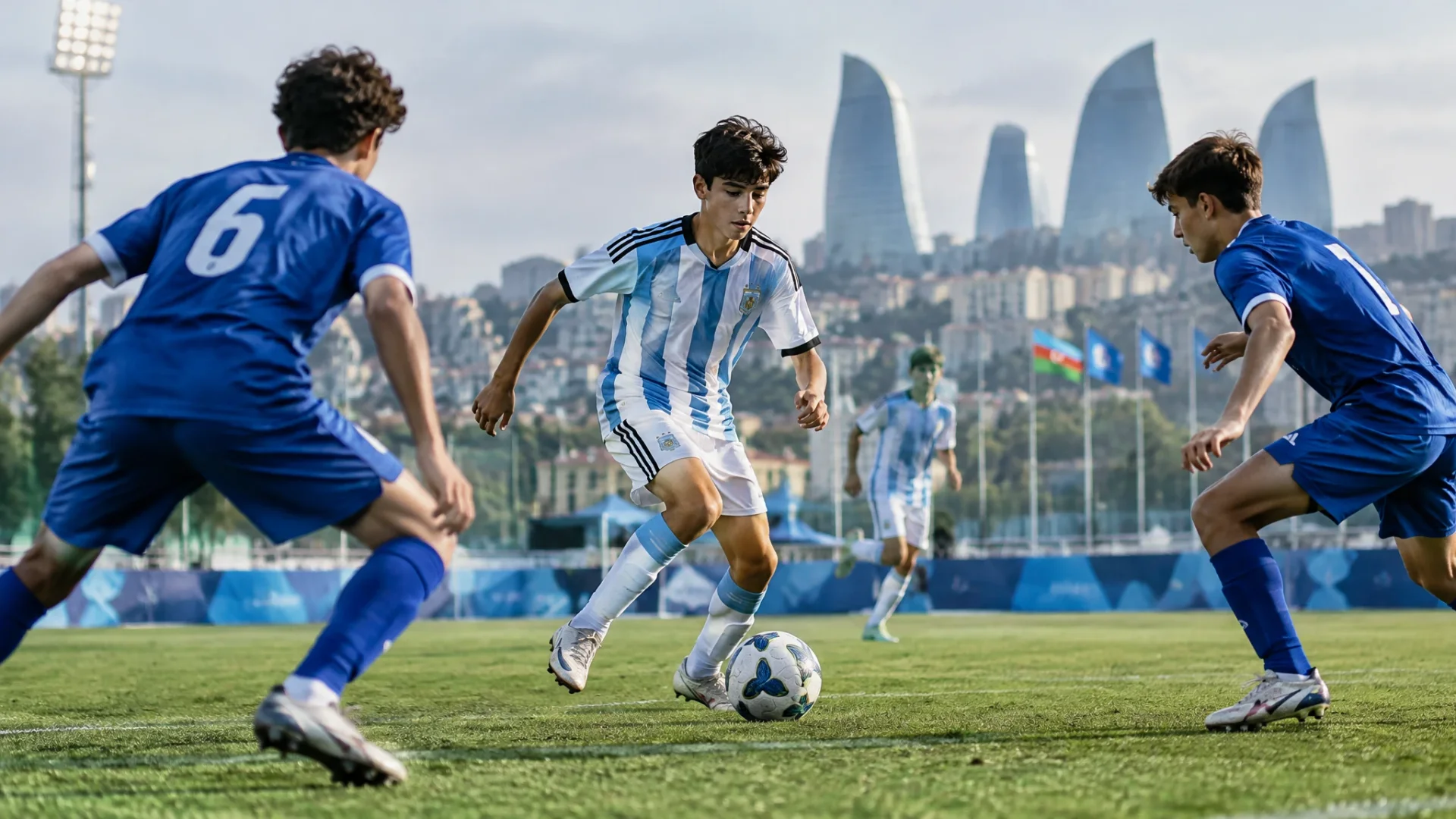
The launch of FIFA’s U-15 World Cup & Festival in Baku feels like an open experiment. FIFA describes an 8v8 format, two 20-minute halves, nearly 1,000 matches and more than 3,000 players, coaches and officials. The stated aim is straightforward: give every team meaningful competitive games, not a token handful of minutes.
Against that backdrop, Argentina’s 3-0 win over Suriname in Baku matters for more than the scoreline. It is a useful indicator of whether the tournament can function as a genuine development tool rather than a polished institutional showcase.
Sources : [1] AFA ↗[2] FIFA ↗
A good idea is not yet proof
I think the idea is sound. At under-15 level, development comes not only from talent but from repetition, adaptation and repeated problem-solving under pressure. A tournament that increases the number of matches can correct a familiar weakness in youth football: too few challenging games, too few decisions, too little continuity.
But the opening sales pitch has to be tested, not admired. Saying a format gives teams competitive games does not prove it develops players better. For that to be true, it must generate something beyond results: cleaner tactical habits, better load management, faster understanding of roles. Without that, it is just a larger pile of fixtures, not a stronger pathway.
What Argentina helps us measure
Argentina is a useful case because it keeps the debate away from branding. The win over Suriname suggests a team can use this kind of competition to build automatisms, rotate profiles and maintain intensity across a tournament. The fact that Argentina still had another match the same day against Malawi strengthens that reading: this is already a competition that demands sequencing, not just isolated snapshots.
That is where the new format will be judged. If federations leave Baku with players who defend higher, circulate the ball more intelligently or make decisions faster, then the model deserves respect. If what remains is mainly the look of a big festival and the language of inclusion, then the event will have produced packaging more than proof.
Sources : [1] AFA ↗[2] FIFA ↗
The verdict: more games, yes; evidence, not yet
I support a tournament that gives more young players real international minutes. It is a necessary correction to a system that too often reserves that experience for the usual few. But a development format has to accept its own discipline: it must be judged by measurable effects, not by good intentions alone.
For now, Baku shows this much: FIFA has understood that young players improve by playing more varied opponents more often. What still needs to be shown is whether that volume, by itself, actually makes better footballers. That is the real question, and the answer will decide whether this project matters.
Sources : [2] FIFA ↗[1] AFA ↗
Read next
 Opinion
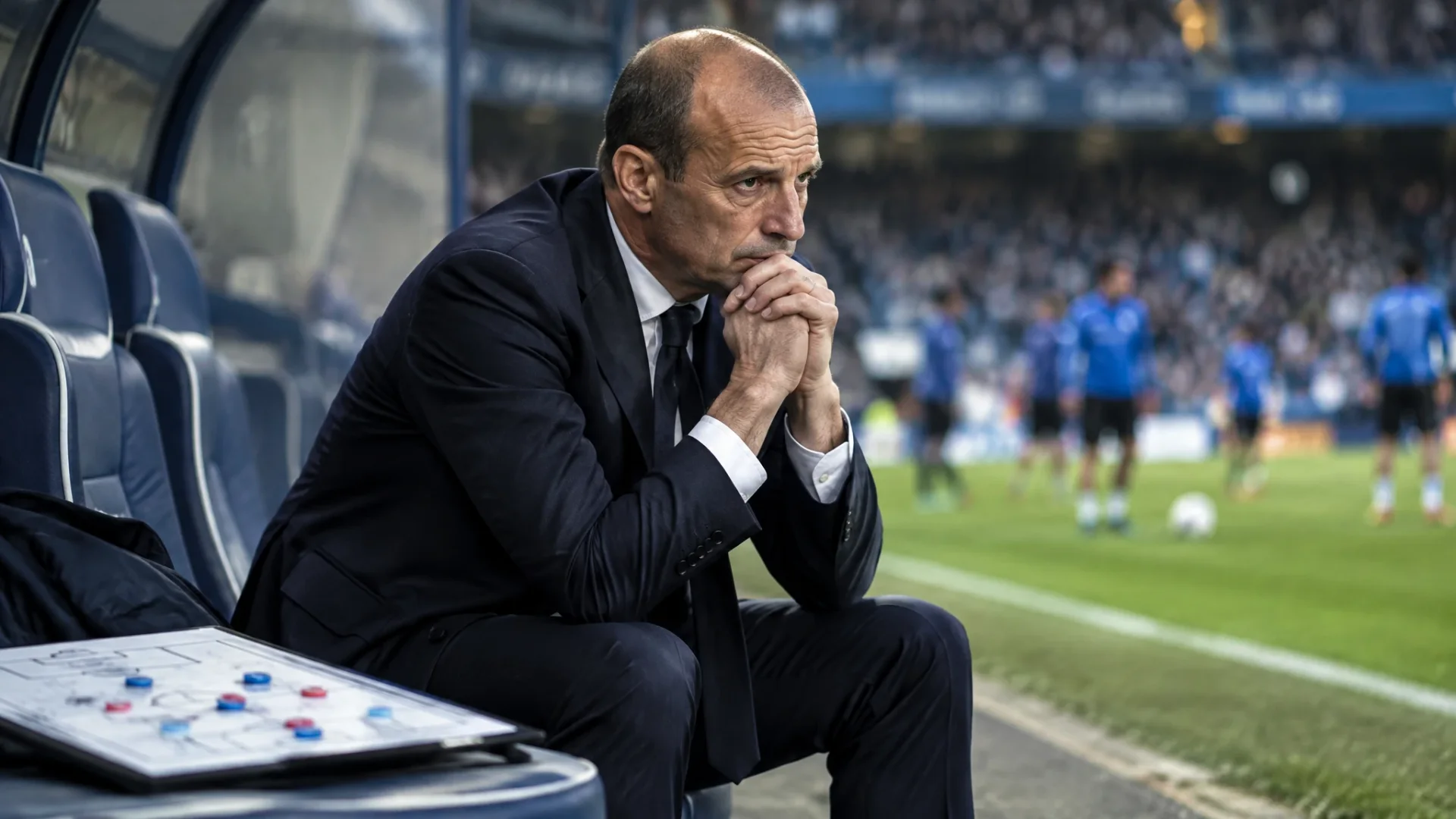
Napoli, Allegri and the very practical cost of a two-match ban
Massimiliano Allegri’s suspension is not just a discipline issue: it leaves Napoli without its coach for Monza and Juventus. How much turbulence can a title contender really absorb?
 Lucien DelcourtItaly, Germany, Spain & Turkey
 Opinion
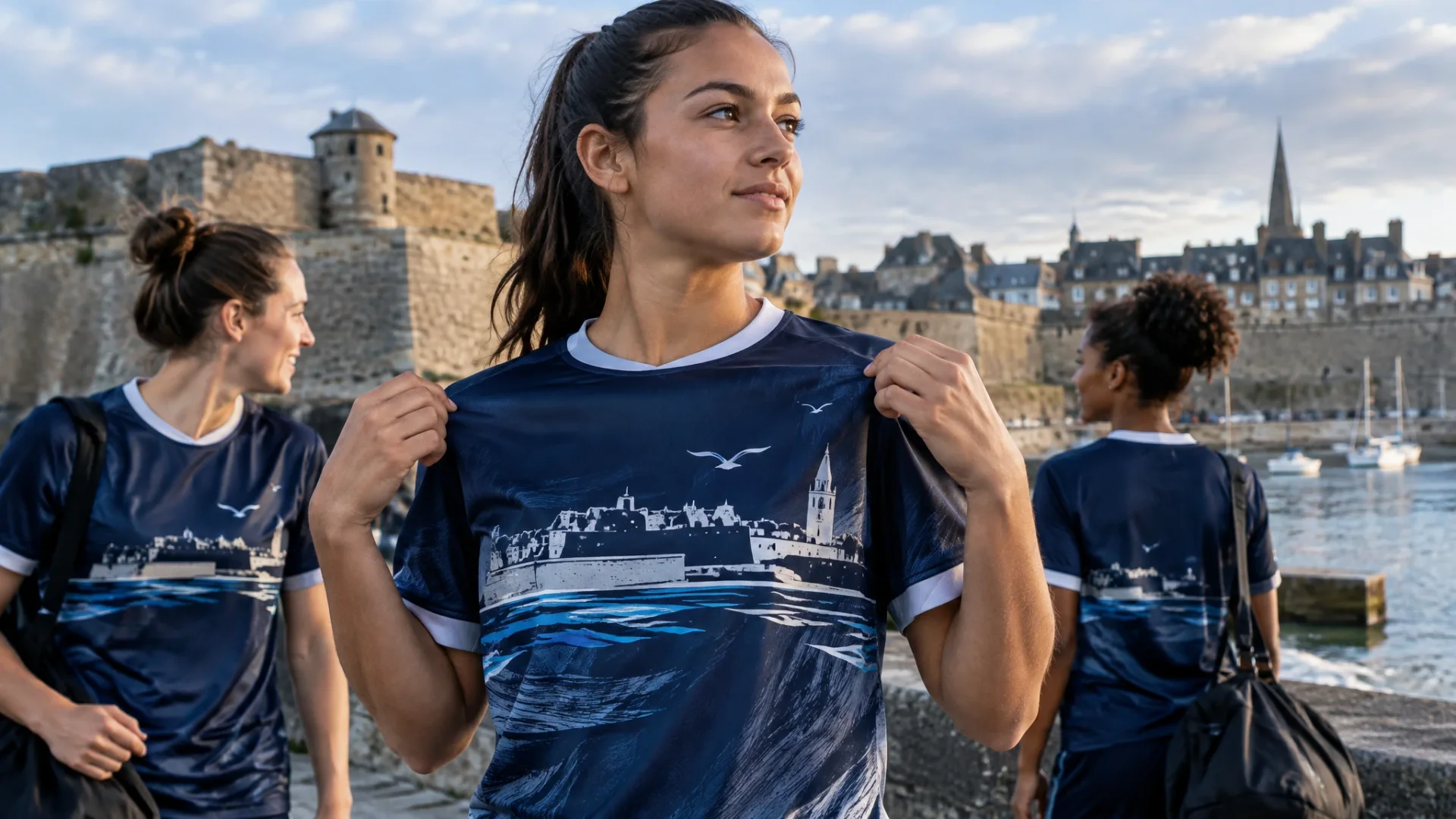
US Saint-Malo, Les Marseillaises: when the shirt becomes an identity product
Why do special editions now say as much about the club as about the city, and why would Marseille recognise the pattern immediately?
 Basil ArtemoffTerraces, Marseille & style
 Opinion
French women’s football is shifting its decisive investment before age 14
PSG’s new U12-U14 preformation centre and LAuRAFoot’s U14F interdistrict pathway show that the real contest is now who builds the first serious bridge into elite development.
 Camille LaurentAcademies & breakthrough seasons
 Opinion
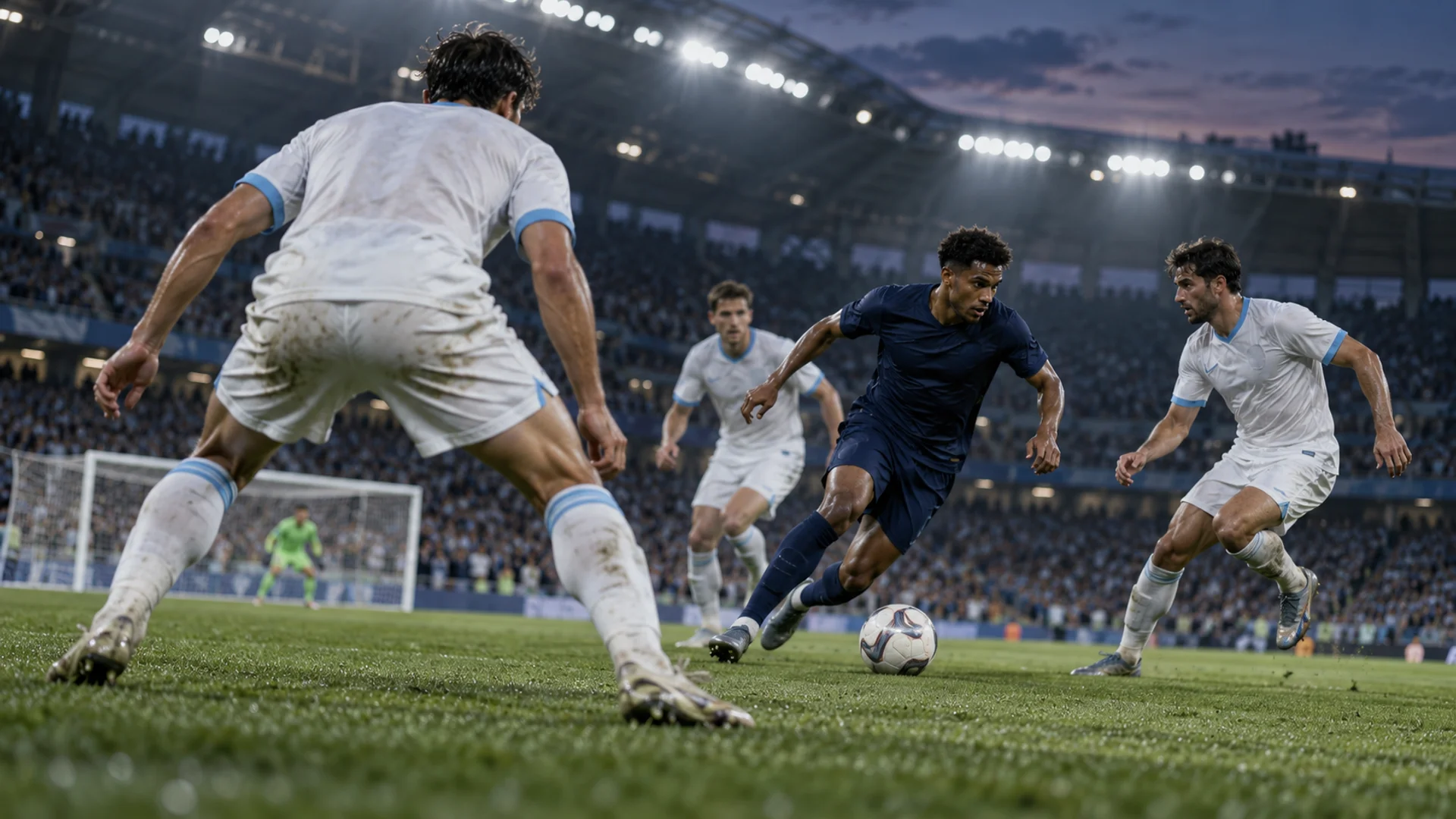
Marseille finally has a shape. The problem is what happens after 60 minutes
Against Le Havre, OM looked structurally clearer for an hour before unraveling. The issue is no longer finding a starting shape, but keeping it alive.
Basil ArtemoffTerraces, Marseille & style Opinion
At the Vélodrome, OM’s supporters are still the club’s most stable asset
When the club wobbles, the stand holds. And as shirts turn into cultural objects, Marseille is a reminder that a demanding crowd is worth more than any launch campaign.
Basil ArtemoffTerraces, Marseille & style Opinion
French football’s smartest move: turning teenage girls into coaches
Nxt Gen Coaches is not a slogan. It is a pathway. For the women’s game, that may be the most important development right now.
Camille LaurentAcademies & breakthrough seasons