
Futsal Finalissima 2026: penalties exposed the real hierarchy
Why did Brazil and Spain reach the final the hard way, and what does Argentina’s third-place run say about the gap that still separates elite futsal from the merely good?
Two semifinals, no comforting myths
The 2026 Futsal Finalissima, staged at Arena Niterói in Rio de Janeiro state with Brazil, Spain, Argentina and Portugal, delivered a blunt answer to every grand claim about futsal’s global pecking order: at the top, the margins are tiny. UEFA notes that the semi-finals were repeat pairings of the continental finals from early 2026, and that is exactly where the tournament stopped being a ceremonial showcase and became a test of detail. [1]
Spain reached the final by equalising in the last minute and then beating Portugal on penalties. Brazil did the same against Argentina. That does not mean the four teams are identical; it means elite futsal often decides a final berth through one late action, one cleaner sequence, one save, one calmer kick. It is a ruthless hierarchy, but it is also a clear one. [2]
Sources : [1] UEFA ↗[2] UEFA ↗
What Brazil-Argentina really told us
Brazil against Argentina did not produce a dramatic verdict on overall quality, but it did confirm something more useful: in CONMEBOL futsal, the best teams do not advance through rhetoric, they advance through precision. When a semi-final ends on penalties, the easy talk about natural superiority or historic aura becomes irrelevant. What remains is the ability to hold structure, avoid gifting chances and turn a neutral moment into an actual advantage. [2]
That is what makes the tournament worth reading seriously. Argentina did not disappear from the conversation; it simply ran into the detail that separates ambition from a final. In a game this fast, slogans about mentality matter less than collective discipline. Penalty shoot-outs are not pure lottery; they also punish the teams that left too little margin to settle it earlier. [2]
Sources : [2] UEFA ↗
Third place as a reality check
The third-place match sharpened that reading. Argentina beat Portugal 3-1, with Leandro Altamirano scoring the first goal and Bolo Alemany adding the late third, according to AFA. That matters, because after losing a semi-final on penalties, Argentina showed it could reset immediately rather than hide behind a permanent unlucky narrative. [3]
The bronze match also hinted at the competition’s overall level: Portugal, part of the same elite four, leaves without a podium finish. In other words, this was not a tournament that crowned a comfortable dominant force. It exposed a compressed pyramid in which the final standings depend first on clarity in the shortest moments. That is less romantic than a heroic script, but far more informative. [1][3]
Sources : [1] UEFA ↗[3] AFA ↗
Why fans should care
It would be a mistake to read the Futsal Finalissima as just a prestige product attached to the UEFA-CONMEBOL relationship. The renewed memorandum explains the frame, not the meaning. The meaning this year is simpler and harsher: elite futsal was not separated by large differences in level, but by the quality of execution when every possession mattered most. [1][2]
For fans, the lesson is straightforward. Brazil and Spain did not reach the final because they were clearly superior from start to finish; they got there because they survived semi-finals that demanded more composure than talk. Argentina, meanwhile, leaves Niterói with a third place that says more than any slogan could: in futsal, as so often in South America, the real hierarchy is measured in detail, not rhetoric. [2][3]
Sources : [1] UEFA ↗[2] UEFA ↗[3] AFA ↗
Read next
 Opinion
Futsal Finalissima 2026: Brazil chose details over spectacle
In Rio, Brazil beat Argentina on penalties in the Futsal Finalissima semifinal. Is this CONMEBOL-UEFA showcase just branding, or something more serious? It matters because it forces elite teams into a real competitive stage.
 Inès ValençaLatin America & world football
 Opinion
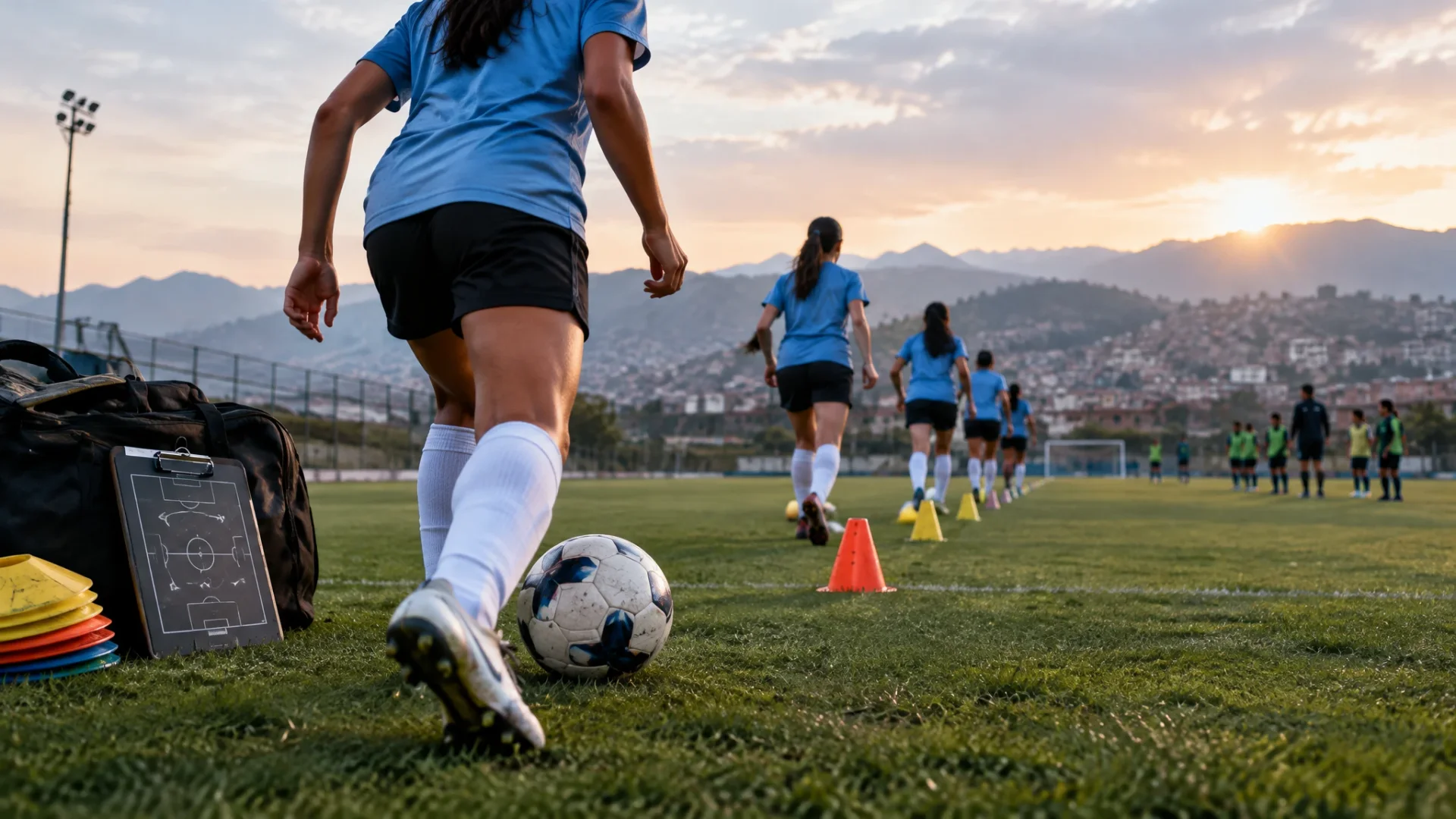
FIFA, Argentina and Brazil: women’s football is now a pathway problem
FIFA’s latest women’s-football roundup points to the real bottleneck: campaigns and tournaments only matter if federations turn them into durable routes into the game.
Inès ValençaLatin America & world football Opinion
AFA vs FIFA: how far should Argentina push its post-World Cup appeal?
Argentina is not just fighting a sanction. By taking the case further, AFA is testing how much control it really has over the discipline and narrative that collapsed around the 2026 World Cup.
Inès ValençaLatin America & world football Opinion
Brazil U-17 women: bronze will decide whether this cycle truly adds up to a podium
Brazil’s U-17 Women’s World Cup run has moved beyond a semifinal storyline. The bronze match is now the concrete test, while Rilany Silva’s place among the final four coaches gives the campaign a representational edge backed by results, not slogans.
Inès ValençaLatin America & world football Opinion
Uruguay, Argentina and the AFA: November is already manufacturing the post-Messi era
This November window is less about nostalgia than administration: squads, schedules and ticketing already show how the next cycle is being packaged.
Inès ValençaLatin America & world football Opinion
Avaí: financial “rebalancing” means little if wages still go unpaid
The club says it is tightening the budget to survive. But what does that mean when players and staff are still owed wages, training is boycotted and one forward takes the dispute to court?
Inès ValençaLatin America & world football