
Ligue 1 kick-off times: when a simple schedule tweak becomes governance
The shift of Auxerre–Paris FC and PSG–Troyes is not a calendar footnote; it shows how prefectural constraints and television still shape the competition’s very format.
A timetable is never neutral
It is easy to dress up a kick-off change as a tidy bit of housekeeping. Here, that would be a polite lie. AJ Auxerre–Paris FC was pushed back from 5:15pm to 7:00pm, then PSG–ESTAC Troyes from 8:45pm to 9:05pm, for Saturday 7 November. The LFP says the move followed a request from the prefecture of Yonne. That sounds administrative and harmless. It is neither: in Ligue 1, match time is not just logistics, it is a decision with authority behind it. [1]
The deeper point is simple: the league does not merely sell fixtures, it arranges flows. A championship evening is not a single block of football; it is broken up, re-sequenced and prioritised. When the first match is shifted, the change is not only for stewards or transport planners. It alters the evening’s reading, the tempo imposed on viewers, and the order in which clubs appear on screen. [1]
Sources : [1] Ligue 1 / LFP ↗
Television writes the sequence
What matters most is not the change itself, but how it lands inside a schedule already set in advance. The league had already published the TV programme for matchdays 10 and 11, with PSG–Troyes listed for that Saturday at 8:45pm. On 4 November, the evening’s hierarchy was rewritten in miniature: no upheaval, just a revised script. That is exactly where the system becomes revealing. Ligue 1 no longer simply occupies a slot; it sells an hour-by-hour sequence like a railway timetable, with connections, delays and departures that are supposed to be under control. [2][1]
This is not new, but it becomes harder to ignore when a seemingly minor adjustment exposes the whole machine. Two matches, two shifts, one evening and the same dependence on outside constraints. Television wants clarity; local authority imposes limits; the league mediates between them. The result may look trivial by 20 minutes. In truth, it says the championship is still organised less as an autonomous sporting occasion than as a service with variable hours. Efficient, perhaps. Good for broadcasters, certainly. But it is also an admission: French football is still governed by its schedule more than by its game. [1][2]
Sources : [1] Ligue 1 / LFP ↗[2] Ligue 1 / LFP ↗
What supporters lose in the micro-management
Supporters lose simplicity. A Ligue 1 Saturday should let you see at a glance where your club’s match sits, when the evening starts and when it ends. Instead, repeated tiny adjustments create the opposite: a segmented product, easy to read for TV grids but increasingly fragmented for those living it in real time. This is not a national catastrophe. It is more French than that: a managed spectacle that mistakes precision for clarity. [1][2]
The issue is not whether a prefectural constraint is respected, or whether the television schedule already announced is taken into account. The issue is the habit of treating those decisions as details when they shape how the competition is perceived. Shift the hour here, five minutes there, and Ligue 1 starts to look as if it can be endlessly re-cut at no symbolic cost. But there is a cost: a product sliced so finely that it begins to resemble not a football evening, but a timetable. [1][2]
Sources : [1] Ligue 1 / LFP ↗[2] Ligue 1 / LFP ↗
A small decision with a real message
These shifts should be taken seriously, not because they transform the championship, but because they reveal its chain of command. Ligue 1 now sells the idea that every minute is under control. When it has to change one, even slightly, the structure becomes visible: the prefecture for the constraint, television for the staging, the league for the arbitration. That is enough to make this small adjustment a governing act. As so often in French football, the most revealing thing is not the matchday itself, but the logistics around it. [1][2]
In an era that claims to optimise everything, the league calendar remains both a tool of discipline and a service to be delivered. That may be the most honest admission of all: the show is not only played, it is ordered. And sometimes, at 7:00pm or 9:05pm, the most technical detail says more about power than any manifesto ever could. [1][2]
Sources : [1] Ligue 1 / LFP ↗[2] Ligue 1 / LFP ↗
Read next
 Opinion
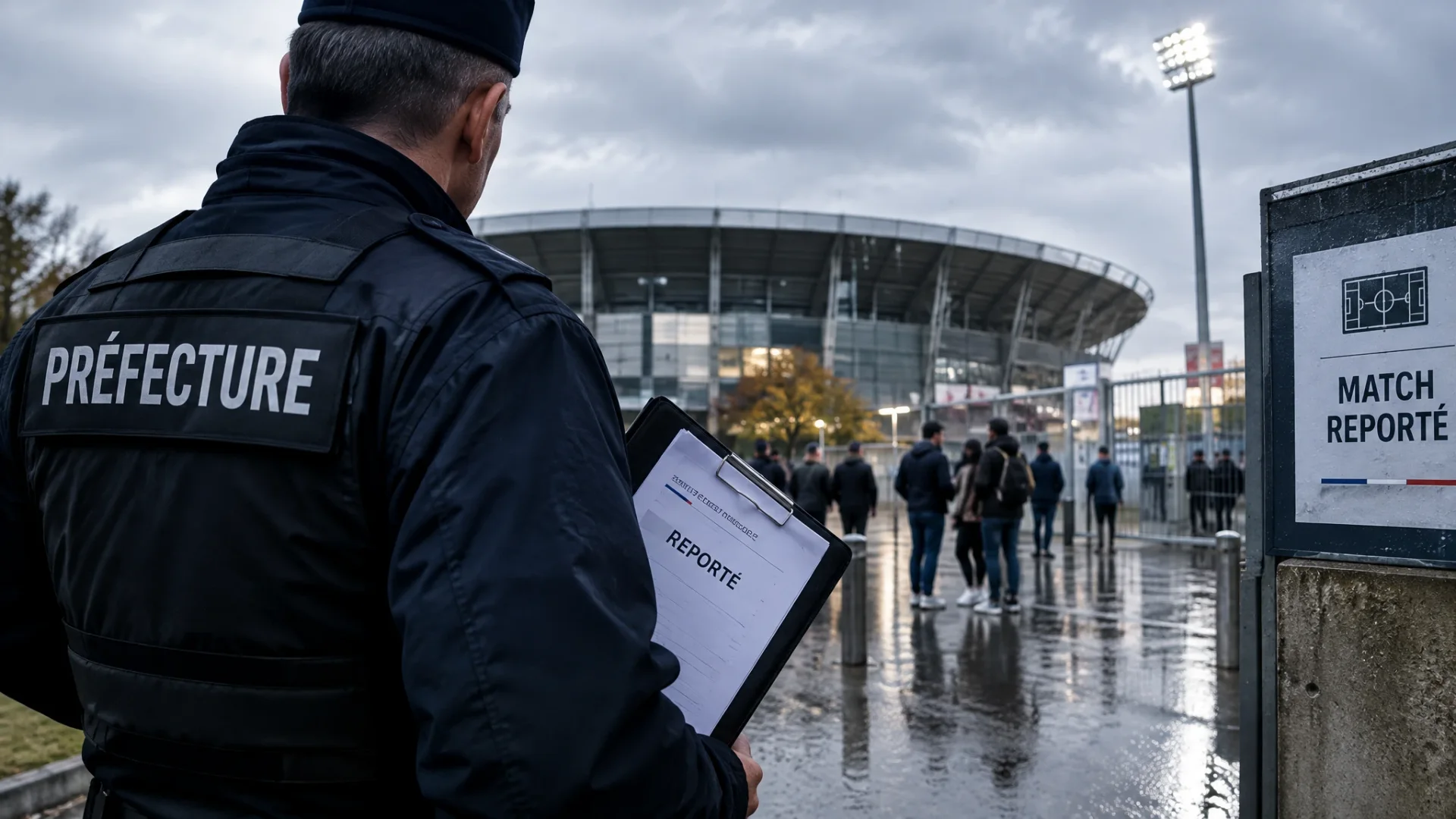
Nice, Lyon, Rennes: when prefects set Ligue 1’s tempo
The reshuffled dates for Nice-Rennes and OL-Angers are not just a calendar nuisance. They show how prefectural security decisions are increasingly shaping Ligue 1’s sporting rhythm.
 Étienne MorelThe football, the clubs, the decisions
 Opinion
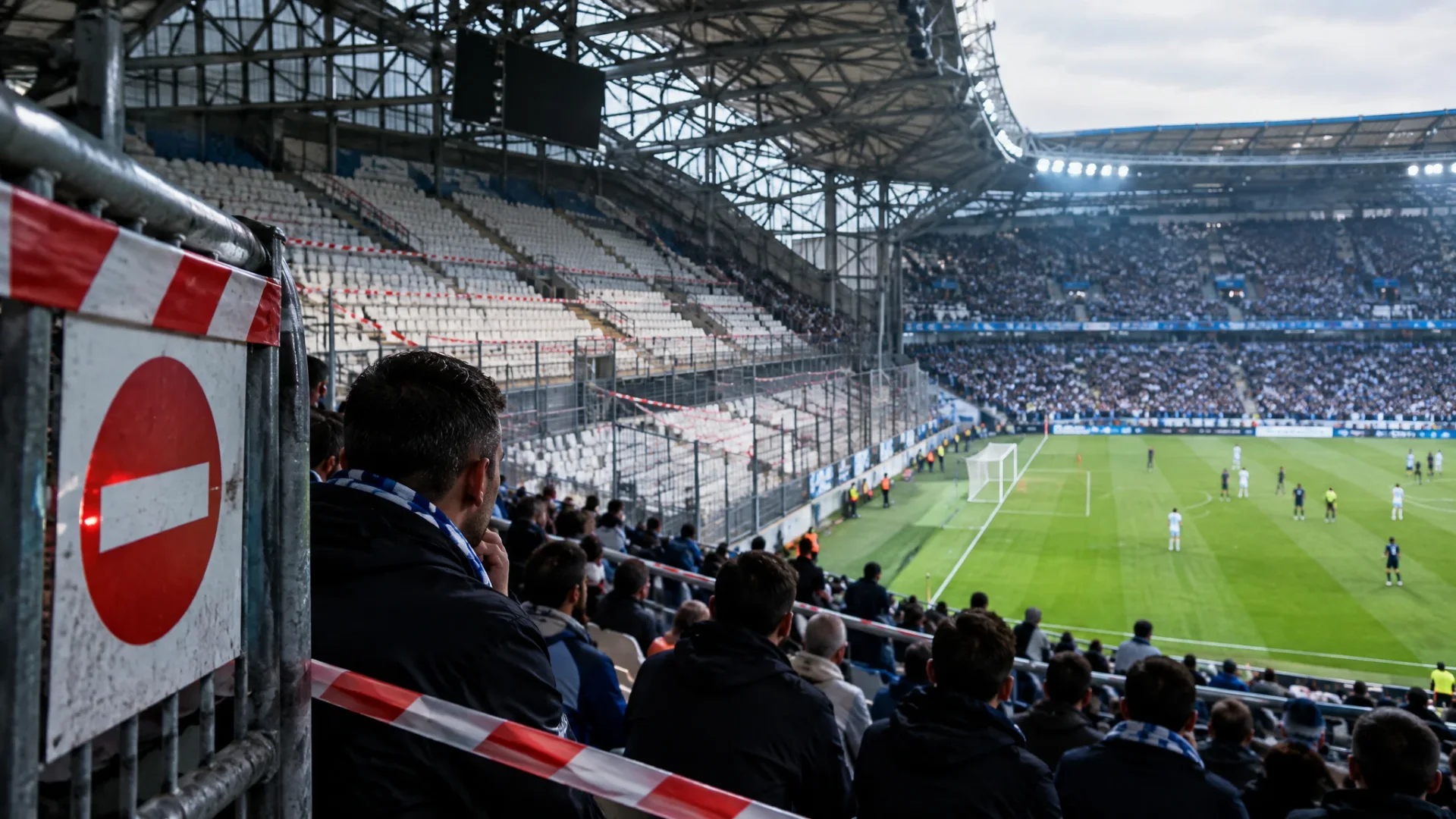
Marseille and the Vélodrome: when the Nord stand becomes a tactical handicap
What is a team worth when it is finally playing better just as its stadium loses part of its voice? Marseille’s sanction is a reminder that a club cannot cleanly separate performance from stand-side disorder.
Étienne MorelThe football, the clubs, the decisions Opinion
Ligue 1: boots tell the story the shirt no longer can
On Matchday 9, Ligue 1’s equipment map looks more complex than a shirt photograph: the brand on the chest no longer necessarily controls the dressing room.
Étienne MorelThe football, the clubs, the decisions Opinion
At Le Havre, PSG are testing their method: winning without stars, without drama
Top of the table before the trip to Le Havre, Paris arrive depleted but not disarmed. The real question is not who is missing, but how Luis Enrique turns that shortage into a footballing principle.
Étienne MorelThe football, the clubs, the decisions Opinion
PSG and Les Marseillaises: when the shirt becomes a public instrument
PSG and Marseille are no longer just dressing a team: they are using the shirt as a civic, charitable and identity-making object. The real question is simple: who now controls the symbol — the club, the sponsor or the cause?
Étienne MorelThe football, the clubs, the decisions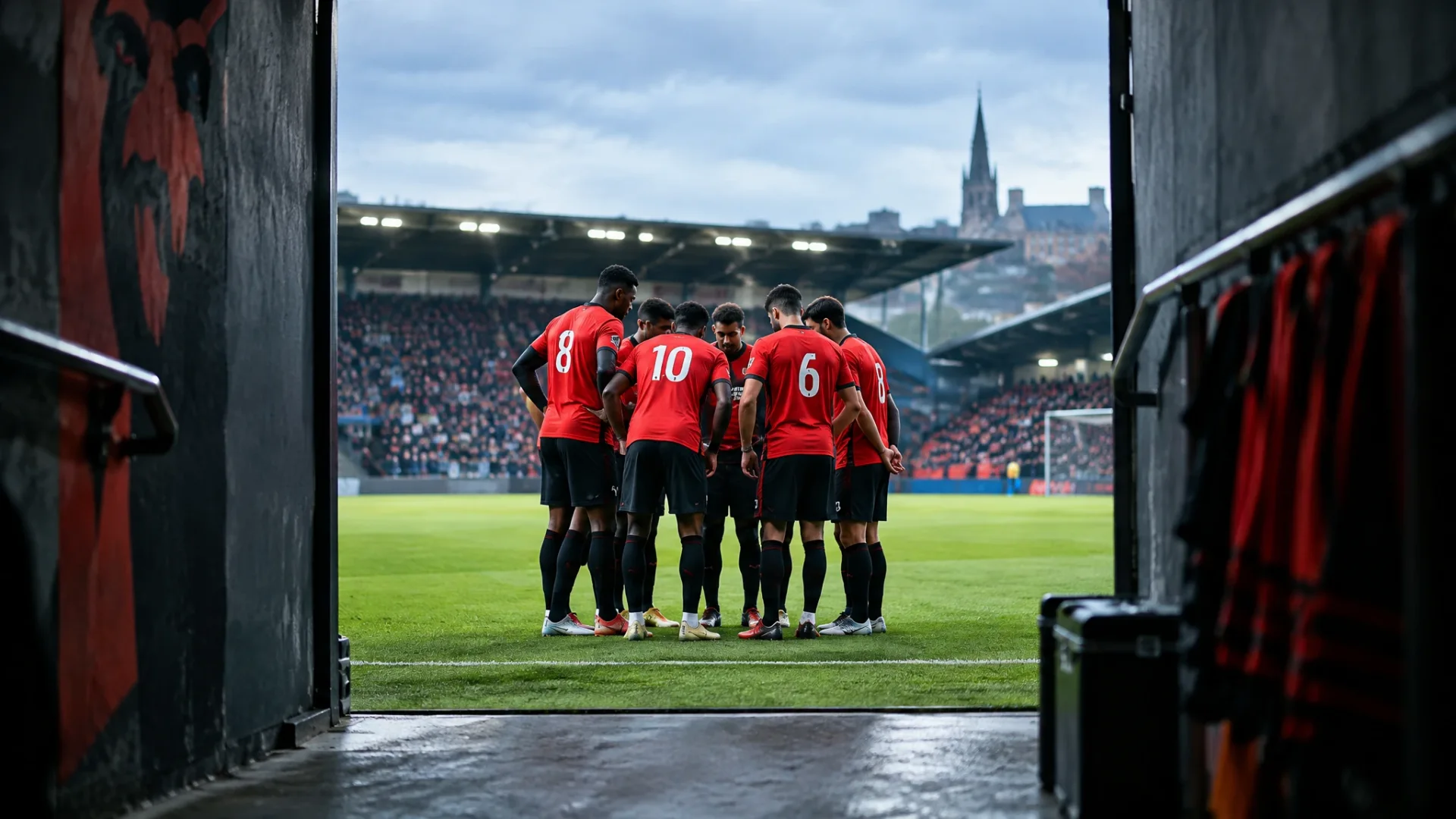 Opinion
Rennes atop Ligue 1, for now: a compressed table leaves no room for self-congratulation
After the 3-0 win over Strasbourg, Rennes moves top provisionally. In a tight Ligue 1, the point is not the snapshot but what the club does with it.
Étienne MorelThe football, the clubs, the decisions