
Ligue 1, Nike and PSG: when the Tiempo moves from pitch to street
Nike has released a Tiempo made to play and to be seen. But in Ligue 1, Nike’s showcase still keeps reflecting PSG: is this still football geography, or already style geography?
A boot built as a bridge
Nike and Kids of Immigrants are back with a collection that no longer keeps the pitch and the pavement apart. Nike says the range includes a Tiempo Maestro Elite for the field and a Streetgato for off-field wear, and presents the project as the duo’s first football-performance shoe collaboration. The launch is framed as a dual object: useful for playing, legible as something to wear, and placed explicitly at the intersection of cultures, neighbourhoods and generations.
That detail matters, because it says a lot about the moment we are in. A Tiempo is no longer only a promise of ball control; it also becomes a signal of movement, a piece of style that can leave the dressing room without losing its football meaning. Nike is not just selling a pair of boots. It is selling continuity between sporting space and urban space. That is a commercial strategy, yes, but also a very clear aesthetic language: football no longer stays locked inside 90 minutes.
Sources : [1] NIKE, Inc. ↗
What Ligue 1 actually shows
The problem is that football visibility is not distributed evenly. Footpack’s Nike Ligue 1 best XI is heavily shaped by PSG, with seven players from the club in the line-up. The piece also mentions OM through Igor Paixão, and OL through Corentin Tolisso and Dominik Greif, while noting that Nike remains the second-biggest brand in Ligue 1 with 30.6% of players.
That is the real tension: when a brand speaks about cultures and generations, the championship’s public image still funnels through a few dominant showcases. The style looks collective, but the exposure is concentrated. For a supporter, that is not a minor marketing detail. It shapes who represents Ligue 1 in the visual imagination, who gets the light, who sets the codes. If almost everything keeps circling back to Paris, the league’s supposed variety quickly turns into a giant monogram.
In plain terms, Nike is not only booting players. It is also arranging a hierarchy of visibility. And that hierarchy affects how Ligue 1 is read: as a competition where a few clubs are used again and again as showcase windows, while others remain at the edge of the frame.
Sources : [2] Footpack ↗
Street is not just a backdrop
That is where supporter culture becomes useful. Marseille has never needed a brand to explain what a strong silhouette is. In a city where shirt, jacket, cap and pair of shoes all belong to the same visual language, the difference between a commercial release and genuine criticism matters. A “pitch and street” shoe can simply be a well-made product; it can also become another symptom of how football dresses itself to travel beyond the stadium.
But circulation should not be mistaken for depth. When brands talk about neighbourhoods, they often borrow the street’s grammar more than they listen to it. That is why this Tiempo matters: it shows how contemporary football now sells a geography of style, with its centres, relay points and image surfaces. So the question is not whether the street has entered football. It already has. The real question is who holds the camera, and which clubs keep returning to the foreground.
Read next
 Opinion
When the shirt serves the stand: Union Saint-Gilloise, Katowice–Ostrava, PSG
When a shirt becomes a public-health tool, a symbol of supporter friendship or the visible frame for a campaign, the real question is simple: does it serve the club, the brand or the terrace first?
 Basil ArtemoffTerraces, Marseille & style
 Opinion
At Le Havre, PSG are testing their method: winning without stars, without drama
Top of the table before the trip to Le Havre, Paris arrive depleted but not disarmed. The real question is not who is missing, but how Luis Enrique turns that shortage into a footballing principle.
 Étienne MorelThe football, the clubs, the decisions
 Opinion
PSG–Lyon: supporters cannot be the spare part
A marquee fixture moves to Monday, a global football ceremony occupies the same evening, and the people who planned their Sunday must adapt. Moving a match can be necessary. Treating its audience as endlessly flexible is a choice.
Étienne MorelThe football, the clubs, the decisions Opinion
PSG in Villarreal: the Youth League shows what an academy is really worth
PSG’s youth defeat in Villarreal is not a verdict on one generation. It is a reminder that a development line is tested when it leaves domestic comfort and enters a competition that measures collective maturity.
 Camille LaurentAcademies & breakthrough seasons
 Opinion
Kids of Immigrants and Nike Tiempo: when a boot becomes an identity story
The new Kids of Immigrants Tiempo matters less as a limited drop than as proof that football now sells heritage, migration and performance in one package.
Basil ArtemoffTerraces, Marseille & style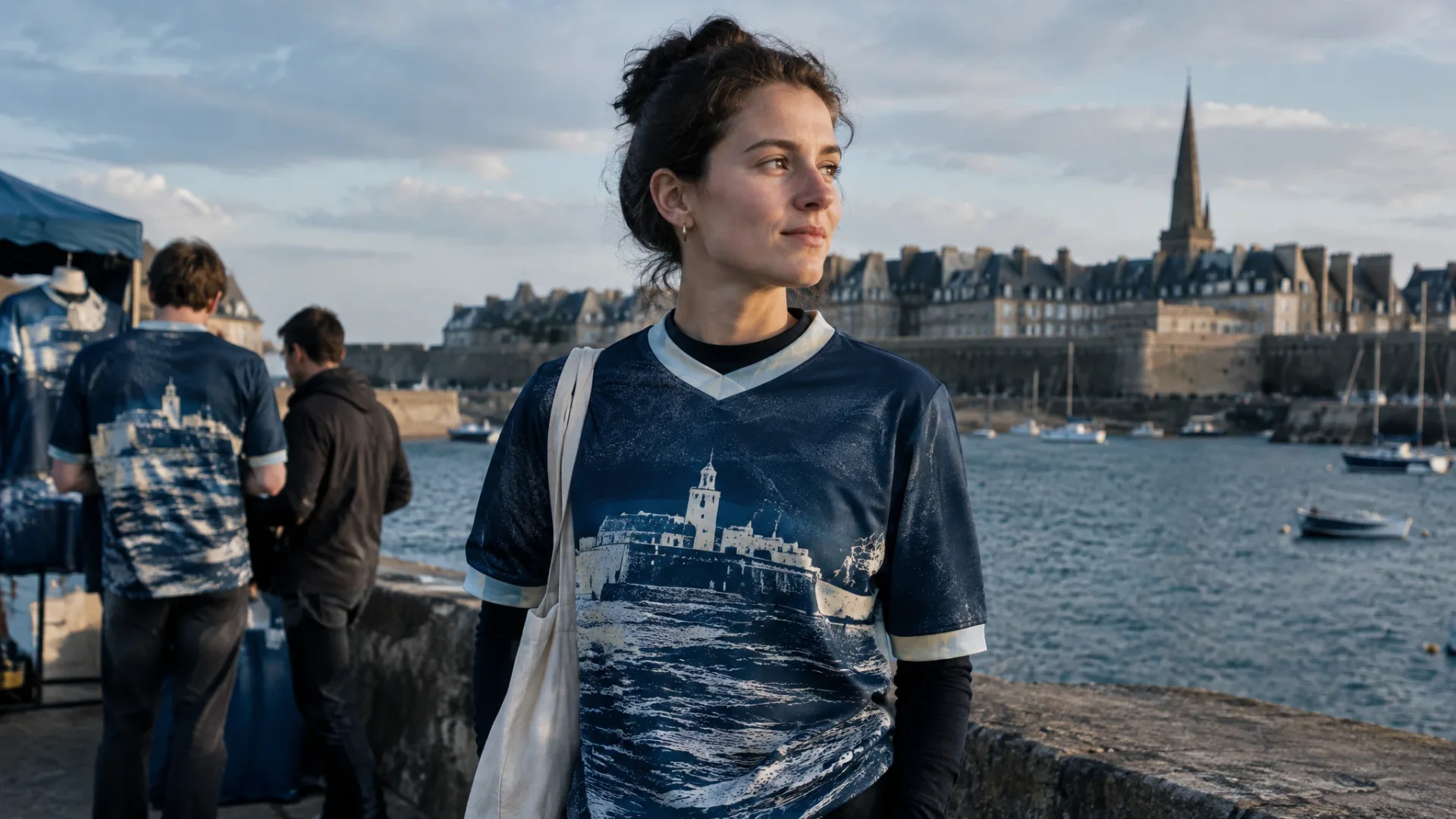 Opinion
When a football shirt sells a city, a cause or a scene
Recent club and brand releases show a clear shift: football apparel is no longer sold only as product, but as belonging. Is that good for supporter culture, or just a smarter way to sell the same thing?
Basil ArtemoffTerraces, Marseille & style