
Cruzeiro, the Copa Libertadores Femenina and the real value of a prize-sharing promise
The question is not whether to applaud the gesture, but whether Cruzeiro’s announced prize split changes how the women’s team is treated once the cameras leave.
A title, then a decision that matters more than the trophy
CONMEBOL has named Cruzeiro the Copa Libertadores Femenina champion after a dramatic final against Corinthians decided on penalties. The federation’s news item refers to a comeback with late equalizers, while ge reported on November 4 that Pedro Lourenço had promised to pass 50% of the club’s prize money to the players. In that same report, the champion’s prize is given as US$2.05 million, or about R$11.2 million. [1,2]
The useful story is not the celebration. It is governance. A prize-sharing promise can be a serious signal if it is written down, carried out and followed by structural changes. Without that, it is just a generous-sounding gesture at the end of the night: strong on image, weak on institution. [2]
Sources : [1] CONMEBOL ↗[2] ge ↗
What the split has to prove
A shared bonus only has meaning if we know what it rewards. Here, the money should not be treated as the owner’s gift, but as recognition of a collective performance that created real value for the club. That is exactly why this needs scrutiny beyond the immediate quote: is this an exception, or the start of a rule? []
If Cruzeiro truly sees its women’s team as a lasting project, the minimum is not a symbolic announcement. It is a method: clear distribution, consistency across the club, and continuity after the trophy. Otherwise the message is simple enough — women are celebrated when they win, and then the old hierarchy returns when the work of building comes back. []
The real test comes when the emotion fades
Clubs like neat gestures. Supporters do too. But the most useful gestures are often the least photogenic: better contracts, clearer budgeting, a more stable status, and football decisions that do not depend on the mood of the week. A shared prize can become a precedent; it can also be used to close the discussion as soon as the victory has done its job. []
That is why this goes beyond Cruzeiro. A club is judged less by how loudly it celebrates than by whether it can turn success into a standard. If the announced promise becomes a durable practice, Cruzeiro will have won more than a trophy. If it fades away, the victory will have merely supplied a good scene for an unchanged order. []
My verdict
The right response is neither blind praise nor automatic cynicism. The promise should be judged on its institutional reach. Right now, Cruzeiro’s announced prize split looks like a credibility test: either it becomes the start of fairer treatment for the women’s team, or it becomes a polished way of changing nothing. []
Read next
 Opinion
Brazil U-17 women: the 2-1 over China shows a pipeline, not a fluke
Brazil’s comeback in Salé matters less as a fairytale than as evidence of a team that can stay dangerous late, keep the ball in advanced areas and turn one finisher’s night into a collective result.
 Inès ValençaLatin America & world football
 Opinion
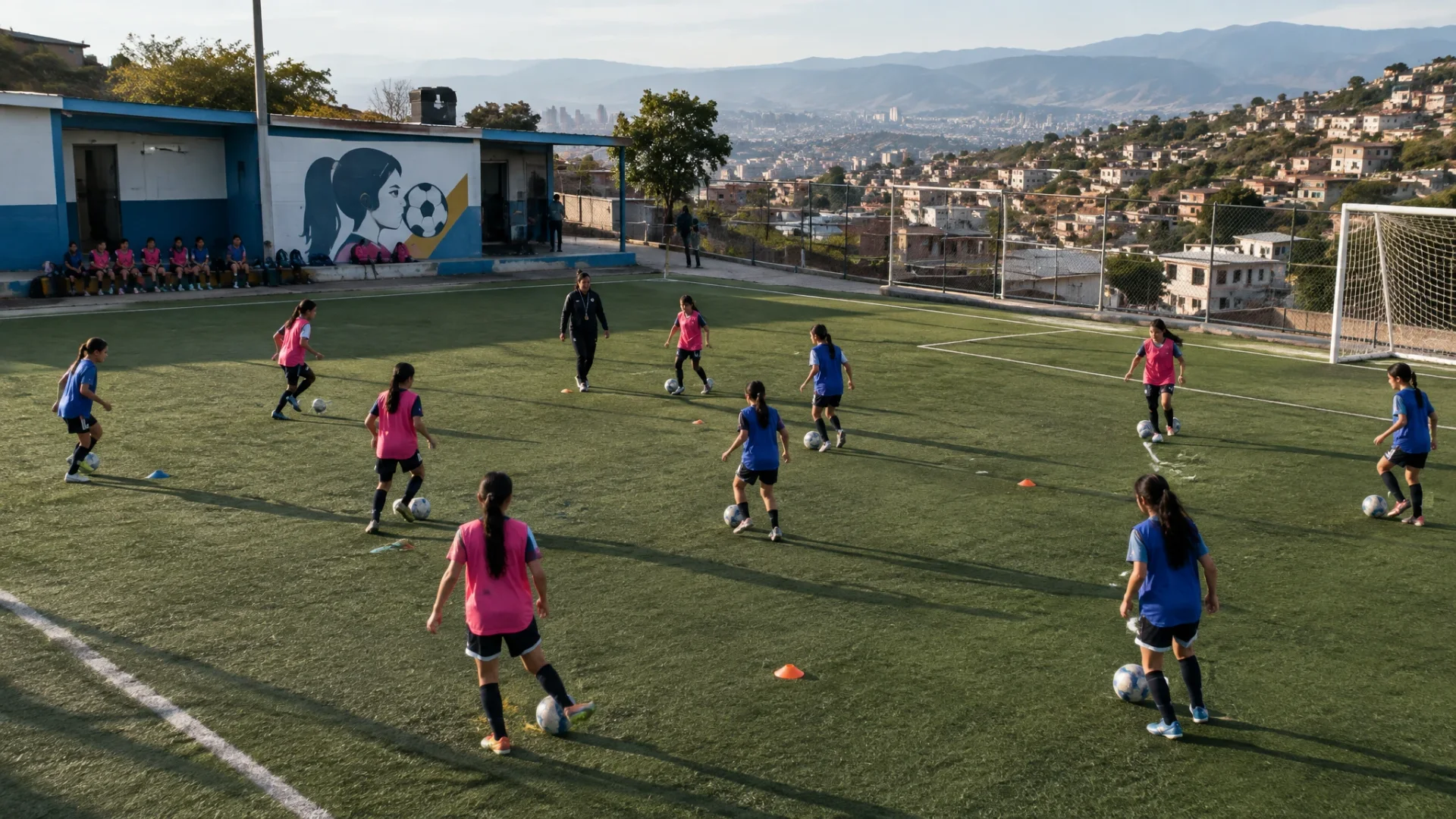
CONMEBOL and Plan International: SUMA Fútbol 360° must prove it can outlast the press release
The new alliance with Plan International matters less for its launch than for the question it raises: can a confederation turn community-football language into durable local access, especially for girls?
Inès ValençaLatin America & world football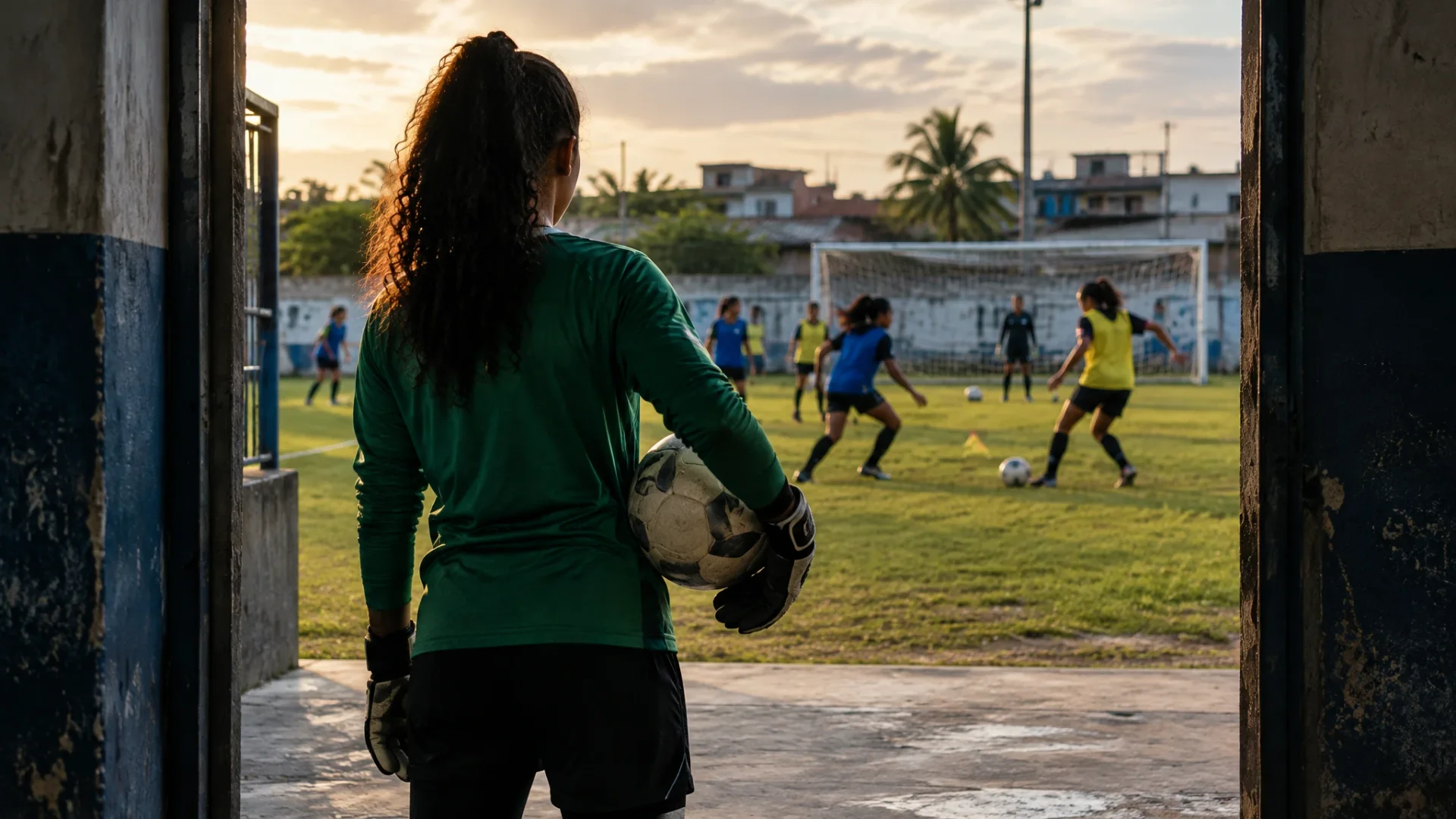 Opinion
Brazil’s women’s game is being built in goal, not in slogans
The real test for Brazil, from a public pitch in Ceará to the CBF’s national plans, is not the announcement itself. It is whether girls can stay in the game long enough to find a pathway.
Inès ValençaLatin America & world football Opinion
Fortaleza, Manaus and FIFA: women’s football advances through boring but decisive infrastructure
Women’s football moves forward not through slogans but through free places, club staff, local tournaments and federations that keep girls in the game after the photo op.
Inès ValençaLatin America & world football Opinion
FIFA, Argentina and Brazil: women’s football is now a pathway problem
FIFA’s latest women’s-football roundup points to the real bottleneck: campaigns and tournaments only matter if federations turn them into durable routes into the game.
Inès ValençaLatin America & world football Opinion
Libertadores Femenina: Brazil has already won the competition before kickoff
Corinthians v Cruzeiro guarantees Brazil a 15th continental title in 18 editions. The real question is no longer who lifts the trophy, but why the gap remains so wide.
Inès ValençaLatin America & world football