
At Bayer Leverkusen, Schick is no longer just a finisher: this is a structure test
The Czech is scoring heavily, yes. But the real question is different: why does his output say as much about Leverkusen’s recruitment and structure as about his own talent?
The old myth of the lone striker
When a centre-forward stacks up goals, the lazy instinct is to call it instinct: a sharp nose for the box, a touch of magic, a season that suddenly tilts. With Patrik Schick, that reading is too small. The point is no longer simply that he scores; it is how Leverkusen are now building their goals around him. His explosive start — eight goals in his first nine Bundesliga matches, presented by the club as a new record — says more than that he is in form. It suggests an attacking environment that is clearer, more useful and, above all, better designed. [1]
Leverkusen used to feel like a team that could invent something on the fly. Attractive, certainly. Also fragile. When Schick says his team-mates are creating good chances for him and that he is working to stay consistent, that sounds routine. It is actually a structural statement. It means the club is no longer relying on individual improvisation alone to feed its striker. The headline scorer is still the visible signature; the real signature sits in the rest of the attack. [1]
Sources : [1] Bundesliga ↗
Maza, the channels, and the hidden work of recruitment
Ibrahim Maza’s assist for the decisive goal in the 2-1 away win at Cologne on 8 November is not just a line in a match report. It is a clue. Leverkusen won that derby late, Schick settled it in the 85th minute, and the final pass came from a player who can connect ball progression to the scoring zone. That is what a more deliberate attack looks like: less random surge, more planned access. [2]
This is where recruitment becomes central. A serious club does not just sign a striker; it assembles compatibilities. Schick is no longer asked to turn scraps into goals. He is being supplied by a supporting cast that can feed him the right kind of ball, at the right tempo, in the right space. Good sporting departments do not always earn the applause, but they win those details. And in modern football, details are often the only thing left standing when luck disappears. [1][2]
So the story is not Schick as a solitary phenomenon. It is Schick as proof that Leverkusen’s attack has become more coherent, with a passer like Maza already showing direct value and the team capable of using its No 9 as more than a simple finisher. For the club, that is encouraging; for opponents, it is inconvenient. [1][2]
Sources : [1] Bundesliga ↗[2] Sportschau ↗
Why this changes the way Leverkusen are judged
It is easy to romanticise the striker who solves everything alone. It is also a neat way to avoid looking at the recruitment chart. Schick deserves a better reading. His current run suggests Leverkusen have not merely found a hot scorer; they have built a framework that raises the ceiling of the centre-forward role. That matters because it says something about the club’s method: recruit for connections, not just for collection. [1]
If Schick keeps scoring inside a system that is now serving him better, his streak will become more than a good striker story. It will become evidence that Leverkusen have improved their attack through squad design, not through magic. And magic, in football, is often just a polite word for a structure that actually works. [1][2]
Sources : [1] Bundesliga ↗[2] Sportschau ↗
Read next
 Opinion
Bayer Leverkusen’s Cologne derby win was built, not bellowed
How did Bayer Leverkusen turn a hostile Rhine derby into a lesson in method? By finding three different routes to goal: Aleix García’s set piece, Patrik Schick’s late finish and Ibrahim Maza’s creativity.
 Lucien DelcourtItaly, Germany, Spain & Turkey
 Opinion
Hamburg, Muheim and the 25-metre strike: when the HSV finally manufactures threat
Does Miro Muheim’s October Goal of the Month say he simply has a sweet left foot, or that Hamburg has learned to create danger from deep?
Lucien DelcourtItaly, Germany, Spain & Turkey Opinion
Elversberg in Dortmund: the record away block that explains a club’s rise
Why does Elversberg’s 8,000-strong away following in Dortmund matter? Because it shows a club that has scaled smartly enough to travel, press and behave like a top-flight outfit before size has caught up with it.
Lucien DelcourtItaly, Germany, Spain & Turkey Opinion
Cologne vs Leverkusen: the Rhine derby that tests two 20-year-old dribblers
The Rhine derby asks a blunt question: who can turn talent into goals, and who merely looks efficient on the way there? Saïd El Mala and Ibrahim Maza sit at the centre of that verdict.
Lucien DelcourtItaly, Germany, Spain & Turkey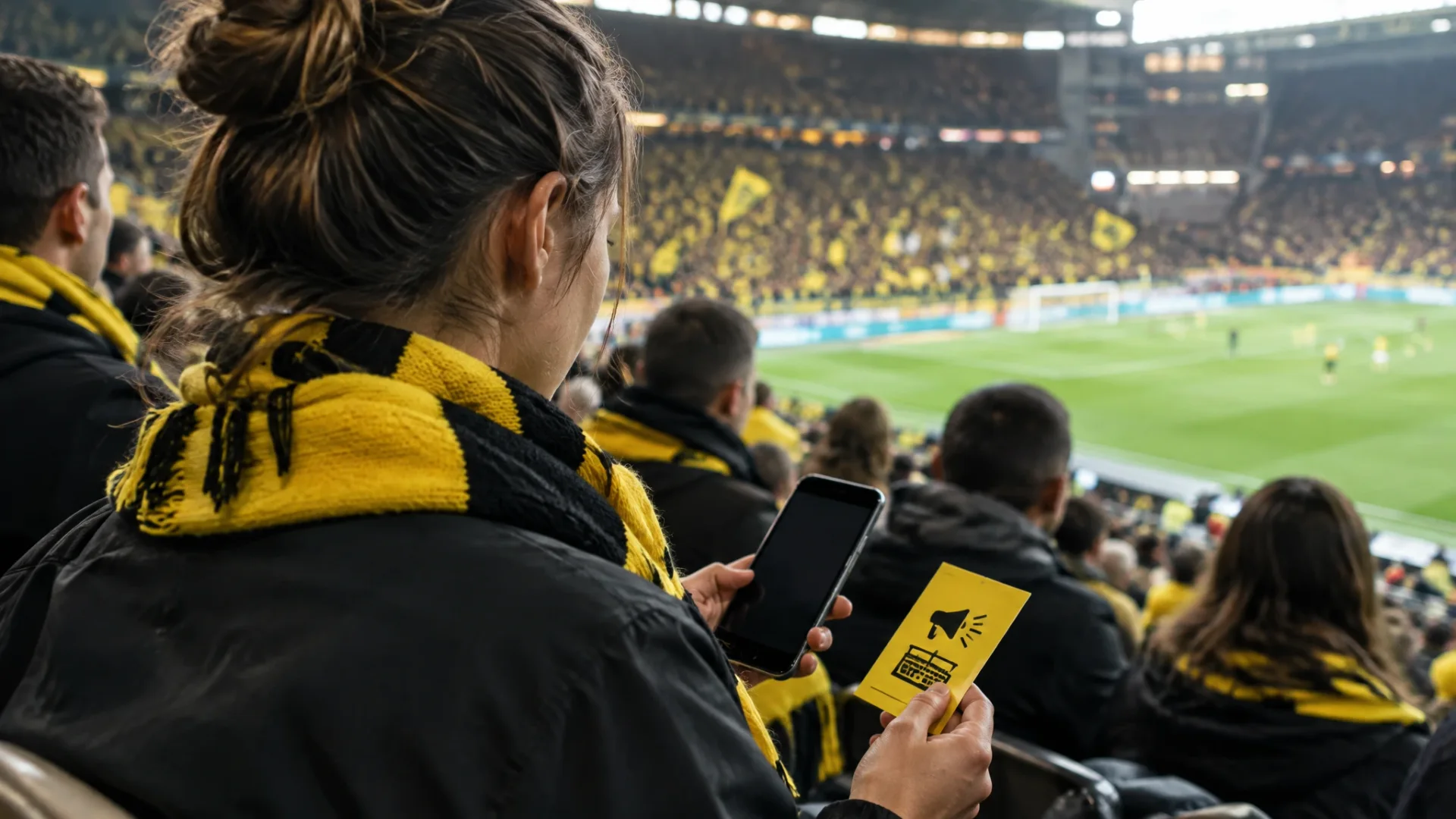 Opinion
Borussia Dortmund’s Fan Mode asks a better question than bans: can rewards protect stadium atmosphere?
Dortmund is testing whether less phone use can be encouraged, not imposed. That matters because the club is trying to defend matchday feeling without turning supporters into content machines.
 Inès ValençaLatin America & world football
 Opinion
RB Leipzig and Gruda: how one dribbler can power an entire attack
The 5-2 win over Augsburg raises a simple question: how does Leipzig create so much chance volume without a classic No. 10? The answer lies in one winger who bends the defence and a bench that turns the attack into an instant relay.
Lucien DelcourtItaly, Germany, Spain & Turkey