
RB Leipzig and Gruda: how one dribbler can power an entire attack
The 5-2 win over Augsburg raises a simple question: how does Leipzig create so much chance volume without a classic No. 10? The answer lies in one winger who bends the defence and a bench that turns the attack into an instant relay.
A bad start, then the machine switches on
Leipzig conceded inside the first minute, which could easily have turned the afternoon into a mess. Instead, they were 3-1 up by half-time and finished with a 5-2 win. The official report credits Brajan Gruda with two assists and names him man of the match. It also notes that Leipzig had won their first four home league games of the season without conceding, which makes Augsburg’s early strike look less like a collapse and more like a sharp interruption of a usually very controlled home pattern.
This was not a merely chaotic game. It was a structure test. When Leipzig are hit early, their attack does not freeze; it speeds up. That is usually the sign of a side that knows exactly where it wants to attack and how it wants to enter that space.
Sources : [1] Bundesliga ↗[3] Sportschau ↗
Gruda as a lever, not a decoration
What stands out is not just that Gruda was decisive. It is the way Leipzig seem to use a dribbler as a structural piece. He is not a traditional No. 10 planted between the lines to hand out final passes like business cards. He works more like a lever: he draws out the first defender, pulls a second one across, and opens the lane or finishing zone for someone else.
That is what makes Leipzig intriguing. Plenty of clubs demand a No. 10 to explain their creativity. Leipzig appear to prefer a shorter chain of decisions: regain, fix, release, shoot. The result is not romantic, but it is efficient. You do not see a team waiting for one brain to improvise everything; you see a team that can generate danger as soon as a dribbler forces imbalance.
Sources : [1] Bundesliga ↗[2] Sportschau ↗
The bench as accelerator, not repair kit
The most impressive part of the win may be the speed of the collective response. Once a team scores early, it can choose to manage. Leipzig did the opposite: the goals came through a sequence that suggests the plan does not depend on one move or one profile. The scorers listed in the reports — Banzuzi, Nkunku, Raum, Rômulo and Baumgartner — point to a distributed attack, almost bureaucratic in its logic: several zones, several sources of threat, no sentimental attachment to a fixed pecking order.
That is a modern way to manufacture chances without worshipping a single playmaker. The bench does not arrive to patch up a problem; it adds layers of speed, running and interpretation. Leipzig do not need an isolated artist to keep producing. They need relays that take over at the right moment. And that is the key nuance: German football loves structure, but here structure does not smother surprise. It channels it.
Sources : [1] Bundesliga ↗[2] Sportschau ↗
What this 5-2 says about the project
Augsburg scored first, but Leipzig showed more than a comeback. They showed a method. That is why this result matters more than the scoreline itself. It says a club can build attacking volume without stacking central creators, provided it has clear triggers, runners who understand space, and a dribbler capable of shifting an entire back line a step sideways.
The risk, naturally, is to pretend this is all repeatable by default. Football is never that tidy. But the principle is sound, and it should reassure Leipzig: even when the match starts badly, the team does not depend on a lone saviour. It depends on a mechanism. In Germany, that is often worth more than folklore.
Sources : [1] Bundesliga ↗[2] Sportschau ↗
Read next
 Opinion
Cologne vs Leverkusen: the Rhine derby that tests two 20-year-old dribblers
The Rhine derby asks a blunt question: who can turn talent into goals, and who merely looks efficient on the way there? Saïd El Mala and Ibrahim Maza sit at the centre of that verdict.
 Lucien DelcourtItaly, Germany, Spain & Turkey
 Opinion
Borussia Dortmund: without Guirassy, the attack loses its anchor
His thigh injury against Betis is more than a team news update: it forces Dortmund to confront how much of its attack still depends on one reference point.
Lucien DelcourtItaly, Germany, Spain & Turkey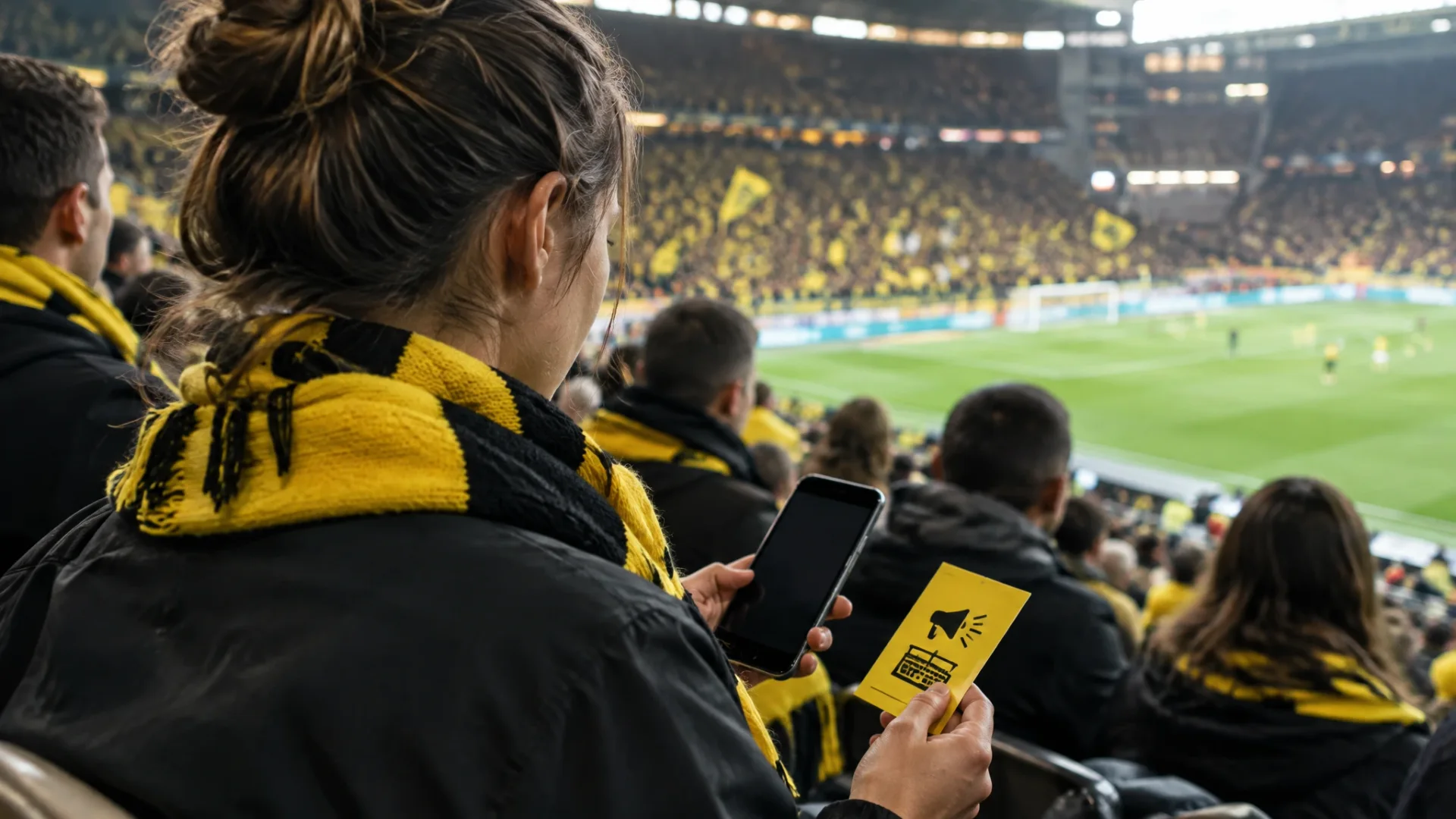 Opinion
Borussia Dortmund’s Fan Mode asks a better question than bans: can rewards protect stadium atmosphere?
Dortmund is testing whether less phone use can be encouraged, not imposed. That matters because the club is trying to defend matchday feeling without turning supporters into content machines.
 Inès ValençaLatin America & world football
 Opinion
Leverkusen’s sterile possession met Marseille’s low block into focus
Why Bayer Leverkusen’s first Europa League defeat looks less like a talent crisis than a warning: against a deep block, the ball means little if decisions are too slow.
Lucien DelcourtItaly, Germany, Spain & Turkey Opinion
Trabzonspor-Freiburg: the real test is whether Freiburg can travel with a plan
In Trabzon, Freiburg must prove that the Monaco defeat did not break its structure: can it play away with a plan against a Turkish side already moving well in Europe?
Lucien DelcourtItaly, Germany, Spain & Turkey Opinion
Napoli in Porto: the diagnosis is broken, not just the squad
The 4-1 defeat in Porto did more than expose absences. It showed a club whose players no longer agree on what the crisis is, which is usually when a manager’s “we are together” line starts sounding like tape on a sinking ship.
Lucien DelcourtItaly, Germany, Spain & Turkey