
Ligue 1, local security and Saturday-night kickoffs: Auxerre and Troyes show who really runs the schedule
When the Yonne prefecture moved Auxerre–Paris FC, PSG–Troyes moved too. This weekend, Ligue 1 did more than reshuffle kickoffs: it exposed how dependent the fixture list remains on local authorities.
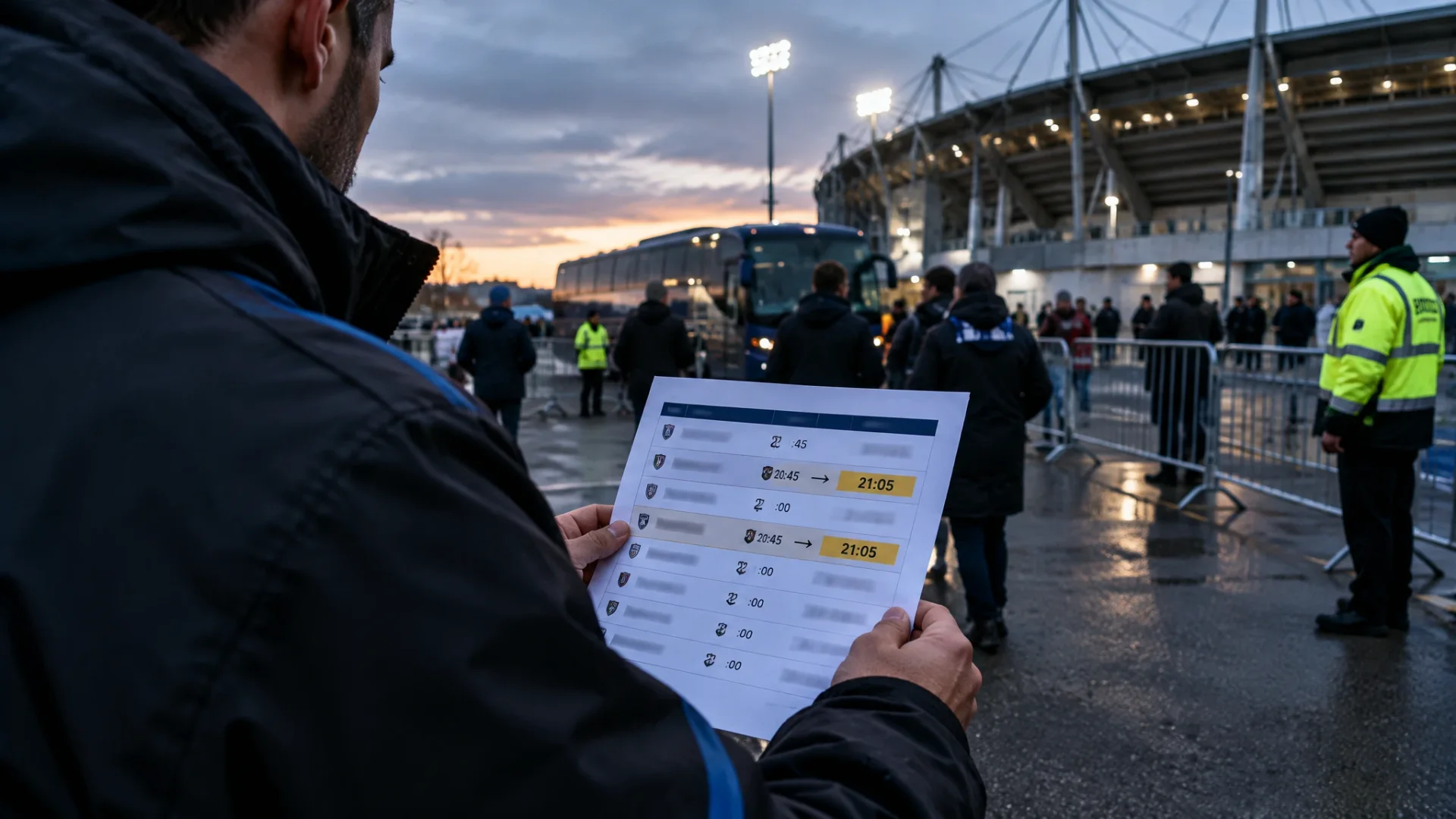
The schedule bent; the league did not
On 4 November, the LFP announced that two matches from Matchday 10, both due on Saturday 7 November 2026, would be moved. At Auxerre, AJ Auxerre–Paris FC was shifted from 5:15pm to 7:00pm at the request of the Yonne prefecture; in turn, PSG–ESTAC Troyes was pushed from 8:45pm to 9:05pm. The statement explicitly tied the Paris match’s new time to the rearranged Auxerre slot. [1]
Paris FC confirmed the change as an official adjustment to the calendar, noting that the match at the Abbé-Deschamps was still set for that Saturday, only at 7:00pm instead of 5:15pm. PSG had originally listed Troyes for 8:45pm, before its match page later validated a 9:05pm kickoff. [2][3][4]
Sources : [1] Ligue 1 / LFP ↗[2] Paris FC ↗[3] Paris Saint-Germain ↗[4] Paris Saint-Germain ↗
The real power is not at the centre
That is the crux. French football likes to present the fixture list as a neat, centrally managed machine, but Saturday night is ultimately governed by something more concrete than tidy charts and department names. A prefecture can force a time change, and the whole chain adjusts behind it. That is not a logistical footnote; it is an institutional reminder. The calendar is not an abstract object. It is a permanent compromise between broadcasting, travel and public safety.
Professional football loves to talk about visibility, exposure and premium appointments. Yet the moment a local match needs a reworking, the competition’s supposed sovereignty dissolves into reality. The league sets the programme, but it does not hold the rope alone. The message is less glamorous than a prime-time launch: conditions on the ground decide, and the league has to adapt. That is normal. It is also a neat illustration of how fragile a central schedule can be when everyone prefers to pretend it is fixed.
Why a 20-minute delay matters
A move from 5:15pm to 7:00pm may look minor on paper. In lived football time, it is not. Travel, pre-match routines, staff planning, recovery and even how supporters experience the evening all shift, if only slightly, and those small shifts add up. Auxerre–Paris FC was not merely rescheduled; it became a reminder that French football often works with time blocks that appear fixed right up until they are not.
The more revealing part is the domino effect on PSG–Troyes. The Paris match had first been planned for a standard evening slot at 8:45pm, then slipped to 9:05pm because the earlier fixture moved. That tells you something important: Ligue 1 programming is not one continuous ribbon, but a chain of dependencies. Change one match and, sometimes far away, the readability of the whole evening changes with it. Centralisation has virtues; it also creates cascading fragility.
Sources : [1] Ligue 1 / LFP ↗[3] Paris Saint-Germain ↗[4] Paris Saint-Germain ↗
Security is not a pretext; it is the referee
Let’s be clear: when a prefecture asks for a time change, caution is not bureaucratic window dressing. Local security has to come first, and a decision like this is not something to be debated as if it were a matter of convenience. Football does not take place in a vacuum; it happens in a town, with its traffic, constraints and balances. If the kickoff has to move to protect those balances, then it moves.
But accepting that does not mean ignoring the other side of the issue. The more intricate the league’s scheduling becomes, the more sensitive the calendar is to any disruption. The competition sells control; reality keeps reminding it that it governs an exposed system, dependent on outside decisions. The right answer is not to argue with security. It is to admit that scheduling should be built with a more honest margin for change from the outset. Saturday night is not a sacred block. It is a zone of negotiation.
Sources : [1] Ligue 1 / LFP ↗[2] Paris FC ↗
The clubs are the ones taking the message
For Paris FC and PSG alike, the lesson is mostly about position. The home club does not write its own time slot; more often than not, it receives one already trimmed of some autonomy. Paris FC relayed the change without drama, which is sensible: it could hardly turn an administrative decision into a soap opera. PSG, meanwhile, simply ended up validating the new time on its match page. In both cases, the club is the reader before it is the author.
That role is less romantic than sporting directors might like, but it is healthy. It reminds us that club football is not a monarchy of the timetable. It is a sport managed in layers, where the final decision can come from elsewhere. Executives like full control; kickoff times remind them they only ever have a partial version of it. That is fine, provided nobody keeps selling the opposite illusion.
Sources : [2] Paris FC ↗[4] Paris Saint-Germain ↗
What Ligue 1 should take from this
The real takeaway from Saturday is not that a match started later. It is that Ligue 1 still cannot convincingly pretend its calendar is entirely internal. Every time local security forces a change, the idea of a fully controlled competition cracks a little. There is nothing shameful about that; what would be dubious is pretending kickoff times are just a matter of aesthetic scheduling.
The league should treat these changes as signals, not annoyances. They show where the real power sits, where the dependencies are, and how far club autonomy actually extends in the face of local state authority. For supporters, the conclusion is simple: the championship does not begin at the whistle, but long before it, in the decisions that make that whistle possible. That is less spectacular than a big football night. It is also where the schedule tells the truth.
Sources : [1] Ligue 1 / LFP ↗[2] Paris FC ↗[3] Paris Saint-Germain ↗[4] Paris Saint-Germain ↗
Read next
 Opinion
At Le Havre, PSG are testing their method: winning without stars, without drama
Top of the table before the trip to Le Havre, Paris arrive depleted but not disarmed. The real question is not who is missing, but how Luis Enrique turns that shortage into a footballing principle.
 Étienne MorelThe football, the clubs, the decisions
 Opinion
PSG–Lyon: supporters cannot be the spare part
A marquee fixture moves to Monday, a global football ceremony occupies the same evening, and the people who planned their Sunday must adapt. Moving a match can be necessary. Treating its audience as endlessly flexible is a choice.
Étienne MorelThe football, the clubs, the decisions Opinion
Ligue 1, Nike and PSG: when the Tiempo moves from pitch to street
Nike has released a Tiempo made to play and to be seen. But in Ligue 1, Nike’s showcase still keeps reflecting PSG: is this still football geography, or already style geography?
 Basil ArtemoffTerraces, Marseille & style
 Opinion
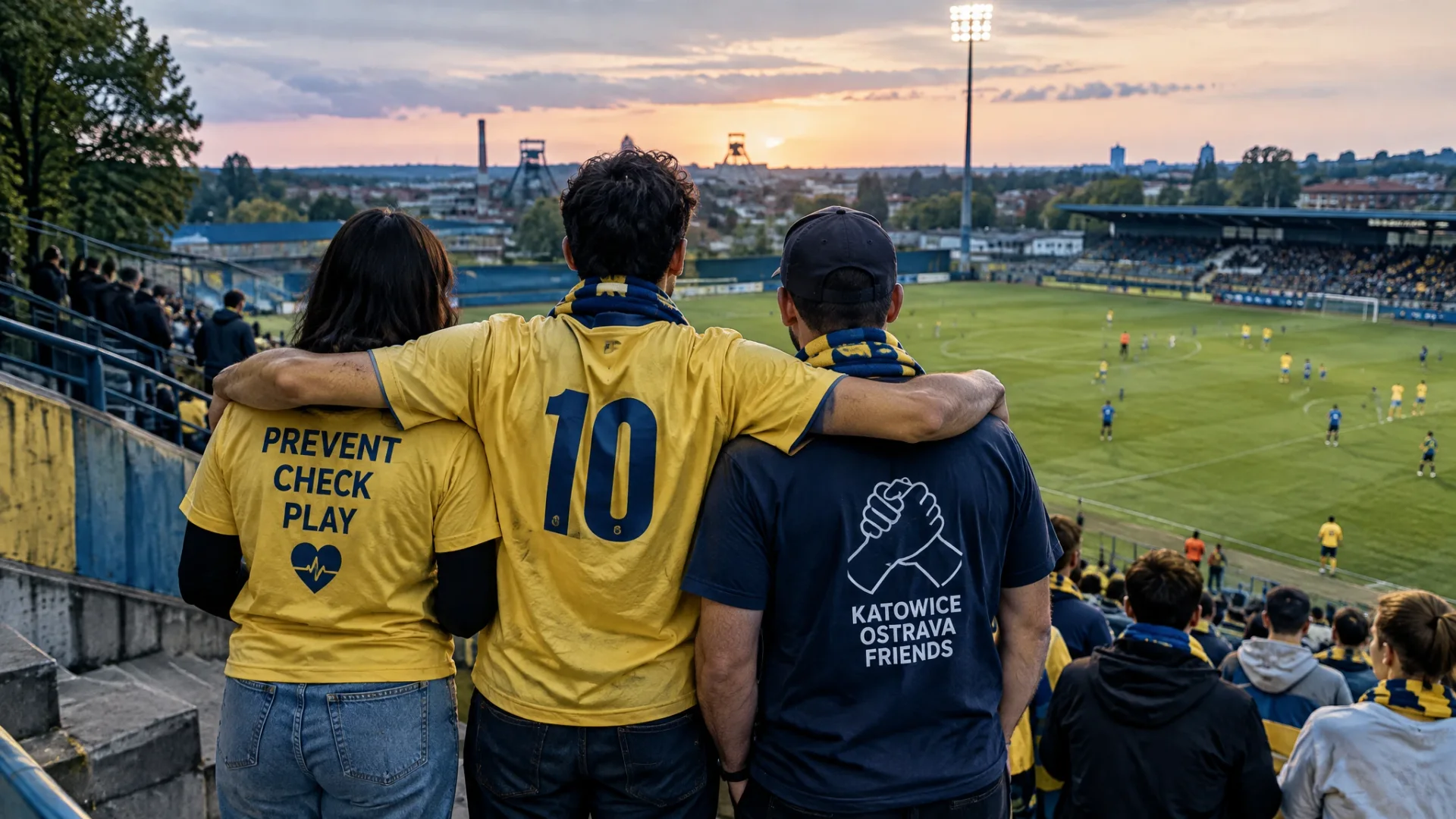
When the shirt serves the stand: Union Saint-Gilloise, Katowice–Ostrava, PSG
When a shirt becomes a public-health tool, a symbol of supporter friendship or the visible frame for a campaign, the real question is simple: does it serve the club, the brand or the terrace first?
Basil ArtemoffTerraces, Marseille & style Opinion
PSG in Villarreal: the Youth League shows what an academy is really worth
PSG’s youth defeat in Villarreal is not a verdict on one generation. It is a reminder that a development line is tested when it leaves domestic comfort and enters a competition that measures collective maturity.
 Camille LaurentAcademies & breakthrough seasons
 Opinion
Lens–OM: a test of squad depth more than a clash of momentum
On Sunday night, the real question is not who comes in carrying form, but who copes best with absences: Lens lose Franjo Ivanović, while Marseille keep a stable defensive base but face uncertainty on one left-sided option.
Étienne MorelThe football, the clubs, the decisions