
Ronaldo’s exit should force Portugal to fix its federation, not just stage a goodbye
The real story is not the tribute to Cristiano Ronaldo; it is whether the FPF can turn a personal retirement into an institutional repair after a very public break.
A farewell that is anything but neutral
Cristiano Ronaldo has announced that he will no longer play for Portugal, ending a 23-year run with the national team. The Portuguese federation immediately promised a tribute worthy of its captain, while also underlining the scale of his record: 234 appearances and 146 goals. On paper, a grand send-off makes sense. In reality, this exit does not read like a clean final curtain. It follows an October episode of tension and lands as a managed rupture, not a purely ceremonial goodbye. [1][2][3]
That is why this moment matters beyond the usual rituals of gratitude. When a player of this magnitude leaves amid a public dispute with the institution around him, the country is not only celebrating a career. It is also being forced to confront what that career revealed about power, trust and control inside the national setup.
The real issue is the FPF’s authority
Ronaldo’s decision is not just the result of sporting fatigue. The available evidence points to a 23-year cycle ending in a climate of strain with Jorge Jesus, after a relationship that had already deteriorated in the coach’s first international window. In other words, the final act is not simply a personal choice; it exposes a governance problem, a trust problem and a hierarchy problem inside the national team structure. [2]
The FPF moved quickly and promised a farewell event that matches the player’s status. But a tribute, no matter how polished, fixes nothing by itself. If the federation wants to make this moment useful, it has to show that it has understood what the episode revealed: a national team cannot be run as a permanent exception, nor can it survive long on the threat of a power struggle between a national icon and the technical staff.
Sources : [2] ge ↗
A country does not inherit a myth; it inherits a framework
The danger with Ronaldo is to reduce everything to gratitude without consequence: a beautiful ceremony, a few images, and then business as usual. That would be a mistake. Portugal has a chance to treat this departure as an institutional test. How does the FPF deal with its own legends? How does it protect the coach’s authority without turning the dressing room into a courtroom? And how does it ensure the team can live after a player who, for years, concentrated so much of the country’s football identity around him? [1][2]
My view is straightforward: the best tribute is not the loudest one, but the clearest one. Ronaldo deserves a farewell on his terms, yes. But the federation now has to prove it can become legible, stable and credible again after an episode that showed both the end of a cycle and the limits of its management. If it misses that chance, the tribute will simply cover up the repair work that really needed doing.
Read next
 Opinion
Cruzeiro, the Copa Libertadores Femenina and the real value of a prize-sharing promise
The question is not whether to applaud the gesture, but whether Cruzeiro’s announced prize split changes how the women’s team is treated once the cameras leave.
 Inès ValençaLatin America & world football
 Opinion
Without Messi, Scaloni starts reshaping Argentina against Uruguay and Costa Rica — and the AFA is already selling the window
This first squad without Messi is less about mourning than reordering. Scaloni is beginning to rework the group for November, while the AFA turns the window into a public product with tickets already on sale for Argentina-Uruguay in Buenos Aires.
Inès ValençaLatin America & world football Opinion
Brazil U-17 women: the 2-1 over China shows a pipeline, not a fluke
Brazil’s comeback in Salé matters less as a fairytale than as evidence of a team that can stay dangerous late, keep the ball in advanced areas and turn one finisher’s night into a collective result.
Inès ValençaLatin America & world football Opinion
Boca, Atlético Mineiro, Estudiantes and Palmeiras: when CONMEBOL sets the time, it sets the script
Why does the South American final weekend feel less like a celebration than an exercise in control? Because once kick-off is fixed, weather, travel and TV optics matter more than match-day convenience.
Inès ValençaLatin America & world football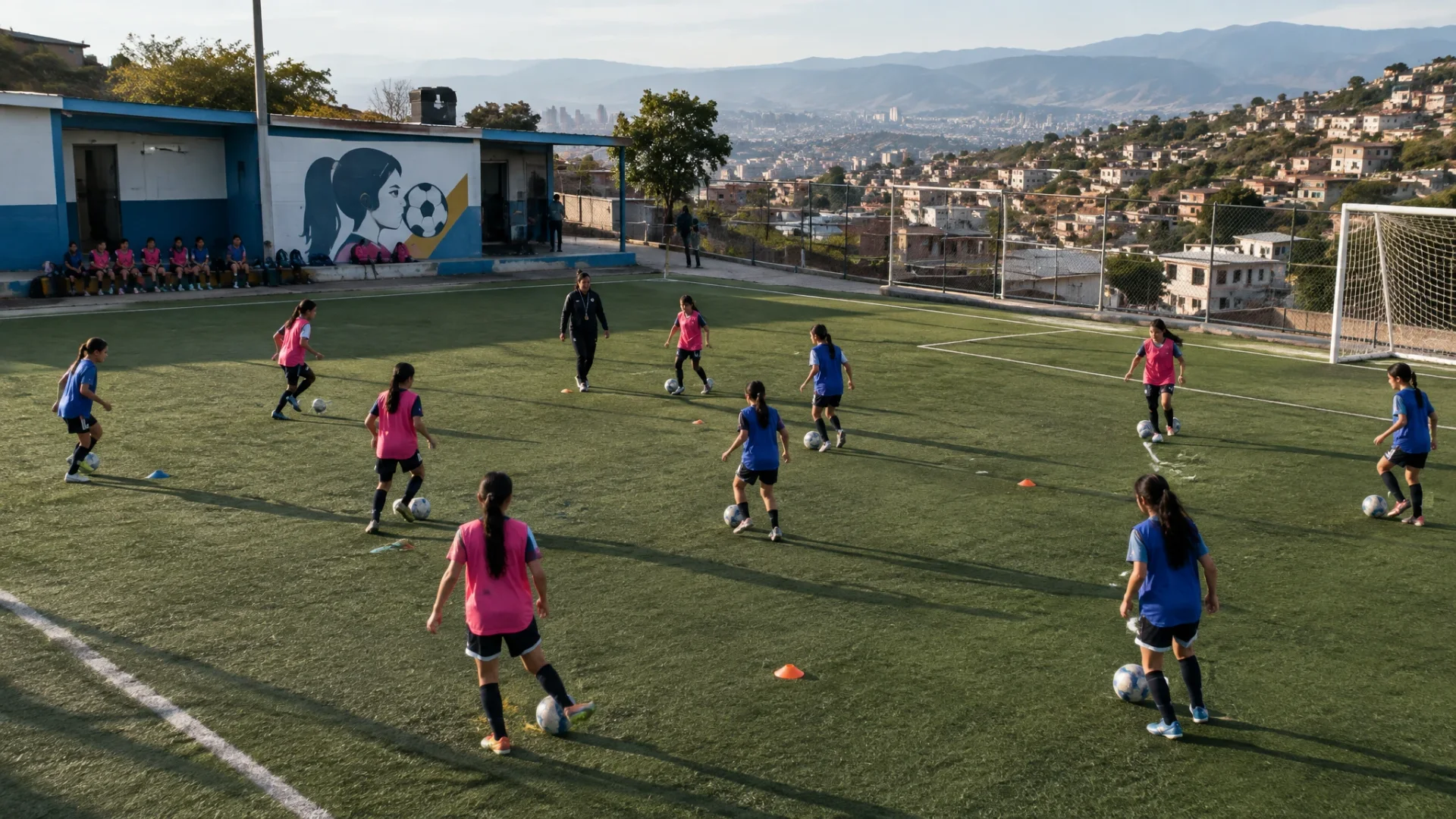 Opinion
CONMEBOL and Plan International: SUMA Fútbol 360° must prove it can outlast the press release
The new alliance with Plan International matters less for its launch than for the question it raises: can a confederation turn community-football language into durable local access, especially for girls?
Inès ValençaLatin America & world football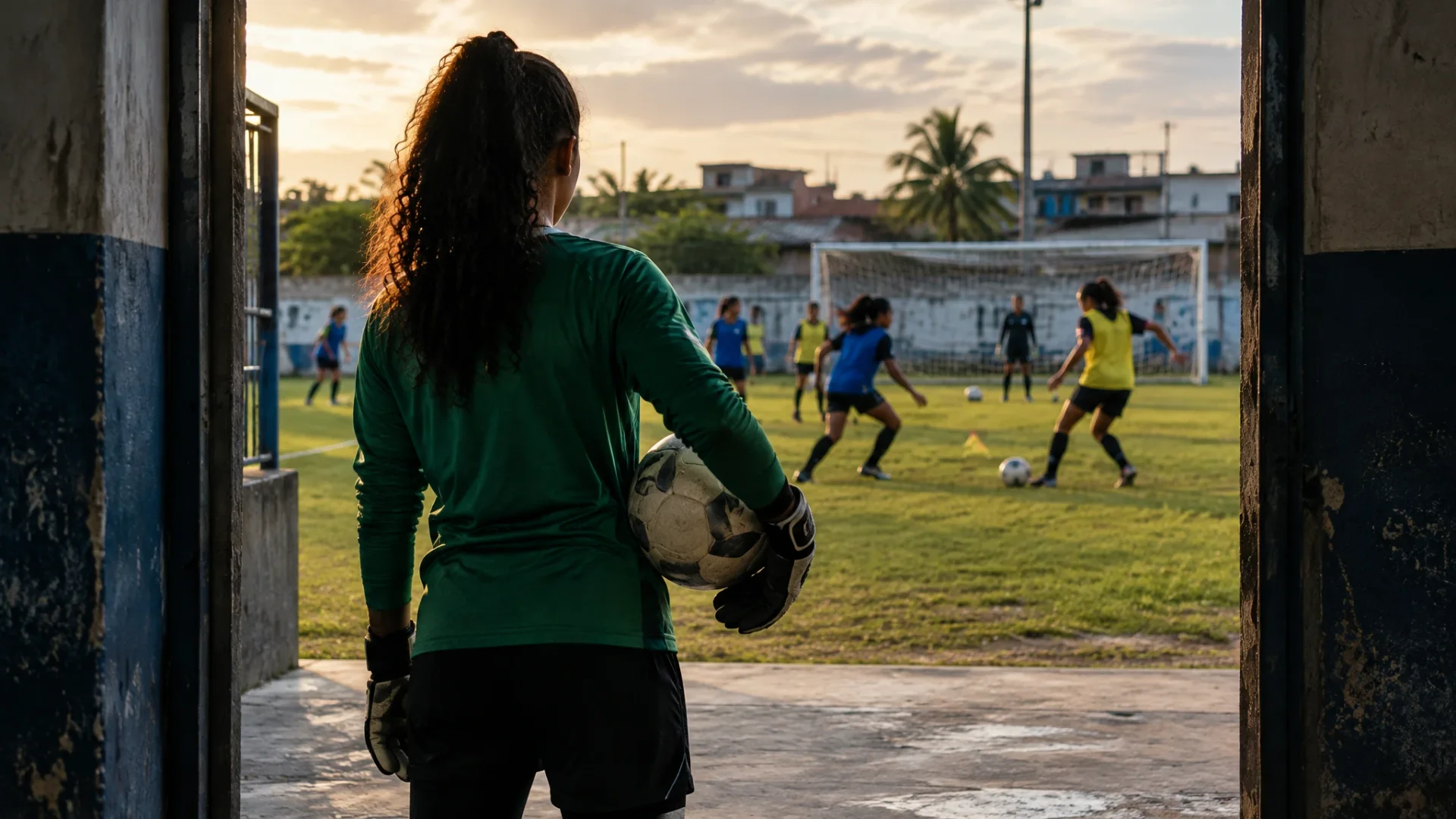 Opinion
Brazil’s women’s game is being built in goal, not in slogans
The real test for Brazil, from a public pitch in Ceará to the CBF’s national plans, is not the announcement itself. It is whether girls can stay in the game long enough to find a pathway.
Inès ValençaLatin America & world football