
Juventus’ defeat at Genoa exposes a thin, low-quality attack
The loss in Genoa is not the real story. The real story is a Juventus side that turns territory into too few chances and leans too much on low-value shooting.
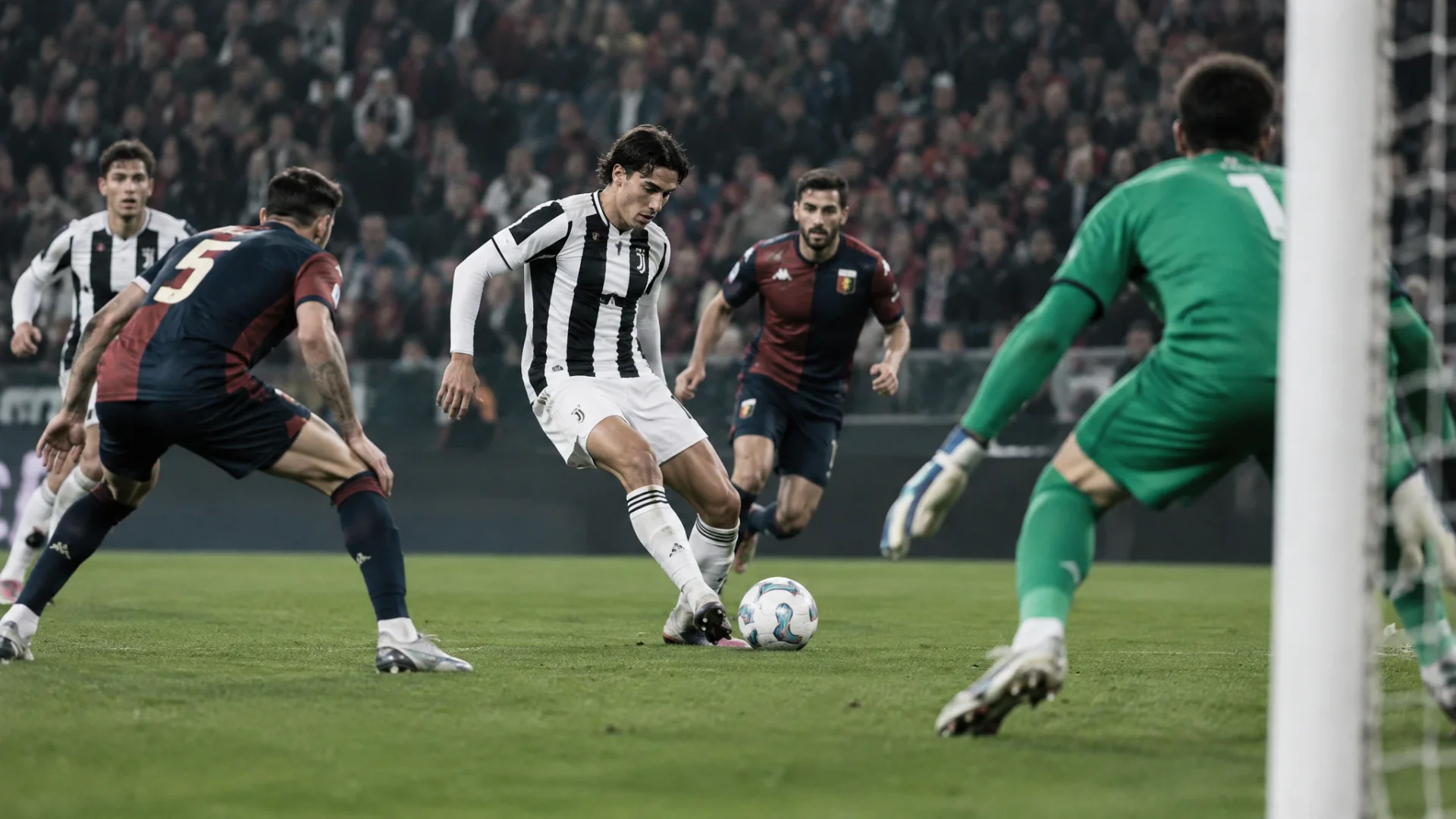
A warning bigger than one bad night
The 2-0 defeat in Genoa should not be treated as an isolated stumble, because the wider trend already looked uneasy before the kickoff. Juventus are not merely losing matches; they are losing the shape of their attack. That is a far more worrying diagnosis than a single result.
The numbers cited before this game are blunt. Juventus were described as the second-weakest attack among Serie A’s top ten, ranked 18th for expected goals from open play after nine league matches, and had scored only 11 goals in their first nine Serie A games. At that point, the issue is no longer a missed chance or two. It is a system that is not producing enough danger.
Sources : [1] Football Italia ↗[2] Lega Serie A ↗
The problem is not shooting, it is shot quality
A poor attacking return rarely means the forwards alone are at fault. More often, it means a side can move the ball into the final third without creating the right kind of pressure there. Juventus seem able to have the ball, but not to use it to disturb the opponent’s structure. That leaves them with plenty of attempts and too little threat.
The official match report for Genoa says Juventus tried to raise the tempo after the break, yet stayed vulnerable to counterattacks. That is the key phrase. Pushing harder is not the same as attacking better. Juventus advanced the game, but not the danger level. They stretched the match, not Genoa’s defence.
Sources : [2] Lega Serie A ↗
Too predictable to be incisive
This is where the discussion needs to move from emotion to design. When a team depends too heavily on low-value shots, it usually means the connection between circulation and the final pass is weak. The side can occupy territory, but it cannot turn that territory into a sequence that forces the defence to break. Juventus have too often looked like a team moving forward in a straight line and expecting the box to solve the rest.
That is why the next fixture against Napoli matters. Not because one match will define the season, but because it will reveal whether this is a temporary slump or a deeper attacking limitation. On current evidence, Juventus are not short of territory. They are short of organised menace.
Sources : [1] Football Italia ↗[2] Lega Serie A ↗
The recruitment question sits underneath everything
It would be too easy to blame the finishing alone. A side that creates too little from open play is usually dealing with a squad-construction problem as much as a form problem. The club’s choices in the attacking line, the profiles between midfield and the front line, and the way the final third is structured all matter here. If the architecture is poor, the last touch becomes a convenient scapegoat.
Juventus do not need melodrama. They need an attack that converts possession into genuine threat. Until that happens, setbacks like Genoa will keep looking less like accidents and more like evidence. That is the uncomfortable part: the diagnosis is already visible.
Sources : [1] Football Italia ↗[2] Lega Serie A ↗
Read next
 Opinion
Napoli, Allegri and the very practical cost of a two-match ban
Massimiliano Allegri’s suspension is not just a discipline issue: it leaves Napoli without its coach for Monza and Juventus. How much turbulence can a title contender really absorb?
 Lucien DelcourtItaly, Germany, Spain & Turkey
 Opinion
Udinese and Runjaic: patience that looks like calculation
After six straight Serie A defeats, Udinese are not only judging their coach. They are measuring what a change would do to recruitment, the dressing-room hierarchy and the next two fixtures.
Lucien DelcourtItaly, Germany, Spain & Turkey Opinion
Borussia Dortmund’s cup escape was a blueprint first, a Sabitzer free kick second
The 3-2 win over Werder Bremen is not just a cup scare. The real question is whether Niko Kovač can keep the first-half intensity without inviting a second-half collapse.
Lucien DelcourtItaly, Germany, Spain & Turkey Opinion
Fenerbahçe: the coach exit is a timing problem, not just a derby hangover
The defeat at Galatasaray hurt, but the real issue is the calendar: a managerial rupture lands between a cup midweek and a league weekend, with discipline still hanging in the air.
Lucien DelcourtItaly, Germany, Spain & Turkey